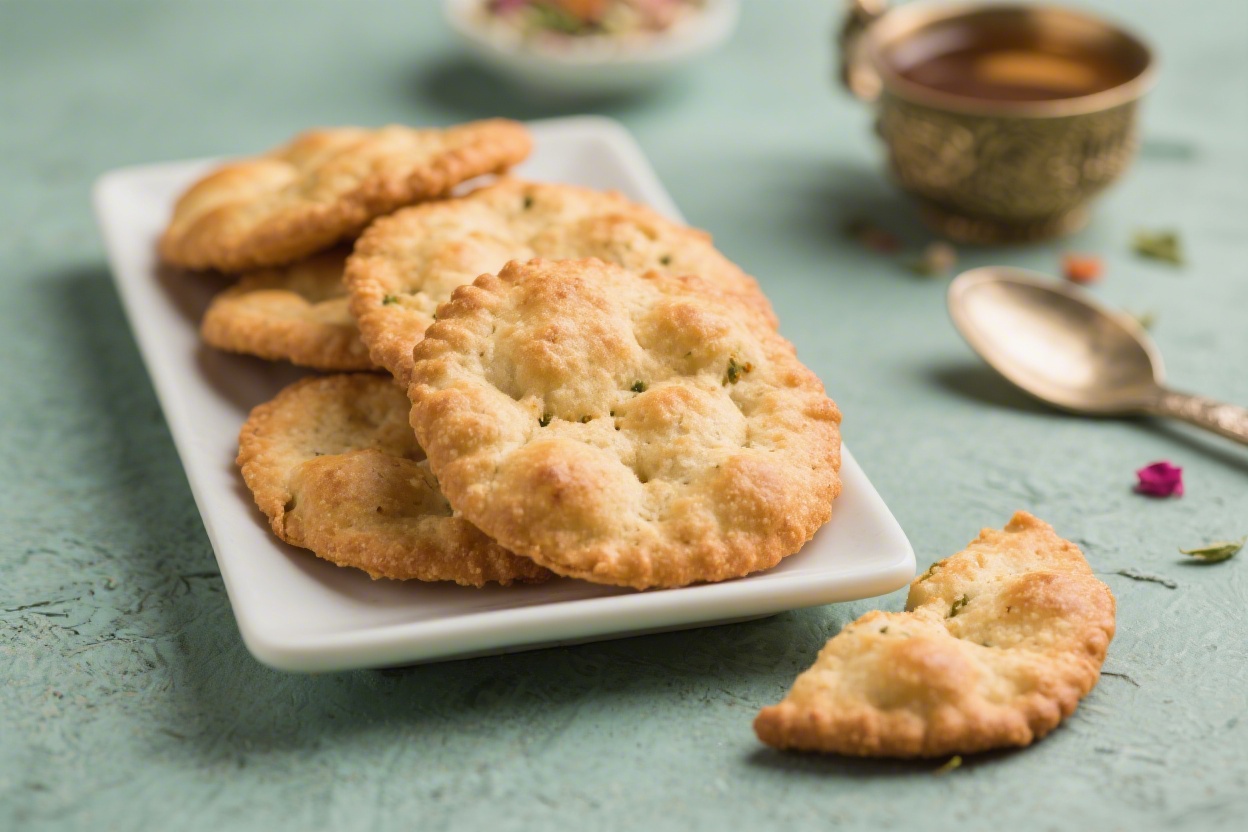
Mix the dry ingredients: In a large bowl, combine flour, semolina, salt, carom seeds, black pepper, and kasuri methi if using. Stir to distribute the spices evenly.
Rub in the fat: Add 4 tablespoons of oil or ghee to the flour.
Use your fingertips to rub it into the flour until it resembles coarse breadcrumbs. This step is key—the mixture should clump when pressed and then fall apart. It’s what creates the flaky layers.
Add water gradually: Sprinkle water a little at a time and bring the dough together. You’re aiming for a stiff, tight dough, not soft.
It should feel firmer than roti dough. Don’t over-knead; 1–2 minutes of gentle kneading is enough.
Rest the dough: Cover the dough with a damp cloth and let it rest for 20–25 minutes. This relaxes the gluten and helps the mathri puff slightly and cook evenly.
Shape the mathri: Divide the dough into small lemon-sized balls.
For classic shapes, flatten each ball into a disc about 2–2.5 inches wide and 1/4 inch thick. You can also roll the dough and cut rounds with a cookie cutter. Prick each disc 3–4 times with a fork to prevent puffing.
Heat the oil: In a deep, wide pan, heat oil on medium-low.
To test, drop a tiny piece of dough—if it rises slowly with gentle bubbles, the oil is ready. If it sizzles hard and browns fast, it’s too hot.
Fry low and slow: Slide in a few discs without crowding. Fry on low to medium-low heat, turning occasionally.
This slow fry ensures even cooking and a crisp, layered texture. Each batch should take 6–10 minutes, depending on thickness.
Drain and cool: Once golden and crisp, remove the mathris to a wire rack or paper towels. Let them cool completely—they’ll firm up further as they cool.
Taste and adjust: Try one after cooling.
If needed, sprinkle a pinch of salt while they’re still slightly warm, or note adjustments for your next batch.