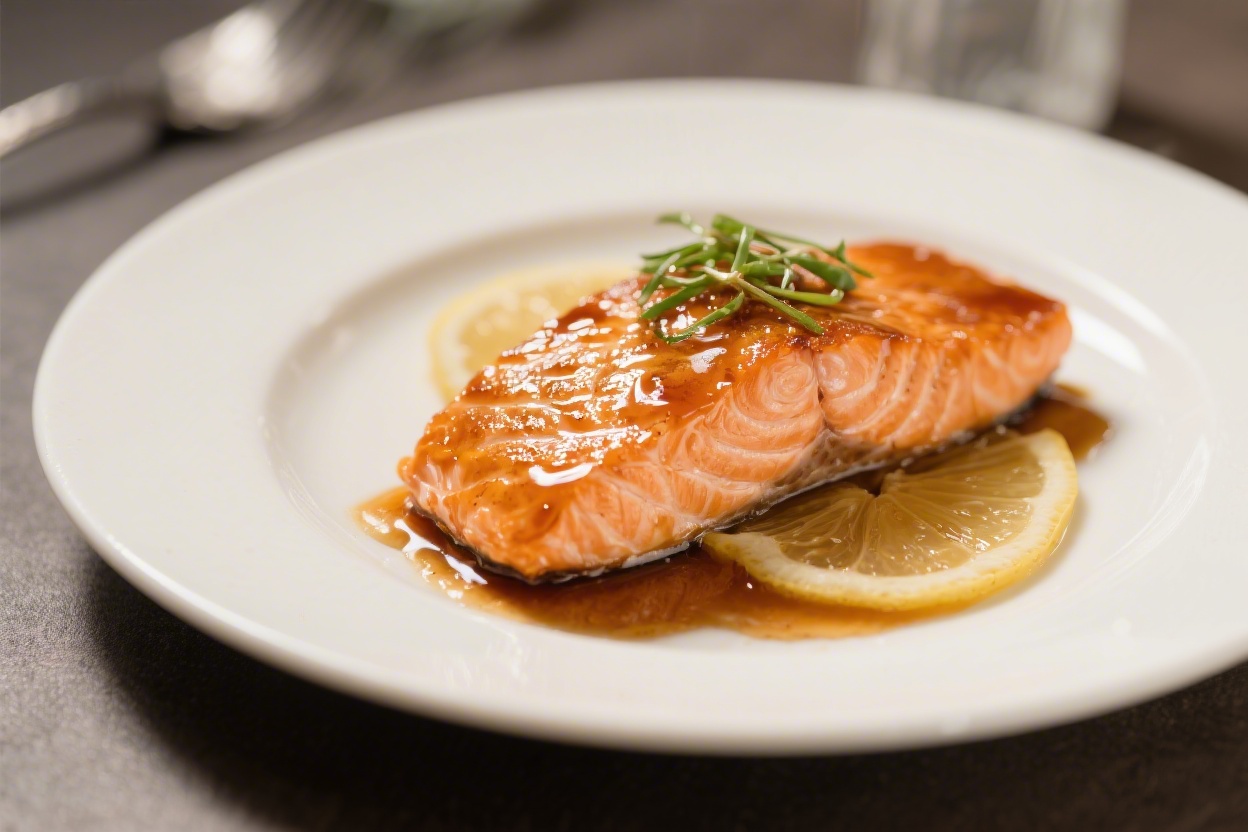
Pat the salmon dry. Use paper towels to blot excess moisture. Season both sides lightly with kosher salt and black pepper.
Dry fish browns better and won’t steam in the pan.
Mix the glaze. In a small bowl, whisk honey, soy sauce, lemon zest, 1 tablespoon lemon juice, minced garlic, grated ginger, and a pinch of red pepper flakes. Adjust sweetness or acidity to taste.
Preheat the pan. Set a large nonstick or stainless steel skillet over medium-high heat. Add oil and let it get hot until shimmering.
A hot pan helps create that golden crust.
Sear skin-side down first. Place salmon in the pan, skin-side down. Press gently with a spatula for the first 10 seconds to prevent curling. Cook 3–4 minutes without moving it.
Flip and add butter. Turn the fillets carefully.
Add butter to the pan and let it melt. Spoon some over the salmon for a glossy finish.
Pour in the glaze. Reduce heat to medium. Add the honey mixture and let it bubble.
Tilt the pan and baste the salmon as the sauce thickens, 2–3 minutes.
Check doneness. Salmon is done when it flakes easily and the center is just slightly translucent, about 125–130°F for medium. Pull it earlier if you prefer medium-rare. Don’t overcook—it keeps cooking after you remove it from heat.
Rest and finish. Transfer salmon to plates.
Simmer the remaining sauce for 30–60 seconds if you want it thicker, then spoon it over the fish. Garnish with sliced green onions or sesame seeds.
Serve. Pair with jasmine rice, quinoa, or roasted broccoli. The glaze also tastes great over sautéed spinach or a simple cucumber salad.