Warm the broth: In a small pot, heat the broth to a gentle simmer. Keep it warm over low heat.
Warm broth absorbs better and helps the rice cook evenly.
Sauté the aromatics: In a wide saucepan or deep skillet, heat the olive oil and 1 tablespoon butter over medium heat. Add the onion and a pinch of salt. Cook 4–5 minutes, until soft and translucent.
Stir in the garlic and cook 30 seconds more, just until fragrant.
Toast the rice: Add the arborio rice and stir to coat each grain with the fat. Cook 1–2 minutes, stirring often, until the edges of the rice look slightly translucent. This step helps the risotto keep a nice bite.
Deglaze with wine: Pour in the white wine and stir until it’s mostly absorbed.
If skipping wine, add a ladle of warm broth instead and continue.
Add broth gradually: Add about 1/2 to 3/4 cup of warm broth and stir. Keep the heat at a gentle simmer. When most of the liquid is absorbed, add another ladle.
Continue this process, stirring frequently, for about 16–18 minutes.
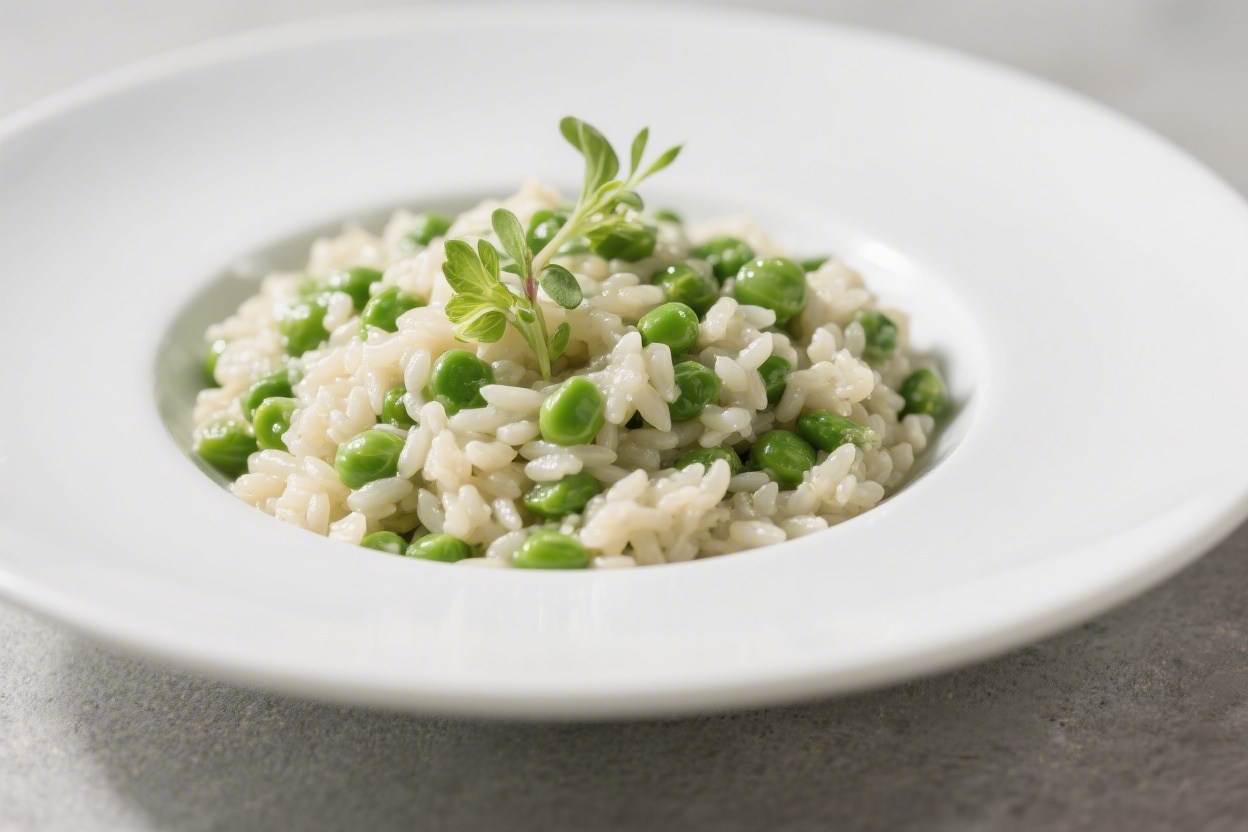
Cook the peas: When the rice is nearly al dente (still slightly firm in the center), stir in the peas. Fresh peas need about 3–4 minutes; frozen peas cook in 2–3 minutes. Add a splash more broth as needed to keep it creamy.
Finish the risotto: When the rice is tender with a slight bite and the texture is loose and creamy, turn off the heat.
Stir in the remaining 1 tablespoon butter, Parmesan, lemon zest, and lemon juice. Season with salt and pepper. The risotto should softly spread on a plate; add a little more warm broth if it looks tight.
Add herbs and serve: Fold in the fresh herbs.
Taste and adjust seasoning or lemon. Finish with a drizzle of extra-virgin olive oil and a sprinkle of Parmesan, if you like. Serve right away.