
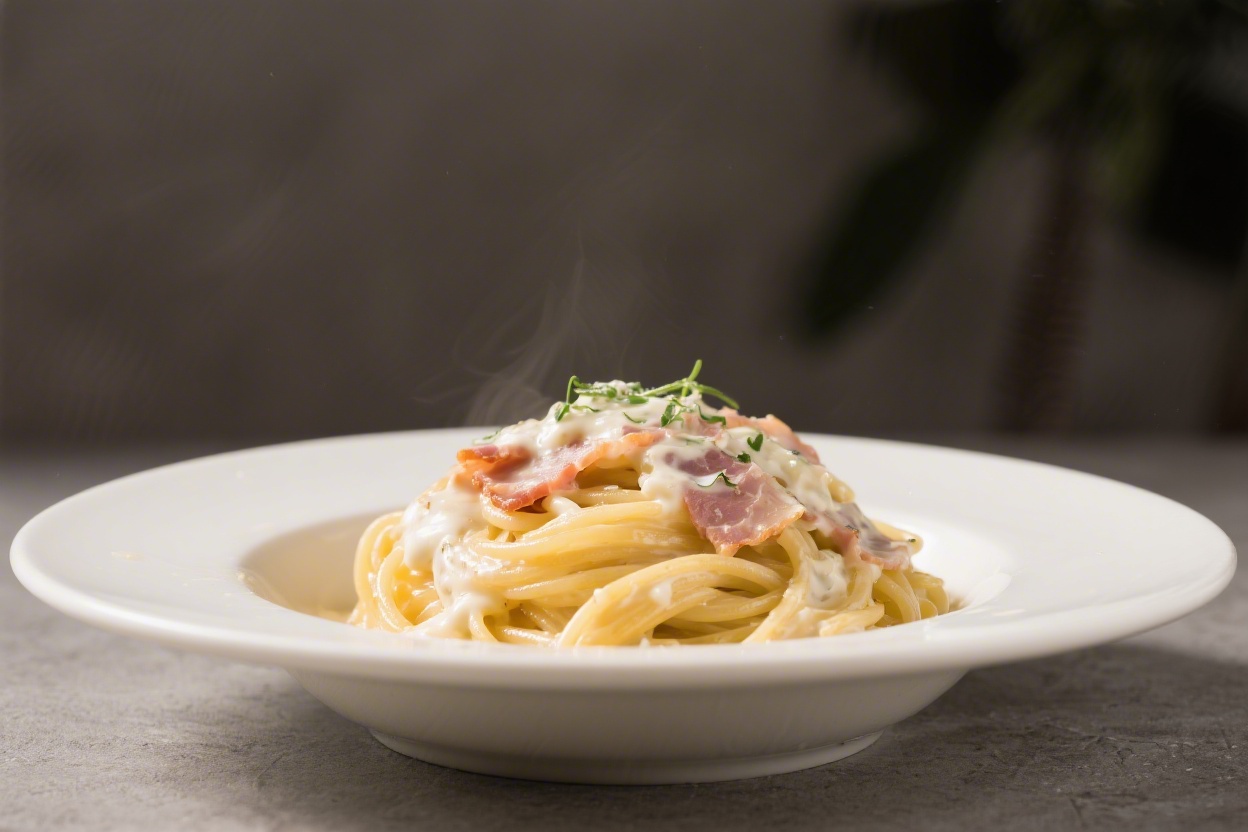
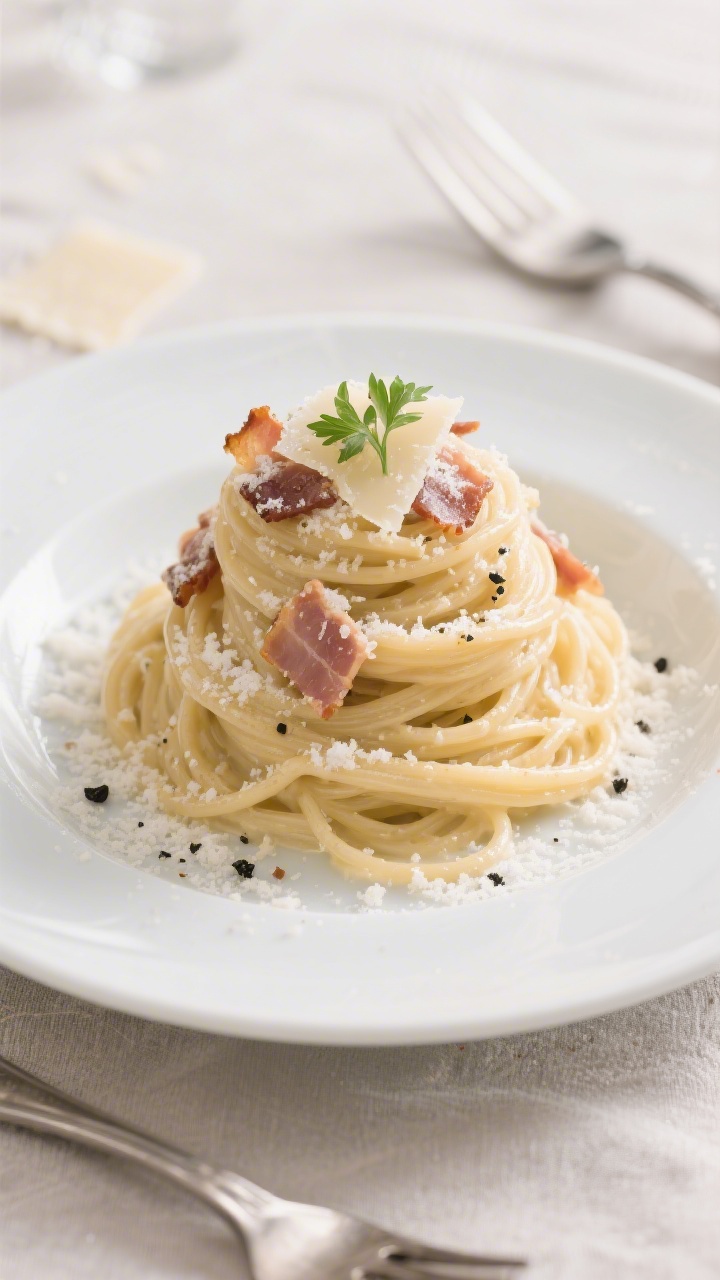
There’s something special about a bowl of creamy spaghetti carbonara. It feels indulgent but comes together with simple ingredients and a few easy steps. This version is rich, silky, and comforting, with crisp bits of pancetta and plenty of savory depth.
No heavy cream needed—just eggs, cheese, and a little technique. If you love a quick weeknight pasta that still tastes like a treat, this one’s for you.
Creamy Spaghetti Carbonara – A Comforting, Classic Pasta
Ingredients
- Spaghetti: 12 ounces (about 340 g). Long pasta holds the silky sauce well.
- Pancetta or guanciale: 4–6 ounces, diced. Guanciale is traditional; pancetta is easier to find.
- Eggs: 3 large yolks + 1 whole egg. This ratio gives body and shine.
- Pecorino Romano: 1 cup, finely grated. You can use half Parmesan if you prefer.
- Black pepper: Freshly cracked, to taste. Aim for a generous amount.
- Salt: For the pasta water. Go easy—cheese and pancetta are salty.
- Olive oil (optional): 1 teaspoon, only if your pancetta is very lean.
- Garlic (optional): 1 small clove, smashed. Adds aroma without overpowering.
Instructions
- Prep your ingredients: Finely grate the cheese, dice the pancetta, and separate the eggs. In a bowl, whisk the egg yolks and whole egg with most of the cheese and a hearty pinch of black pepper. Reserve a little cheese for serving.
- Boil the pasta: Bring a large pot of well-salted water to a boil. Cook spaghetti until just shy of al dente. Before draining, reserve 1–1½ cups of hot starchy pasta water.
- Crisp the pancetta: While the pasta cooks, place pancetta in a large, cool skillet and set over medium heat. Let the fat render and the meat turn golden and crisp, 6–8 minutes. If using garlic, add it for the last minute to perfume the fat, then remove and discard.
- Control the heat: Turn the skillet heat to low. You want it warm, not sizzling, to avoid scrambling the eggs.
- Combine pasta and pancetta: Add drained spaghetti directly to the skillet with the pancetta and rendered fat. Toss to coat so every strand gets a sheen.
- Temper the egg mixture: Whisk about 2 tablespoons of hot pasta water into the egg-cheese mixture to loosen it. This step reduces the risk of curdling.
- Create the sauce: Remove the skillet from the heat. Pour the tempered egg mixture over the pasta, tossing quickly and continuously. Add hot pasta water a splash at a time until the sauce turns silky and clings to the noodles. You may use ½–1 cup total. Work off the heat to prevent scrambling.
- Adjust and season: Taste and add more black pepper or a tiny pinch of salt if needed. Fold in the remaining cheese for extra body.
- Serve immediately: Plate the pasta while it’s glossy and hot. Top with a final shower of cheese and more pepper.
What Makes This Recipe So Good
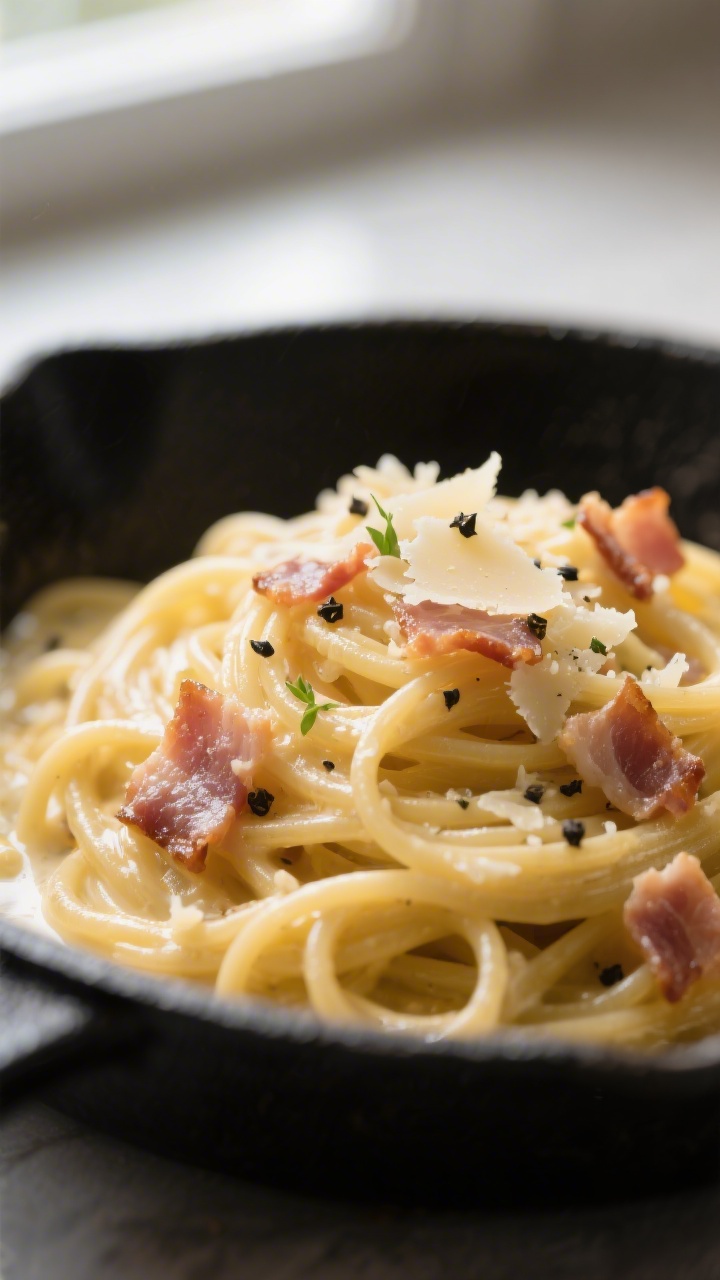
- Restaurant-quality texture at home: The sauce coats every strand with a glossy, velvety finish.
- No cream required: The creaminess comes from egg yolks, Pecorino Romano, and starchy pasta water.
- Fast and simple: From start to finish, you can be eating in under 30 minutes.
- Balanced flavor: Salty pancetta, sharp cheese, and a hint of black pepper make each bite satisfying.
- Foolproof technique: Clear steps help you avoid scrambled eggs and sticky pasta.
What You’ll Need
- Spaghetti: 12 ounces (about 340 g). Long pasta holds the silky sauce well.
- Pancetta or guanciale: 4–6 ounces, diced.
Guanciale is traditional; pancetta is easier to find.
- Eggs: 3 large yolks + 1 whole egg. This ratio gives body and shine.
- Pecorino Romano: 1 cup, finely grated. You can use half Parmesan if you prefer.
- Black pepper: Freshly cracked, to taste.
Aim for a generous amount.
- Salt: For the pasta water. Go easy—cheese and pancetta are salty.
- Olive oil (optional): 1 teaspoon, only if your pancetta is very lean.
- Garlic (optional): 1 small clove, smashed. Adds aroma without overpowering.
Step-by-Step Instructions
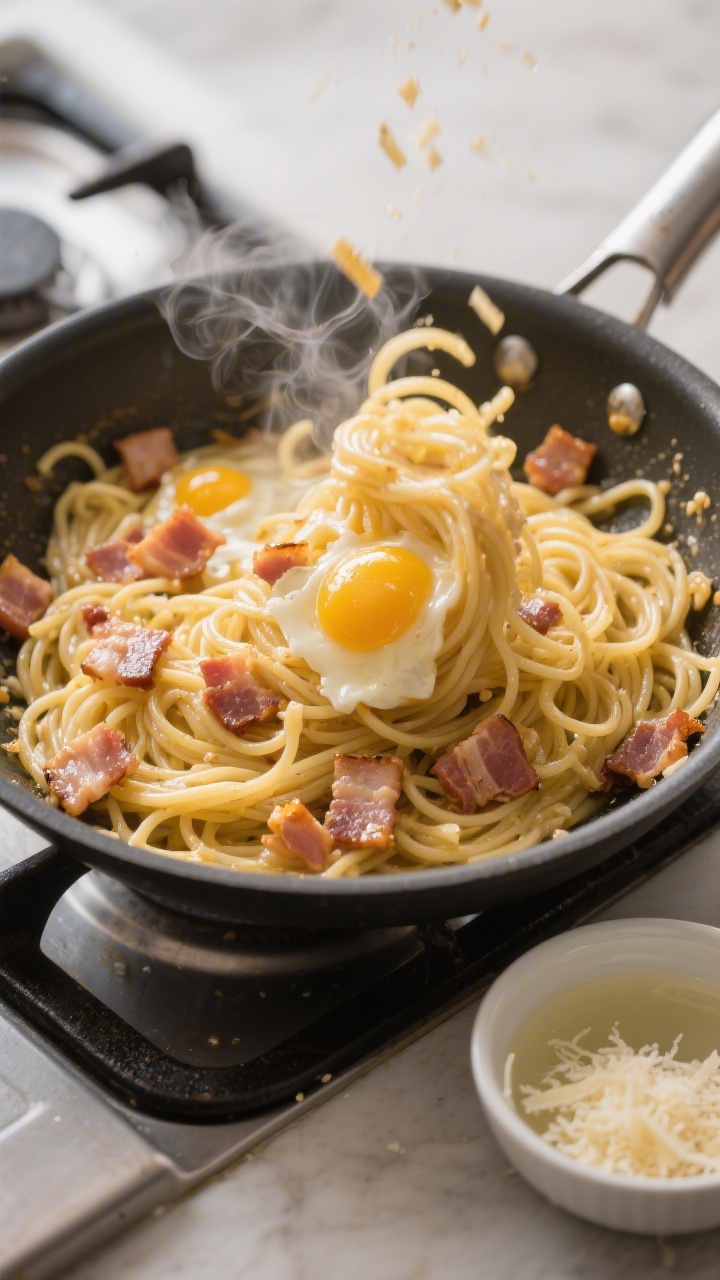
- Prep your ingredients: Finely grate the cheese, dice the pancetta, and separate the eggs.
In a bowl, whisk the egg yolks and whole egg with most of the cheese and a hearty pinch of black pepper. Reserve a little cheese for serving.
- Boil the pasta: Bring a large pot of well-salted water to a boil. Cook spaghetti until just shy of al dente. Before draining, reserve 1–1½ cups of hot starchy pasta water.
- Crisp the pancetta: While the pasta cooks, place pancetta in a large, cool skillet and set over medium heat.
Let the fat render and the meat turn golden and crisp, 6–8 minutes. If using garlic, add it for the last minute to perfume the fat, then remove and discard.
- Control the heat: Turn the skillet heat to low. You want it warm, not sizzling, to avoid scrambling the eggs.
- Combine pasta and pancetta: Add drained spaghetti directly to the skillet with the pancetta and rendered fat.
Toss to coat so every strand gets a sheen.
- Temper the egg mixture: Whisk about 2 tablespoons of hot pasta water into the egg-cheese mixture to loosen it. This step reduces the risk of curdling.
- Create the sauce: Remove the skillet from the heat. Pour the tempered egg mixture over the pasta, tossing quickly and continuously.
Add hot pasta water a splash at a time until the sauce turns silky and clings to the noodles. You may use ½–1 cup total. Work off the heat to prevent scrambling.
- Adjust and season: Taste and add more black pepper or a tiny pinch of salt if needed. Fold in the remaining cheese for extra body.
- Serve immediately: Plate the pasta while it’s glossy and hot.
Top with a final shower of cheese and more pepper.
Storage Instructions
- Refrigeration: Store leftovers in an airtight container for up to 2 days. The sauce may thicken as it chills.
- Reheating: Warm gently in a skillet over low heat with a splash of water. Stir constantly to loosen the sauce.
Avoid high heat, which can cause the eggs to seize.
- Freezing: Not recommended. The texture of the sauce breaks and becomes grainy after thawing.
Benefits of This Recipe
- Quick comfort: Satisfying and elegant without a long cooking time.
- Simple pantry staples: Uses ingredients you probably already have or can find easily.
- Customizable: You can adjust cheese, pepper, and richness to your taste.
- Crowd-pleaser: Familiar flavors that feel special for guests or weeknights.
What Not to Do
- Don’t add cream if you want true carbonara: It dulls the cheese-and-egg silkiness. The creamy texture comes from technique, not dairy cream.
- Don’t skip reserving pasta water: It’s essential for emulsifying the sauce.
- Don’t pour eggs into a sizzling pan: High heat will scramble them.
Remove the pan from heat first.
- Don’t over-salt the water: Remember, cheese and pancetta are already salty.
- Don’t overcook the pasta: Slightly under al dente is ideal since it finishes in the pan.
Alternatives
- Cheese swaps: Use half Pecorino Romano and half Parmesan for a milder, nuttier profile.
- Meat options: Bacon works in a pinch. Choose thick-cut and cook until crisp but not dry.
- Pasta shapes: Bucatini, linguine, or fettuccine all work. Short shapes like rigatoni are fine, but long noodles give the best silkiness.
- Extra richness: Add one more egg yolk for a more decadent sauce.
- Garlic and herbs: A light rub of garlic in the pan adds aroma.
Finish with chopped parsley for a fresh note, if you like.
- Dairy note: If you must use a little cream, keep it minimal and understand it shifts the dish away from classic carbonara.
FAQ
Can I make carbonara without pork?
Yes. For a pork-free version, try turkey bacon or sautéed mushrooms for a savory bite. The flavor profile changes, but the egg-and-cheese emulsion still delivers a creamy sauce.
Why did my eggs scramble?
They likely hit too much heat.
Always remove the pan from the burner before adding the egg mixture, and add hot pasta water gradually while tossing. Tempering the eggs with a little pasta water first also helps.
Is it safe to eat eggs in carbonara?
The eggs warm and thicken from the residual heat of the pasta and pan. If you’re concerned, use very fresh, high-quality eggs or pasteurized eggs.
Working quickly ensures the sauce reaches a safe, custardy texture without scrambling.
What if my sauce is too thick?
Add a splash more hot pasta water and toss. The starch loosens and re-emulsifies the sauce, bringing back that glossy finish.
What if my sauce is too thin?
Toss off heat for another minute to let the sauce thicken as it cools slightly. You can also add a bit more finely grated cheese to tighten it up.
Can I make it ahead?
Carbonara is best served right away.
You can prep the cheese, dice the pancetta, and whisk the eggs in advance, but combine everything just before serving for the best texture.
Do I need olive oil?
Usually no. Pancetta or guanciale renders enough fat. If yours is very lean, add a teaspoon of olive oil to help it crisp and to carry the sauce.
Can I add vegetables?
Sure.
Peas or sautéed asparagus tips can be folded in at the end. Keep additions light so they don’t water down the sauce.
Wrapping Up
Creamy spaghetti carbonara is simple, fast, and deeply satisfying when you get the basics right. Focus on gentle heat, plenty of pepper, and the magic of starchy pasta water.
With a few pantry staples, you’ll have a silky, restaurant-level pasta any night of the week. Keep it classic, or make small tweaks to suit your taste—either way, it’s a keeper.
Printable Recipe Card
Want just the essential recipe details without scrolling through the article? Get our printable recipe card with just the ingredients and instructions.
