

Creamy tomato basil spaghetti—also known as pink sauce pasta—is one of those meals that tastes like a hug in a bowl. It’s silky, rich, and full of fresh tomato flavor with a whisper of garlic and basil. The sauce comes together quickly, which makes it perfect for busy weeknights or casual dinner guests.
You get the brightness of tomatoes, the comfort of cream, and the aroma of basil all in one bite. Simple ingredients, big flavor, and minimal fuss.
Creamy Tomato Basil Spaghetti (Pink Sauce) - Cozy, Comforting, and Ready Fast
Ingredients
- Spaghetti: About 12 ounces; you can use any long pasta you like.
- Olive oil: For sautéing the aromatics.
- Unsalted butter: Adds richness and helps emulsify the sauce.
- Garlic: 3–4 cloves, minced.
- Crushed red pepper flakes: Optional, for a gentle heat.
- Tomato paste: 2 tablespoons, for depth and sweetness.
- Crushed tomatoes: One 28-ounce can, or use passata for a smoother texture.
- Heavy cream: 3/4 to 1 cup, depending on how creamy you want it.
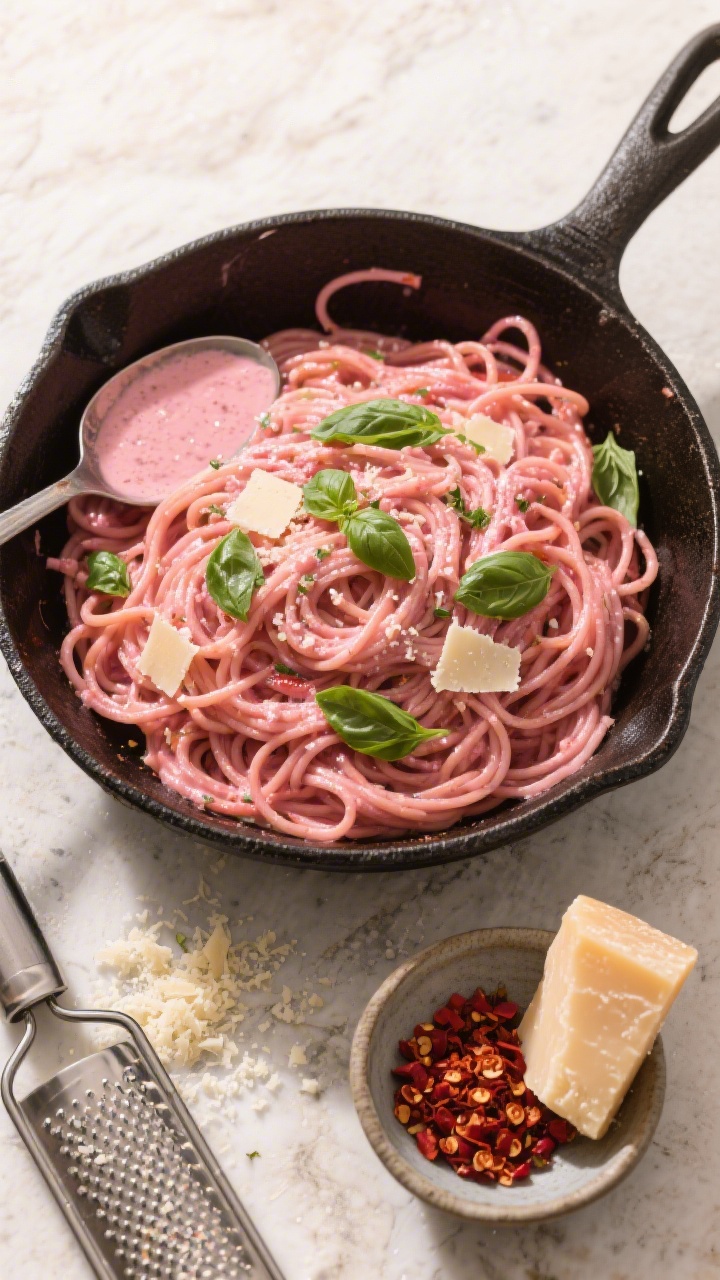
- Parmesan cheese: Freshly grated, about 1/2 cup plus more for serving.
- Fresh basil: A handful of leaves, sliced or torn.
- Salt and black pepper: To taste.
- Sugar (optional): A pinch, if your tomatoes taste too acidic.
- Reserved pasta water: 1 cup, to help loosen and bind the sauce.
Instructions
- Boil the pasta: Bring a large pot of salted water to a rolling boil. Cook the spaghetti until just shy of al dente. Reserve about 1 cup of pasta water, then drain.
- Sauté the aromatics: In a wide skillet, warm olive oil over medium heat. Add butter. Once melted, add the garlic and a pinch of red pepper flakes. Cook 30–60 seconds until fragrant, not browned.
- Build tomato flavor: Stir in the tomato paste and cook for 1–2 minutes to caramelize it slightly. This deepens the flavor and cuts raw acidity.
- Add tomatoes: Pour in the crushed tomatoes. Season with salt and pepper. Simmer gently for 8–10 minutes, stirring occasionally. If the sauce tastes sharp, add a small pinch of sugar.
- Stir in the cream: Lower the heat and add the heavy cream. Start with 3/4 cup, then add more if you want it creamier. Simmer 2–3 minutes until the color turns rosy and the sauce thickens slightly.
- Add cheese and basil: Stir in grated Parmesan and most of the basil. The cheese will melt and help the sauce emulsify.
- Toss the pasta: Add the cooked spaghetti to the skillet. Splash in a little reserved pasta water and toss vigorously until the sauce clings to the pasta and turns glossy. Adjust with more water as needed.
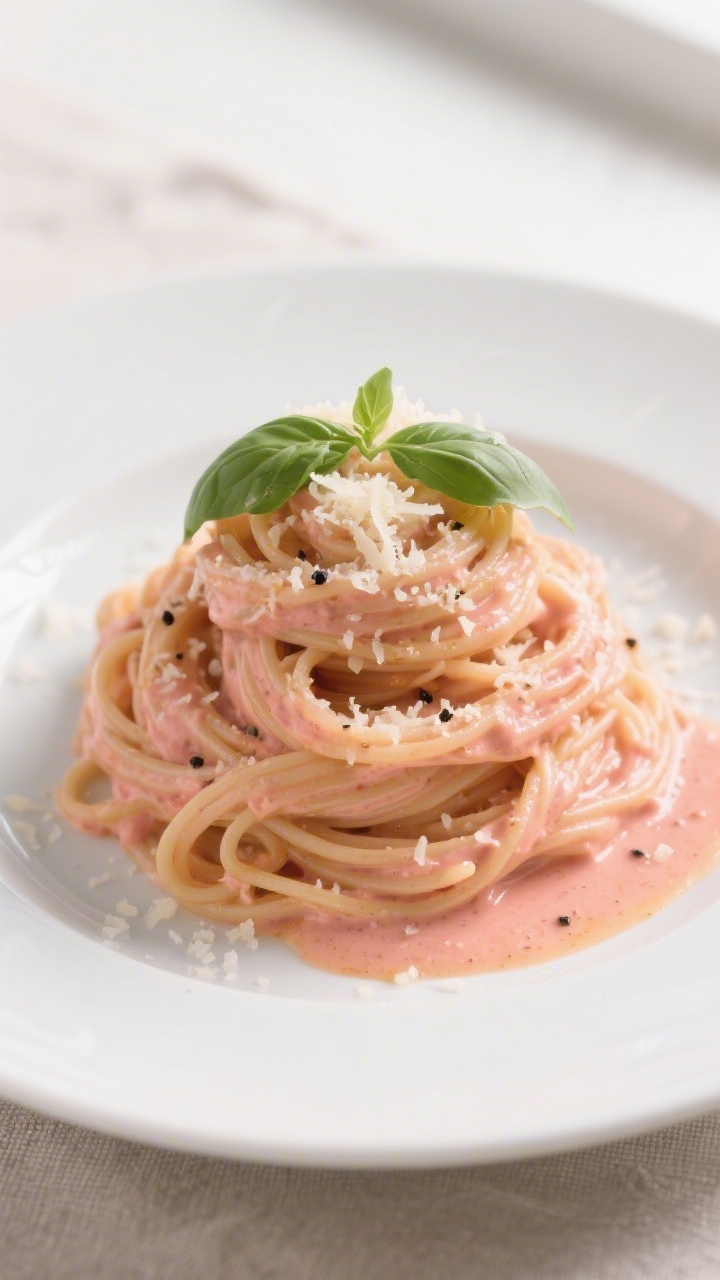
- Taste and finish: Season with more salt and pepper if needed. Top with extra basil and Parmesan. Serve hot.
What Makes This Recipe So Good
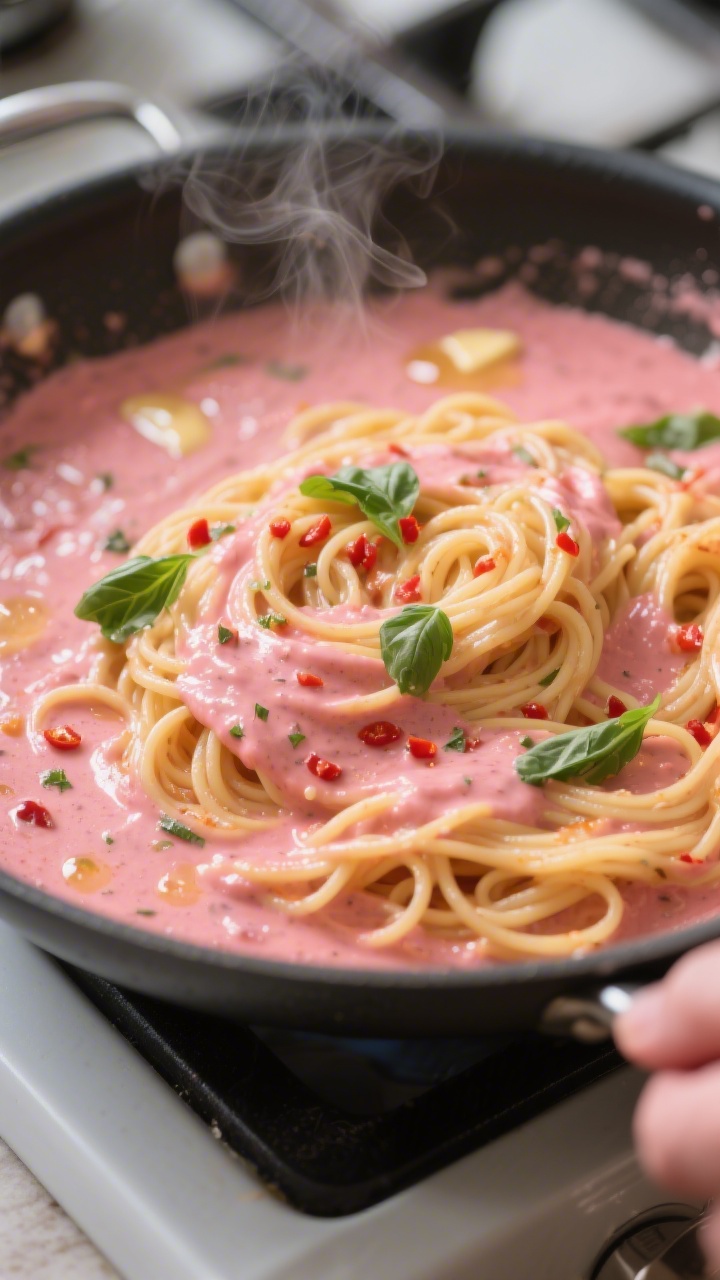
- Balanced flavor: The combination of tangy tomato and velvety cream creates a mellow, well-rounded sauce that’s not too heavy.
- Weeknight-friendly: From pot to plate in under 30 minutes with pantry staples you likely already have.
- Restaurant-style texture: Butter and pasta water help the sauce cling to every strand for a glossy finish.
- Fresh basil aroma: Stirred in at the end, it brings a burst of freshness that brightens the dish.
- Super adaptable: Add protein, switch up the pasta shape, or make it spicy—this sauce plays well with almost anything.
What You’ll Need
- Spaghetti: About 12 ounces; you can use any long pasta you like.
- Olive oil: For sautéing the aromatics.
- Unsalted butter: Adds richness and helps emulsify the sauce.
- Garlic: 3–4 cloves, minced.
- Crushed red pepper flakes: Optional, for a gentle heat.
- Tomato paste: 2 tablespoons, for depth and sweetness.
- Crushed tomatoes: One 28-ounce can, or use passata for a smoother texture.
- Heavy cream: 3/4 to 1 cup, depending on how creamy you want it.
- Parmesan cheese: Freshly grated, about 1/2 cup plus more for serving.
- Fresh basil: A handful of leaves, sliced or torn.
- Salt and black pepper: To taste.
- Sugar (optional): A pinch, if your tomatoes taste too acidic.
- Reserved pasta water: 1 cup, to help loosen and bind the sauce.
How to Make It
- Boil the pasta: Bring a large pot of salted water to a rolling boil. Cook the spaghetti until just shy of al dente.
Reserve about 1 cup of pasta water, then drain.
- Sauté the aromatics: In a wide skillet, warm olive oil over medium heat. Add butter. Once melted, add the garlic and a pinch of red pepper flakes.
Cook 30–60 seconds until fragrant, not browned.
- Build tomato flavor: Stir in the tomato paste and cook for 1–2 minutes to caramelize it slightly. This deepens the flavor and cuts raw acidity.
- Add tomatoes: Pour in the crushed tomatoes. Season with salt and pepper.
Simmer gently for 8–10 minutes, stirring occasionally. If the sauce tastes sharp, add a small pinch of sugar.
- Stir in the cream: Lower the heat and add the heavy cream. Start with 3/4 cup, then add more if you want it creamier.
Simmer 2–3 minutes until the color turns rosy and the sauce thickens slightly.
- Add cheese and basil: Stir in grated Parmesan and most of the basil. The cheese will melt and help the sauce emulsify.
- Toss the pasta: Add the cooked spaghetti to the skillet. Splash in a little reserved pasta water and toss vigorously until the sauce clings to the pasta and turns glossy.
Adjust with more water as needed.
- Taste and finish: Season with more salt and pepper if needed. Top with extra basil and Parmesan. Serve hot.
Storage Instructions
- Refrigerator: Store leftovers in an airtight container for up to 3–4 days.
- Reheating: Warm gently on the stove over low heat with a splash of milk, cream, or water to loosen the sauce.
Stir often.
- Freezer: The sauce alone freezes better than the finished pasta. Freeze the pink sauce in a sealed container for up to 2 months. Thaw overnight in the fridge, then reheat and toss with fresh-cooked pasta.
Health Benefits
- Tomatoes: Rich in lycopene, vitamin C, and antioxidants that support heart health and may help reduce inflammation.
- Olive oil: Provides heart-healthy monounsaturated fats.
- Basil: Adds vitamin K and plant compounds with potential anti-inflammatory properties.
- Protein and calcium: Parmesan adds a bit of protein and calcium, which support bone health.
- Balanced comfort: Using a moderate amount of cream and pairing with a big salad or steamed veggies can round out the meal.
Common Mistakes to Avoid
- Overcooking the garlic: Burnt garlic turns bitter.
Keep the heat moderate and watch closely.
- Skipping the tomato paste step: Briefly cooking the paste boosts sweetness and body. Don’t add it raw.
- Boiling the cream: High heat can cause separation. Simmer gently after adding cream.
- Forgetting pasta water: The starch in the water helps the sauce emulsify and coat the spaghetti beautifully.
- Under-salting: Season the pasta water well and taste the sauce before serving.
Layering salt makes a big difference.
Recipe Variations
- Spicy pink sauce: Increase red pepper flakes or add a spoonful of Calabrian chili paste for a bolder kick.
- Protein boost: Fold in sautéed shrimp, grilled chicken, or browned Italian sausage.
- Veggie add-ins: Stir in sautéed mushrooms, spinach, peas, or roasted red peppers.
- Lighter version: Swap half the cream for whole milk or use half-and-half. Add a touch more Parmesan for body.
- Vodka twist: Add a splash of vodka after the tomato paste step and cook it off for a subtle sharpness, similar to penne alla vodka.
- Dairy-free: Use a creamy unsweetened plant milk or cashew cream and a vegan Parmesan-style cheese.
- Different pasta shapes: Try bucatini, rigatoni, or fusilli. Short shapes catch sauce in their curves.
FAQ
Can I use fresh tomatoes instead of canned?
Yes.
Use about 2 pounds of ripe tomatoes, peeled and crushed, or grate them. Cook them a bit longer to reduce excess water and intensify the flavor before adding cream.
What can I substitute for heavy cream?
Half-and-half works in a pinch, though the sauce will be thinner. For dairy-free, use cashew cream or a creamy oat milk and add more olive oil and a little extra Parmesan-style alternative for body.
How do I prevent the sauce from curdling?
Lower the heat before adding cream, and don’t let it boil hard.
Stir well and keep the sauce at a gentle simmer. Adding the cream after the tomatoes have simmered helps stabilize it.
Is sugar necessary in tomato sauce?
Not always. Taste first.
If your tomatoes are very acidic, a tiny pinch of sugar—or a small knob of butter—can round out the flavor without making it sweet.
Can I make the sauce ahead?
Absolutely. Cook the sauce through the cream and Parmesan step, cool, and refrigerate for up to 3 days. Reheat gently and toss with fresh pasta and basil just before serving.
What wine pairs well with this dish?
A light to medium-bodied red like Chianti or Montepulciano works nicely.
For white, try Pinot Grigio or an unoaked Chardonnay to balance the cream and tomato.
How much salt should I add to pasta water?
Aim for water that tastes like the sea. As a guide, use about 1–1.5 tablespoons of kosher salt per 4 quarts of water.
Final Thoughts
Creamy tomato basil spaghetti is proof that simple ingredients can taste luxurious. It’s fast, flexible, and comforting without being heavy.
Keep good tomatoes, cream, and basil on hand, and you’ve got an easy answer to the “what’s for dinner” question. Serve it with a crisp salad, warm bread, and extra Parmesan on the table—classic, cozy, and always a hit.
Printable Recipe Card
Want just the essential recipe details without scrolling through the article? Get our printable recipe card with just the ingredients and instructions.
