
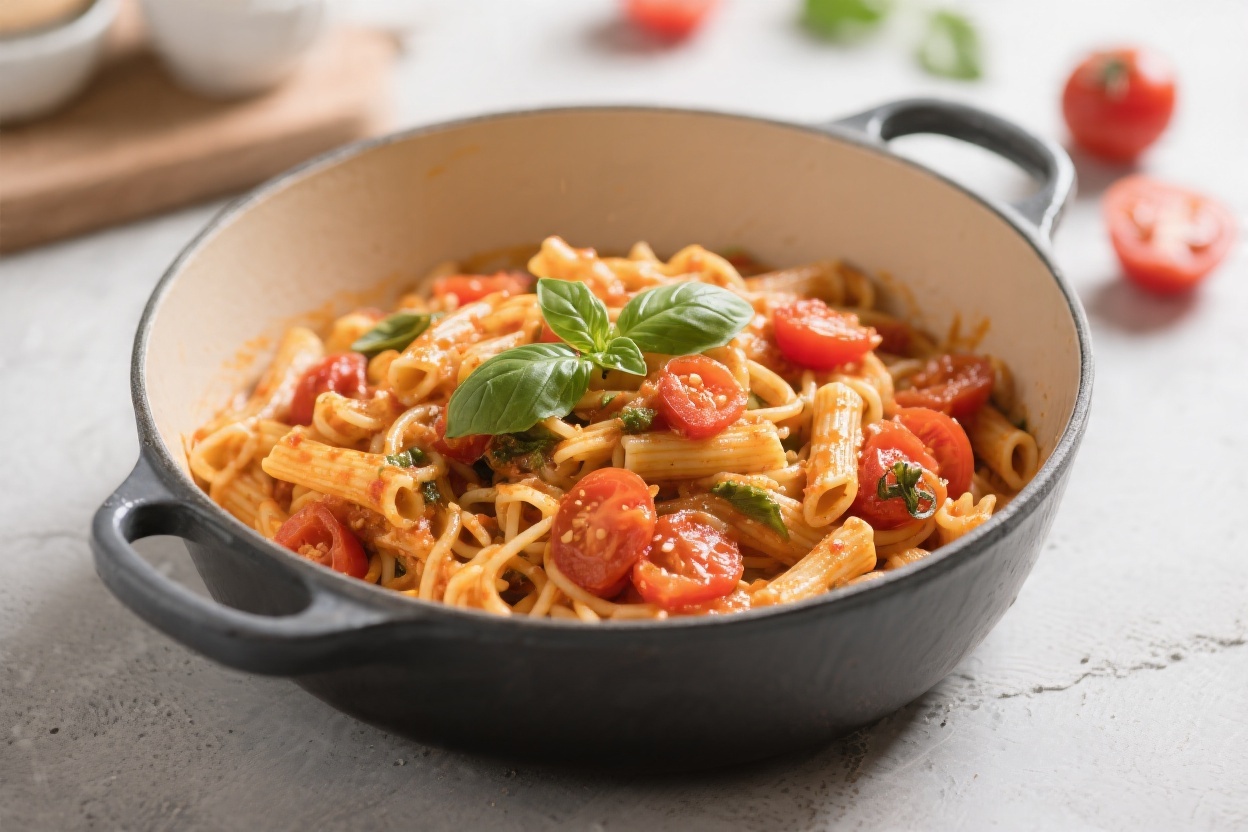
This is the kind of dinner that makes you feel like you have it all figured out. One pot. Simple ingredients.
Big flavor. The pasta simmers right in a silky tomato-basil sauce, soaking up every bit of garlicky goodness as it cooks. Cleanup is minimal, the timing is forgiving, and the result tastes like something you’d order at a cozy neighborhood spot.
If you want a reliable weeknight hero, this is it.
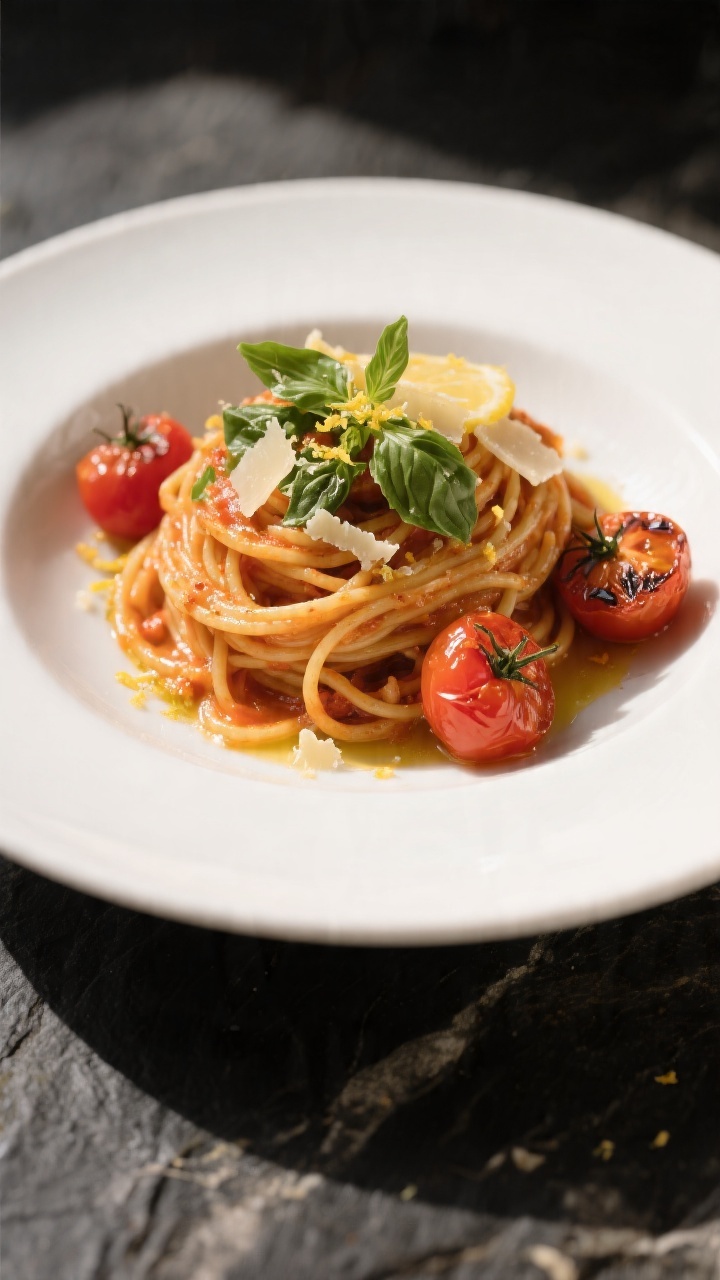
One-Pot Tomato Basil Pasta - Easy, Fresh, and Weeknight-Friendly
Ingredients
- 12 ounces dried spaghetti or linguine
- 2 tablespoons extra-virgin olive oil, plus more for finishing
- 4 cloves garlic, thinly sliced
- 1 medium yellow onion, thinly sliced (optional but recommended)
- 1/2 teaspoon red pepper flakes (adjust to taste)
- 1 (28-ounce) can crushed tomatoes or whole peeled tomatoes, hand-crushed
- 3 cups low-sodium vegetable broth or water (you may need a bit more)
- 1 teaspoon kosher salt, plus more to taste
- 1/2 teaspoon black pepper
- 1 teaspoon sugar or honey (optional, to balance acidity)
- 1 cup cherry tomatoes, halved (optional for bursts of freshness)
- 1 packed cup fresh basil leaves, torn
- 1/2 cup grated Parmesan or Pecorino Romano, plus more for serving
- Zest of 1 lemon (optional, for brightness)
Instructions
- Warm the oil and aromatics. In a large, wide pot or deep skillet, heat olive oil over medium. Add the sliced onion and a pinch of salt. Cook 3–4 minutes until softened. Stir in garlic and red pepper flakes and cook 30 seconds, just until fragrant.
- Build the base. Add crushed tomatoes, broth, salt, pepper, and sugar if using. Stir well and bring to a gentle simmer. Taste and adjust salt now—you want it well seasoned.
- Add the pasta. Lay the spaghetti in the pot. Use tongs to press and twist the strands so they’re mostly submerged. It’s fine if a few ends poke out—they’ll soften as you stir.
- Simmer and stir. Cook uncovered at a steady simmer, tossing with tongs every minute or two to prevent sticking. Add a splash of hot water if the liquid reduces too quickly. This usually takes 9–12 minutes, depending on your pasta.
- Check doneness and texture. When the pasta is al dente, the sauce should be silky and clinging. If it’s too thin, simmer 1–2 minutes more. If it’s too thick, add a small splash of water to loosen.
- Finish with freshness. Stir in cherry tomatoes (if using), most of the torn basil, and the cheese. Add lemon zest for brightness if you like. Drizzle with another teaspoon of olive oil for a glossy finish. Taste and adjust seasoning.
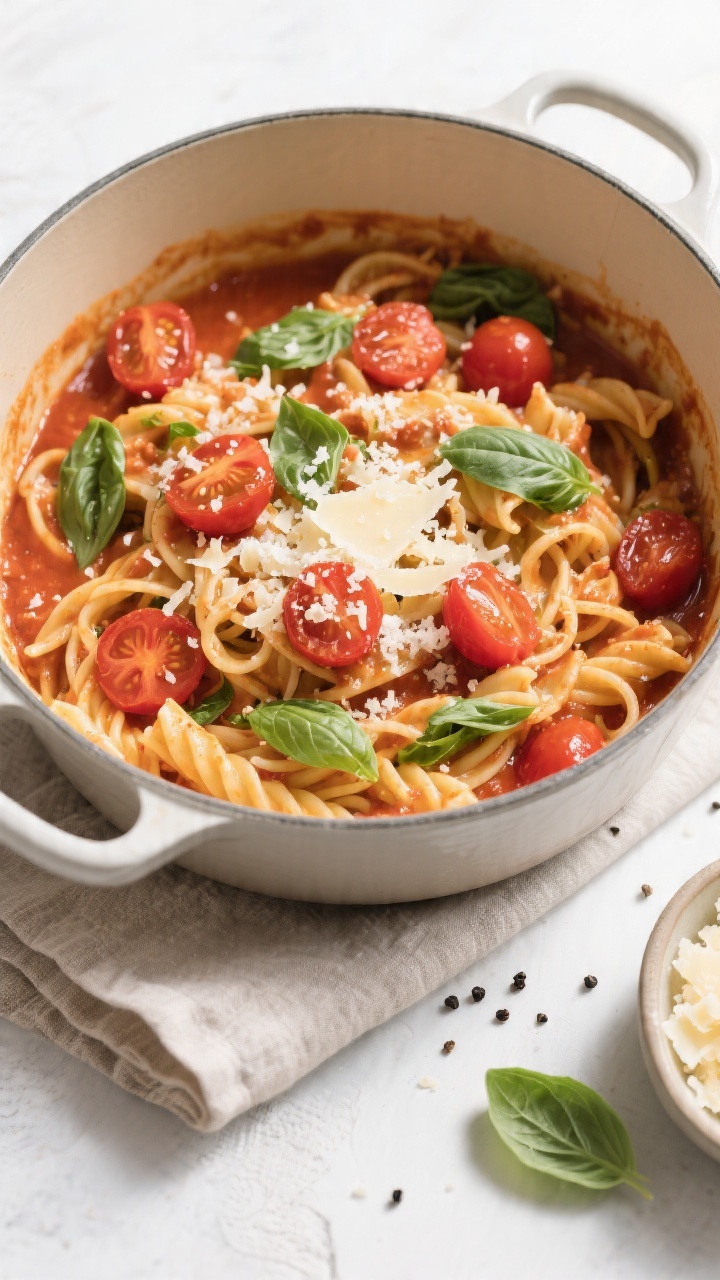
- Serve hot. Plate immediately with extra basil and more grated cheese. A few grinds of black pepper on top are perfect.
What Makes This Special
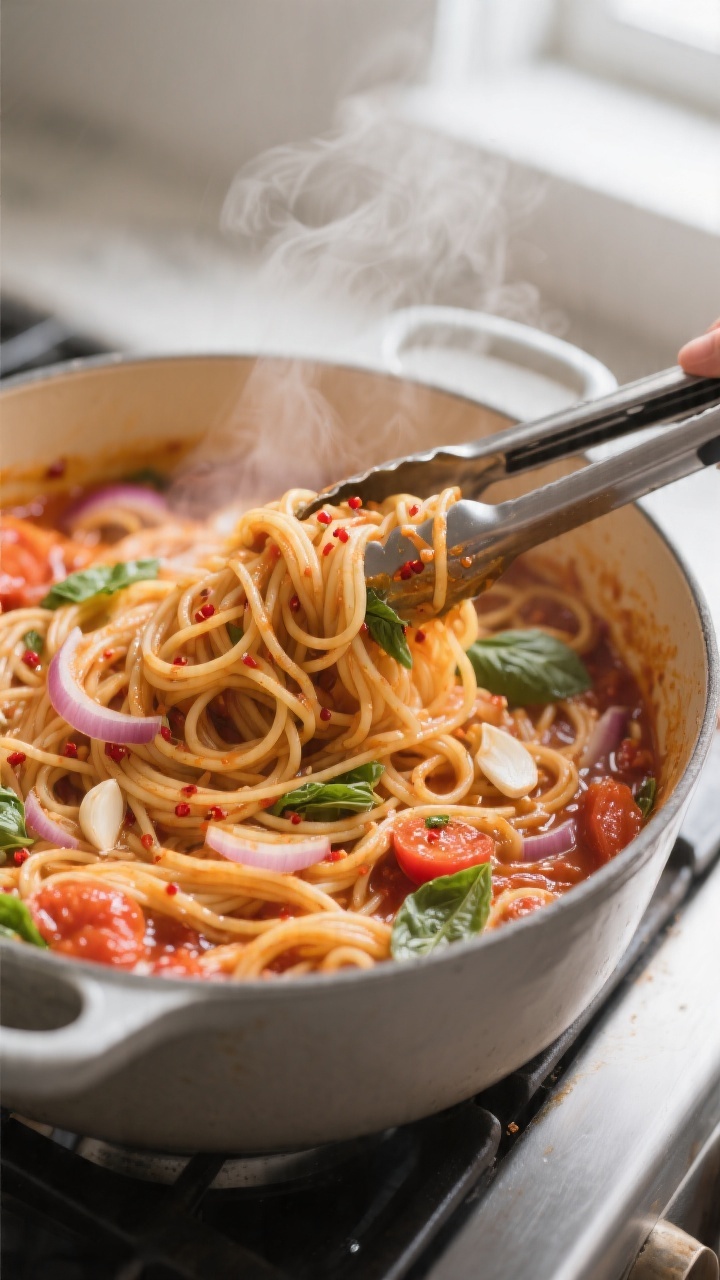
This recipe isn’t just about convenience—it’s about flavor built the smart way. The pasta cooks directly in the tomatoes and broth, which means the starch from the noodles thickens the sauce naturally. You get a glossy, rich texture without heavy cream or extra steps.
Fresh basil brightens everything at the end, and a splash of olive oil ties it all together. It’s budget-friendly, versatile, and fast, but it still feels like real cooking.
Ingredients
- 12 ounces dried spaghetti or linguine
- 2 tablespoons extra-virgin olive oil, plus more for finishing
- 4 cloves garlic, thinly sliced
- 1 medium yellow onion, thinly sliced (optional but recommended)
- 1/2 teaspoon red pepper flakes (adjust to taste)
- 1 (28-ounce) can crushed tomatoes or whole peeled tomatoes, hand-crushed
- 3 cups low-sodium vegetable broth or water (you may need a bit more)
- 1 teaspoon kosher salt, plus more to taste
- 1/2 teaspoon black pepper
- 1 teaspoon sugar or honey (optional, to balance acidity)
- 1 cup cherry tomatoes, halved (optional for bursts of freshness)
- 1 packed cup fresh basil leaves, torn
- 1/2 cup grated Parmesan or Pecorino Romano, plus more for serving
- Zest of 1 lemon (optional, for brightness)
Instructions
- Warm the oil and aromatics. In a large, wide pot or deep skillet, heat olive oil over medium. Add the sliced onion and a pinch of salt.
Cook 3–4 minutes until softened. Stir in garlic and red pepper flakes and cook 30 seconds, just until fragrant.
- Build the base. Add crushed tomatoes, broth, salt, pepper, and sugar if using. Stir well and bring to a gentle simmer.
Taste and adjust salt now—you want it well seasoned.
- Add the pasta. Lay the spaghetti in the pot. Use tongs to press and twist the strands so they’re mostly submerged. It’s fine if a few ends poke out—they’ll soften as you stir.
- Simmer and stir. Cook uncovered at a steady simmer, tossing with tongs every minute or two to prevent sticking.
Add a splash of hot water if the liquid reduces too quickly. This usually takes 9–12 minutes, depending on your pasta.
- Check doneness and texture. When the pasta is al dente, the sauce should be silky and clinging. If it’s too thin, simmer 1–2 minutes more.
If it’s too thick, add a small splash of water to loosen.
- Finish with freshness. Stir in cherry tomatoes (if using), most of the torn basil, and the cheese. Add lemon zest for brightness if you like. Drizzle with another teaspoon of olive oil for a glossy finish.
Taste and adjust seasoning.
- Serve hot. Plate immediately with extra basil and more grated cheese. A few grinds of black pepper on top are perfect.
Keeping It Fresh
Pasta is best right after cooking, when the sauce clings and the noodles are tender with a little bite. If you’re storing leftovers, cool them quickly and keep them in an airtight container for up to 3 days.
Add a splash of water or broth when reheating on the stove to bring the sauce back to life. Avoid reheating multiple times—warm only what you plan to eat. For meal prep, keep extra basil and cheese separate and add them just before serving for that fresh pop.
Why This is Good for You
- Lycopene boost: Cooked tomatoes are rich in lycopene, an antioxidant linked to heart health.
The olive oil helps your body absorb it.
- Satisfying carbs: Pasta offers steady energy. Pairing it with olive oil and cheese adds fat and protein for better balance.
- Fresh herbs: Basil brings antioxidants and a clean, peppery aroma that wakes up the whole dish without extra sodium.
- Customizable: You can add veggies, lean proteins, or whole-wheat pasta to boost fiber and nutrients without losing the soul of the dish.
Common Mistakes to Avoid
- Not seasoning early. Salt the sauce base before adding pasta. It’s harder to fix a bland pot at the end.
- Forgetting to stir. In a one-pot pasta, stirring keeps strands from clumping and prevents scorching at the bottom.
- Letting it boil too hard. A raging boil evaporates liquid too quickly and can make the pasta uneven.
Keep a steady simmer.
- Overcooking the pasta. Pull it at al dente. It continues to soften as it sits in the hot sauce.
- Skipping the finishers. Fresh basil, a drizzle of olive oil, and a shower of cheese make a big difference in taste and texture.
Recipe Variations
- Creamy Tomato Basil: Stir in 1/3 cup heavy cream or a splash of half-and-half at the end for a lush, velvety sauce.
- Garlic Shrimp: Sear seasoned shrimp in olive oil first, remove, then build the sauce. Add shrimp back in at the end.
- Spicy Arrabbiata: Double the red pepper flakes and add a teaspoon of Calabrian chili paste for heat and depth.
- Veggie-Packed: Add sliced mushrooms, spinach, or diced zucchini in step 1.
Sauté until softened before adding tomatoes and broth.
- Caprese Style: Toss in cherry tomatoes and small mozzarella pearls at the end. Finish with a drizzle of balsamic glaze.
- Whole-Wheat or Gluten-Free: Swap in whole-wheat spaghetti for extra fiber. For gluten-free, use a sturdy rice- or corn-based pasta and watch the liquid; GF pasta can absorb more.
- Herb Swap: Try a mix of basil and parsley or a touch of fresh oregano for a more savory, earthy profile.
FAQ
Can I use fresh tomatoes instead of canned?
Yes.
Use about 2 pounds of ripe tomatoes, chopped. Add an extra pinch of salt and cook a few minutes longer to break them down. If they’re very watery, simmer a bit more to concentrate the sauce.
What if my sauce looks too thick before the pasta is done?
Add hot water or broth, 1/4 cup at a time, stirring as you go.
Keep a steady simmer and continue tossing the pasta. You want it fluid enough to move but not soupy.
How do I make this dairy-free?
Skip the cheese and finish with extra olive oil and a sprinkle of nutritional yeast for a savory note. Adjust salt and lemon zest to keep the flavor lively.
Can I make this ahead?
The texture is best fresh, but you can cook it slightly under al dente, cool quickly, and reheat with a splash of water.
Add basil and cheese right before serving to keep it bright.
What pot should I use?
A wide Dutch oven or a large, deep skillet works best. The extra surface area helps the pasta submerge and cook evenly while reducing the sauce properly.
How can I make it more protein-forward?
Add seared chicken, shrimp, or a can of drained chickpeas in the last few minutes. You can also stir in a dollop of ricotta when serving for creamy protein.
Why add sugar to tomato sauce?
It’s optional, but a small amount can balance acidity, especially with canned tomatoes.
If your tomatoes are naturally sweet, skip it.
Can I use short pasta?
Yes—penne, rigatoni, or shells work well. You may need to adjust liquid slightly and stir more often to prevent sticking.
In Conclusion
One-Pot Tomato Basil Pasta is the kind of weeknight meal that checks every box: quick, satisfying, and full of fresh flavor. With a handful of pantry staples and a bunch of basil, you can create something that feels both simple and special.
Keep the technique in your back pocket, tweak it to your taste, and you’ll always have a plan for a good dinner—without a sink full of dishes.
Printable Recipe Card
Want just the essential recipe details without scrolling through the article? Get our printable recipe card with just the ingredients and instructions.
