
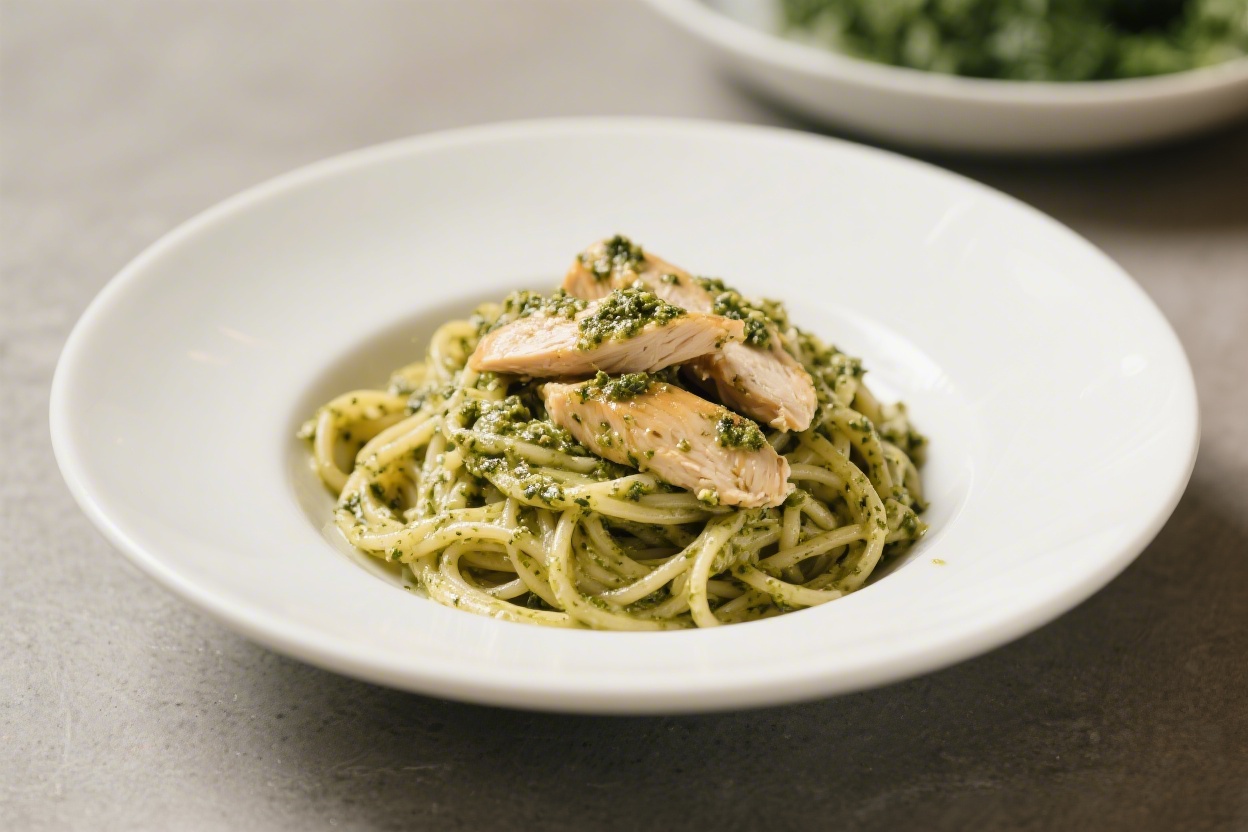
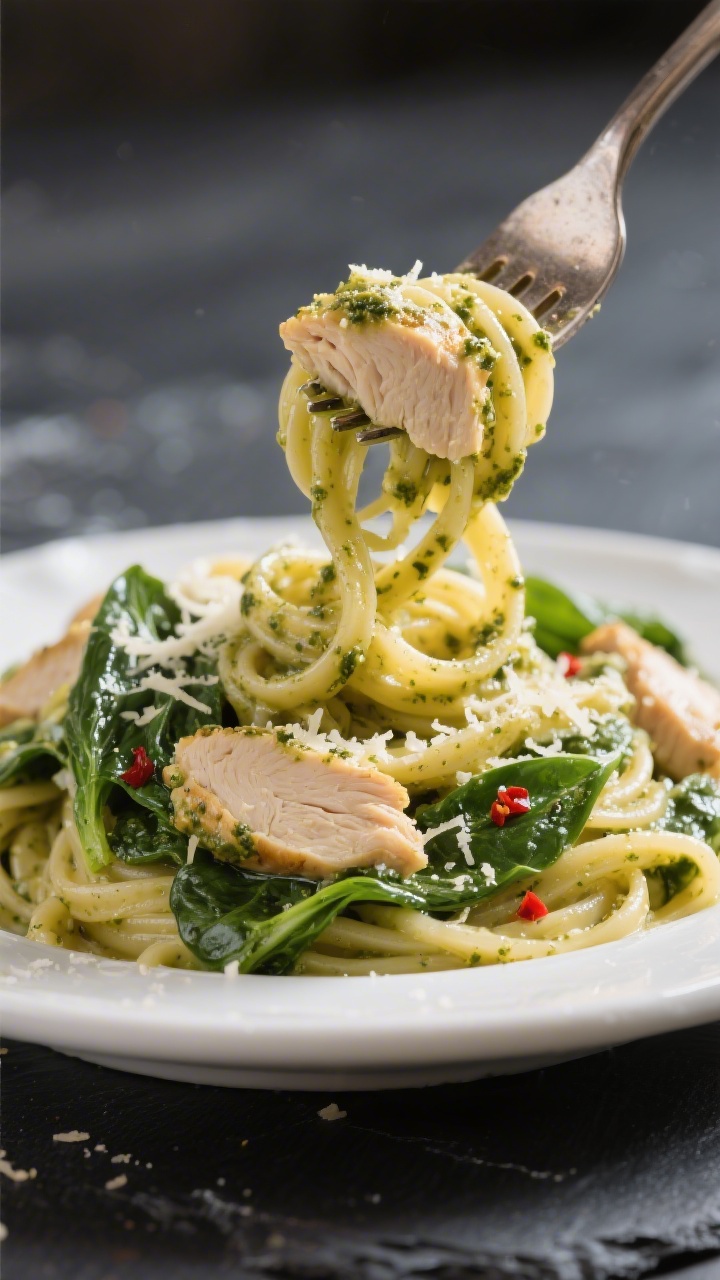
This Chicken Pesto Pasta is the kind of meal you’ll want on repeat. It’s quick, cozy, and loaded with fresh flavor from basil pesto, tender chicken, and a touch of Parmesan. The sauce clings to the pasta, the chicken stays juicy, and the whole dish comes together in the time it takes to boil water.
It tastes restaurant-level but uses simple pantry staples. If you love big flavor with minimal effort, this one’s for you.
Chicken Pesto Pasta - Creamy, Bright, and Weeknight-Friendly
Ingredients
- Pasta: 12 oz short pasta like penne, fusilli, or rotini (spaghetti works too)
- Chicken: 1 lb boneless, skinless chicken breasts or thighs, cut into bite-size pieces
- Pesto: 1/2 to 3/4 cup high-quality basil pesto (store-bought or homemade)
- Olive oil: 2 tablespoons for cooking the chicken
- Garlic: 2 cloves, minced (optional if your pesto is garlicky)
- Lemon: 1 lemon for juice and zest
- Parmesan: 1/2 cup freshly grated, plus more for serving
- Heavy cream or half-and-half (optional): 1/4 cup for extra creaminess
- Cherry tomatoes (optional): 1 cup, halved
- Spinach or arugula (optional): 2 cups for added greens
- Salt and pepper: To season
- Red pepper flakes (optional): A pinch for gentle heat
Instructions
- Boil the pasta. Bring a large pot of salted water to a rolling boil. Cook the pasta until al dente according to package instructions. Reserve 1 cup of pasta water before draining.
- Prep the chicken. Pat the chicken dry and season generously with salt and pepper. If you like a little heat, add a pinch of red pepper flakes.
- Cook the chicken. Heat olive oil in a large skillet over medium-high. Add chicken in a single layer and let it sear until golden, 3–4 minutes per side, depending on size. Don’t crowd the pan. If needed, cook in batches. Remove to a plate.
- Optional aromatics. Reduce heat to medium. Add minced garlic to the same pan and cook for 30 seconds until fragrant. Don’t let it burn.
- Build the sauce. Add 1/2 cup of the reserved pasta water to the skillet. Stir in the pesto and a squeeze of lemon juice. If using cream, add it now. Simmer gently for 1 minute to combine. The sauce should be glossy and loosened, not thick and clumpy.
- Add pasta and chicken. Toss the drained pasta and cooked chicken into the skillet. Add a splash more pasta water as needed to help the sauce coat everything.
- Finish with cheese and zest. Stir in the Parmesan and a little lemon zest. Taste and adjust with salt, pepper, or more lemon.
- Optional add-ins. Fold in spinach (it will wilt quickly) and cherry tomatoes at the end for color and freshness.
- Serve hot. Top with extra Parmesan and a drizzle of olive oil. Serve immediately while it’s saucy and vibrant.
Why This Recipe Works
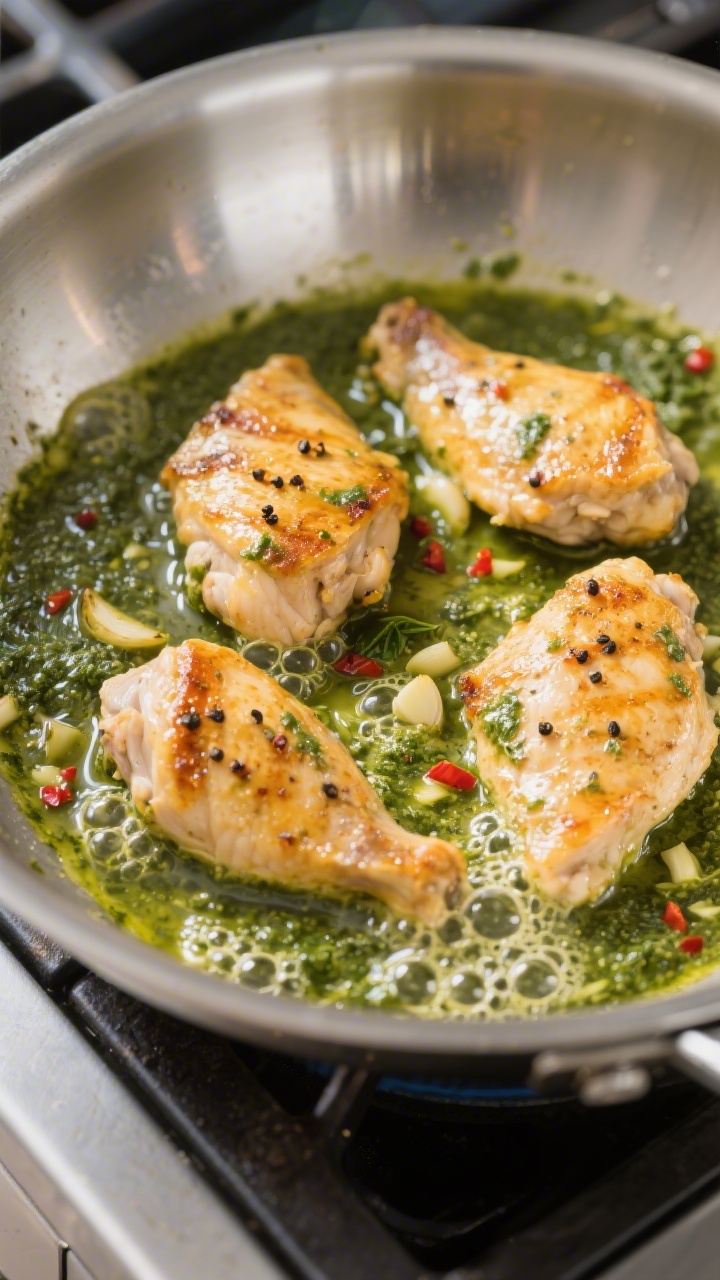
The balance of ingredients is what makes this pasta shine. Starchy pasta water blends with pesto to create a silky sauce that coats every noodle without feeling heavy. Quick-seared chicken locks in moisture, so the pieces are tender, not dry. A squeeze of fresh lemon adds brightness and cuts through the richness of the cheese and oil.
Finally, using al dente pasta keeps the texture on point and prevents sogginess.
What You’ll Need
- Pasta: 12 oz short pasta like penne, fusilli, or rotini (spaghetti works too)
- Chicken: 1 lb boneless, skinless chicken breasts or thighs, cut into bite-size pieces
- Pesto: 1/2 to 3/4 cup high-quality basil pesto (store-bought or homemade)
- Olive oil: 2 tablespoons for cooking the chicken
- Garlic: 2 cloves, minced (optional if your pesto is garlicky)
- Lemon: 1 lemon for juice and zest
- Parmesan: 1/2 cup freshly grated, plus more for serving
- Heavy cream or half-and-half (optional): 1/4 cup for extra creaminess
- Cherry tomatoes (optional): 1 cup, halved
- Spinach or arugula (optional): 2 cups for added greens
- Salt and pepper: To season
- Red pepper flakes (optional): A pinch for gentle heat
How to Make It
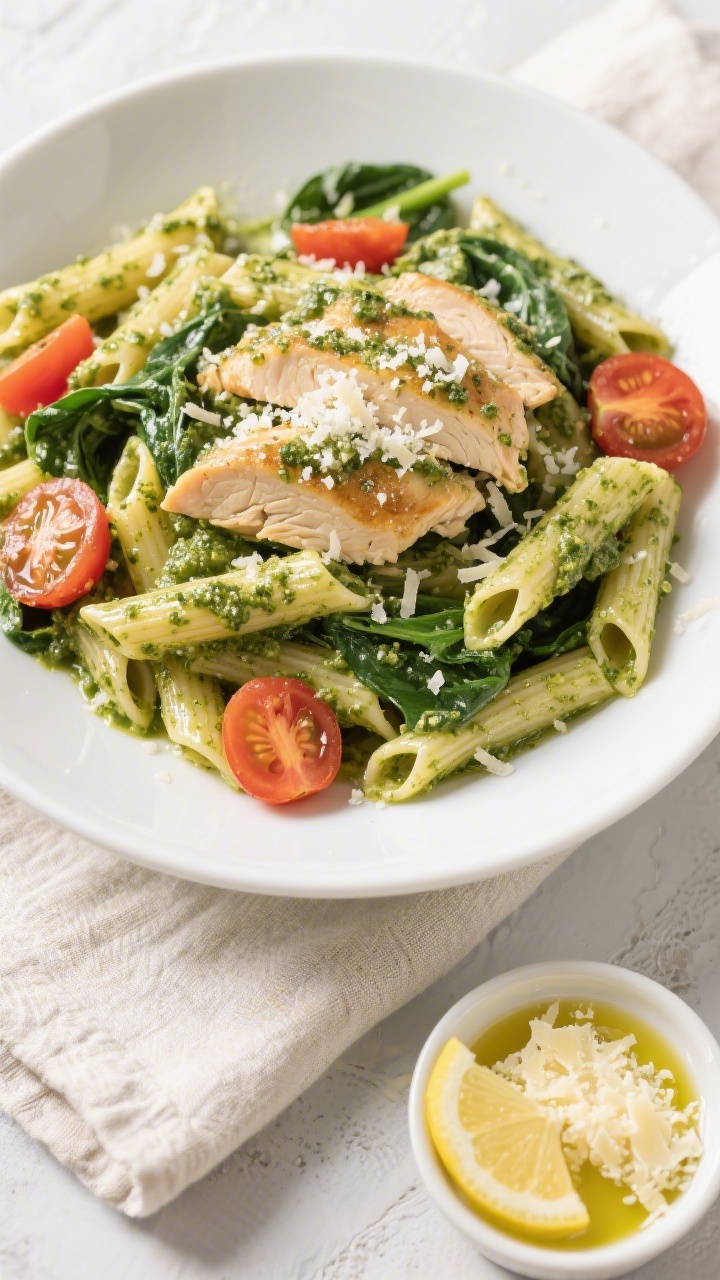
- Boil the pasta. Bring a large pot of salted water to a rolling boil. Cook the pasta until al dente according to package instructions. Reserve 1 cup of pasta water before draining.
- Prep the chicken. Pat the chicken dry and season generously with salt and pepper. If you like a little heat, add a pinch of red pepper flakes.
- Cook the chicken. Heat olive oil in a large skillet over medium-high.
Add chicken in a single layer and let it sear until golden, 3–4 minutes per side, depending on size. Don’t crowd the pan. If needed, cook in batches.
Remove to a plate.
- Optional aromatics. Reduce heat to medium. Add minced garlic to the same pan and cook for 30 seconds until fragrant. Don’t let it burn.
- Build the sauce. Add 1/2 cup of the reserved pasta water to the skillet.
Stir in the pesto and a squeeze of lemon juice. If using cream, add it now. Simmer gently for 1 minute to combine.
The sauce should be glossy and loosened, not thick and clumpy.
- Add pasta and chicken. Toss the drained pasta and cooked chicken into the skillet. Add a splash more pasta water as needed to help the sauce coat everything.
- Finish with cheese and zest. Stir in the Parmesan and a little lemon zest. Taste and adjust with salt, pepper, or more lemon.
- Optional add-ins. Fold in spinach (it will wilt quickly) and cherry tomatoes at the end for color and freshness.
- Serve hot. Top with extra Parmesan and a drizzle of olive oil.
Serve immediately while it’s saucy and vibrant.
Keeping It Fresh
Leftovers keep well in an airtight container in the fridge for up to 3 days. To reheat, add a splash of water or broth in a skillet over low heat and toss until warmed through. This brings the sauce back to life.
If you plan to make it ahead, cook the pasta just shy of al dente and keep the pesto separate.
Combine and warm gently right before serving. Avoid high heat when reheating; pesto can lose its bright flavor if cooked too long.
Health Benefits
- Lean protein: Chicken provides protein that supports muscle repair and keeps you satisfied.
- Healthy fats: Pesto made with olive oil, nuts, and Parmesan offers monounsaturated fats that support heart health.
- Herbs and greens: Basil is rich in antioxidants. Adding spinach or arugula boosts fiber, iron, and vitamins A and K.
- Portion-friendly carbs: Pasta fuels energy.
Choosing whole-wheat or legume-based pasta can increase fiber and protein.
Pitfalls to Watch Out For
- Overcooking the chicken: It turns dry fast. Sear in a hot pan and pull it as soon as it’s cooked through.
- Skipping the pasta water: It’s your secret sauce-maker. The starch helps pesto cling to the noodles.
- Boiling the pesto: High heat dulls the flavor and color.
Keep the sauce at a gentle simmer, not a hard boil.
- Under-seasoning: Pesto and Parmesan are salty, but pasta needs seasoning too. Salt your pasta water until it tastes like the sea.
- Too much lemon: A little brightens; too much turns bitter. Start small and taste as you go.
Alternatives
- Protein swaps: Use shrimp, turkey, or rotisserie chicken.
For a vegetarian version, try white beans, chickpeas, or sautéed mushrooms.
- Dairy-free: Choose a dairy-free pesto and skip the Parmesan. Nutritional yeast adds a cheesy vibe without dairy.
- Nut-free pesto: Make or buy pesto without pine nuts. Sunflower seeds or pumpkin seeds work well.
- Pasta types: Whole-wheat, chickpea, or lentil pasta increases fiber and protein.
Short shapes hold sauce best.
- Veggie boost: Add blistered zucchini, roasted bell peppers, peas, or steamed broccoli for color and nutrients.
- Creamy twist: Swap cream for a spoon of ricotta or mascarpone for a lighter, velvety finish.
FAQ
Can I use store-bought pesto?
Yes. Choose a good-quality brand with simple ingredients like basil, olive oil, nuts, cheese, and garlic. Taste it first and adjust lemon, salt, and cheese in the pasta to balance flavors.
How do I keep the sauce from getting greasy?
Use reserved pasta water to emulsify the pesto and olive oil into a smooth sauce.
Keep the heat gentle and add cheese off heat or at a low simmer. Stir continuously as you add liquid.
What cut of chicken works best?
Boneless, skinless thighs stay juicier and are forgiving. Breasts work well too—just avoid overcooking.
Cut pieces small so they cook quickly and brown nicely.
Can I make it without cream?
Absolutely. The pasta water and pesto create a velvety sauce on their own. Cream is optional and adds richness, but it’s not required for a great texture.
How do I make homemade pesto?
Blend 2 cups packed basil, 1/3 cup toasted nuts, 1/2 cup grated Parmesan, 1–2 garlic cloves, juice of half a lemon, and 1/2 cup olive oil.
Season with salt and pepper. Adjust oil and lemon to taste.
What if my pesto tastes bitter?
Add a pinch of salt, a squeeze of lemon, and a little more Parmesan. Sometimes a drizzle of honey balances sharp or bitter notes, especially if the olive oil is robust.
Can I serve it cold as a pasta salad?
Yes.
Rinse pasta briefly to cool, then toss with pesto, cooked chicken, tomatoes, and arugula. Add a splash of olive oil and lemon before serving to keep it bright.
How can I make it kid-friendly?
Skip red pepper flakes, go lighter on garlic, and use small pasta shapes. Stir in a bit of cream or ricotta to mellow the flavors and make the sauce extra silky.
Final Thoughts
Chicken Pesto Pasta is the definition of simple comfort with fresh, bold flavor.
With a few smart moves—well-salted water, gentle heat, and that magic pasta water—you get a restaurant-worthy dish in under 30 minutes. Keep the base the same and swap proteins, veggies, or pasta types to suit your mood. It’s easy, adaptable, and always satisfying.
Printable Recipe Card
Want just the essential recipe details without scrolling through the article? Get our printable recipe card with just the ingredients and instructions.
