
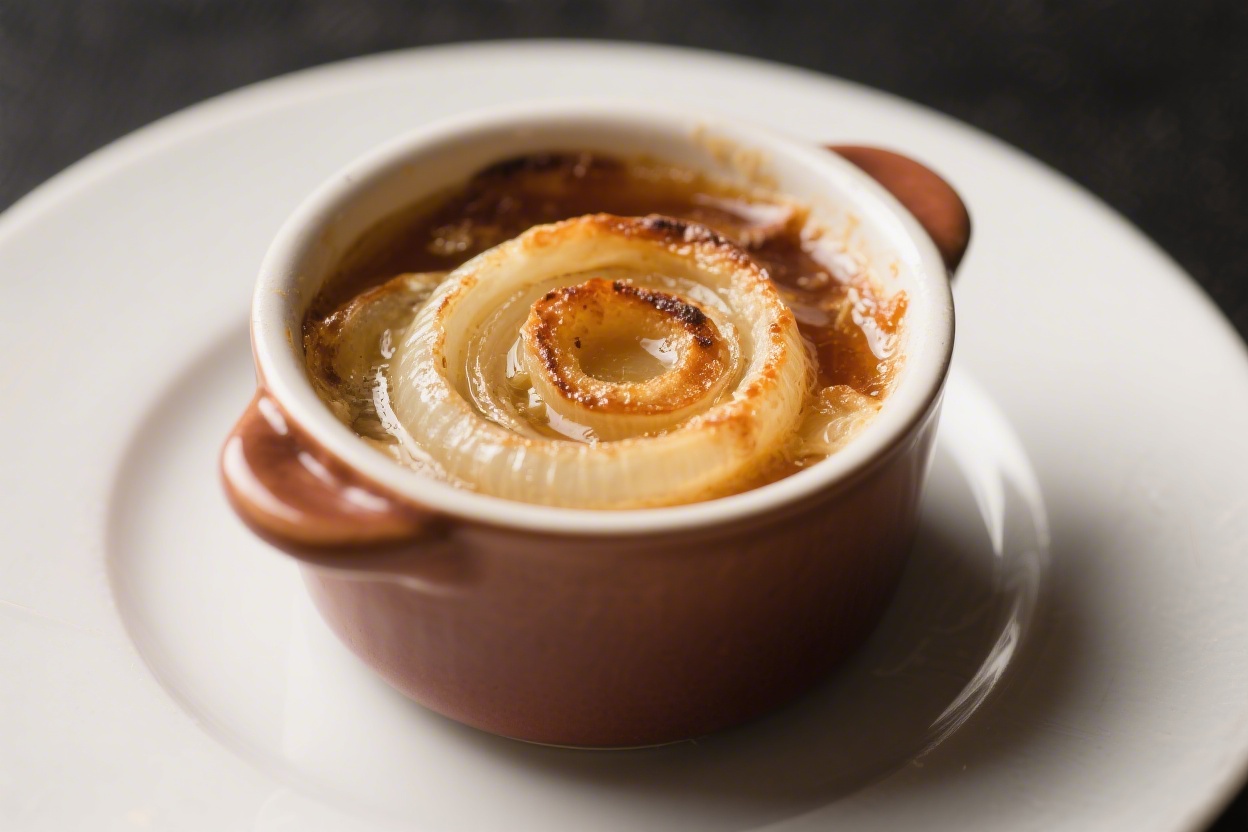
French onion soup is the kind of meal that makes a cold evening feel warmer. It’s simple food elevated by patience: sweet, deeply caramelized onions, a savory broth, and a molten, cheesy top. You don’t need fancy skills, just time and a few good ingredients.
The payoff is a bowl that’s cozy, aromatic, and a little bit luxurious. If you love dishes that feel classic without being fussy, this one belongs in your regular rotation.

Classic French Onion Soup - Rich, Comforting, and Timeless
Ingredients
- 3 pounds yellow onions, thinly sliced (about 6–8 medium)
- 3 tablespoons unsalted butter
- 1 tablespoon olive oil
- 1 teaspoon kosher salt, plus more to taste
- 1/2 teaspoon freshly ground black pepper
- 1 teaspoon sugar (optional, helps jump-start browning)
- 2 cloves garlic, minced
- 1 tablespoon flour (or 2 teaspoons cornstarch for gluten-free)
- 1/2 cup dry white wine or dry sherry (optional but recommended)
- 6 cups beef stock (low-sodium), plus 1–2 cups chicken or vegetable stock if needed
- 1 bay leaf
- 4–6 thyme sprigs (or 1/2 teaspoon dried thyme)
- 1 teaspoon Worcestershire sauce or 1/2 teaspoon soy sauce (for umami)
- 1–2 teaspoons sherry vinegar or red wine vinegar, to finish
- 1 baguette, sliced into 1/2-inch rounds
- 2 cups grated Gruyère cheese (or a mix of Gruyère and Comté)
- 1/2 cup grated Parmesan (optional, for extra savoriness)
Instructions
- Slice the onions evenly. Trim root ends, slice in half pole-to-pole, then cut into thin half-moons. Aim for uniform slices so they cook at the same rate.
- Start the caramelization. In a large heavy pot or Dutch oven, melt butter with olive oil over medium heat. Add onions, salt, pepper, and sugar if using. Cook, stirring every few minutes, until they soften and turn translucent, 10–15 minutes.
- Take them deep. Reduce heat to medium-low and keep cooking, stirring often and scraping browned bits from the bottom. If the pot looks dry, add a splash of water. This can take 35–45 minutes. You’re aiming for a rich, deep-brown color and jammy texture.
- Add garlic and flour. Stir in garlic and cook 1 minute. Sprinkle flour over the onions and cook 1–2 minutes more to remove the raw taste. This helps thicken the broth slightly.
- Deglaze with wine. Pour in the wine or sherry. Scrape up any fond from the pot and let it simmer until mostly reduced, 2–3 minutes.
- Build the broth. Add beef stock, bay leaf, thyme, and Worcestershire or soy sauce. Bring to a simmer and cook 20–25 minutes. If it tastes too intense, add 1–2 cups chicken or vegetable stock to balance.
- Adjust and finish. Remove bay leaf and thyme stems. Taste and adjust salt and pepper. Stir in vinegar, starting with 1 teaspoon. The acid should brighten the soup without making it sour.
- Toast the bread. While the soup simmers, toast baguette slices under the broiler until crisp and lightly golden on both sides. This helps them hold up in the soup.
- Assemble and broil. Ladle hot soup into broiler-safe bowls. Top each with 1–2 toasts, then a generous mound of Gruyère and a sprinkle of Parmesan. Broil until the cheese is melted, bubbling, and browned in spots, 2–4 minutes. Watch closely.
- Serve carefully. Let bowls cool for a minute before serving. The cheese and broth will be very hot.
Why This Recipe Works
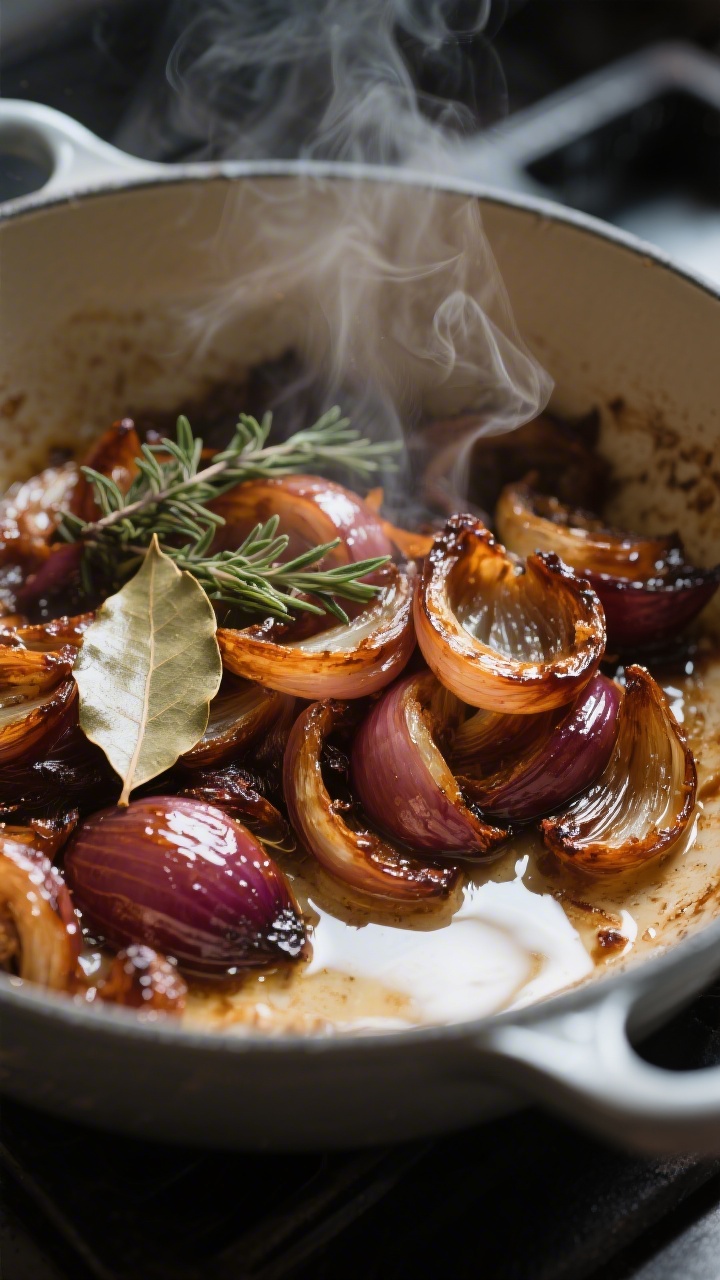
This soup leans on a few smart techniques to bring out big flavor from basic ingredients. Slowly caramelizing onions unlocks their natural sweetness and creates a deep, jammy base.
A splash of wine and a touch of vinegar cut through the richness and keep the broth bright. Using a mix of beef stock and a little chicken or vegetable stock adds body without tasting heavy. Finally, broiling the bread and cheese right on top seals everything together into one satisfying spoonful.
Ingredients
- 3 pounds yellow onions, thinly sliced (about 6–8 medium)
- 3 tablespoons unsalted butter
- 1 tablespoon olive oil
- 1 teaspoon kosher salt, plus more to taste
- 1/2 teaspoon freshly ground black pepper
- 1 teaspoon sugar (optional, helps jump-start browning)
- 2 cloves garlic, minced
- 1 tablespoon flour (or 2 teaspoons cornstarch for gluten-free)
- 1/2 cup dry white wine or dry sherry (optional but recommended)
- 6 cups beef stock (low-sodium), plus 1–2 cups chicken or vegetable stock if needed
- 1 bay leaf
- 4–6 thyme sprigs (or 1/2 teaspoon dried thyme)
- 1 teaspoon Worcestershire sauce or 1/2 teaspoon soy sauce (for umami)
- 1–2 teaspoons sherry vinegar or red wine vinegar, to finish
- 1 baguette, sliced into 1/2-inch rounds
- 2 cups grated Gruyère cheese (or a mix of Gruyère and Comté)
- 1/2 cup grated Parmesan (optional, for extra savoriness)
How to Make It
- Slice the onions evenly. Trim root ends, slice in half pole-to-pole, then cut into thin half-moons.
Aim for uniform slices so they cook at the same rate.
- Start the caramelization. In a large heavy pot or Dutch oven, melt butter with olive oil over medium heat. Add onions, salt, pepper, and sugar if using. Cook, stirring every few minutes, until they soften and turn translucent, 10–15 minutes.
- Take them deep. Reduce heat to medium-low and keep cooking, stirring often and scraping browned bits from the bottom.
If the pot looks dry, add a splash of water. This can take 35–45 minutes. You’re aiming for a rich, deep-brown color and jammy texture.
- Add garlic and flour. Stir in garlic and cook 1 minute.
Sprinkle flour over the onions and cook 1–2 minutes more to remove the raw taste. This helps thicken the broth slightly.
- Deglaze with wine. Pour in the wine or sherry. Scrape up any fond from the pot and let it simmer until mostly reduced, 2–3 minutes.
- Build the broth. Add beef stock, bay leaf, thyme, and Worcestershire or soy sauce.
Bring to a simmer and cook 20–25 minutes. If it tastes too intense, add 1–2 cups chicken or vegetable stock to balance.
- Adjust and finish. Remove bay leaf and thyme stems. Taste and adjust salt and pepper.
Stir in vinegar, starting with 1 teaspoon. The acid should brighten the soup without making it sour.
- Toast the bread. While the soup simmers, toast baguette slices under the broiler until crisp and lightly golden on both sides. This helps them hold up in the soup.
- Assemble and broil. Ladle hot soup into broiler-safe bowls.
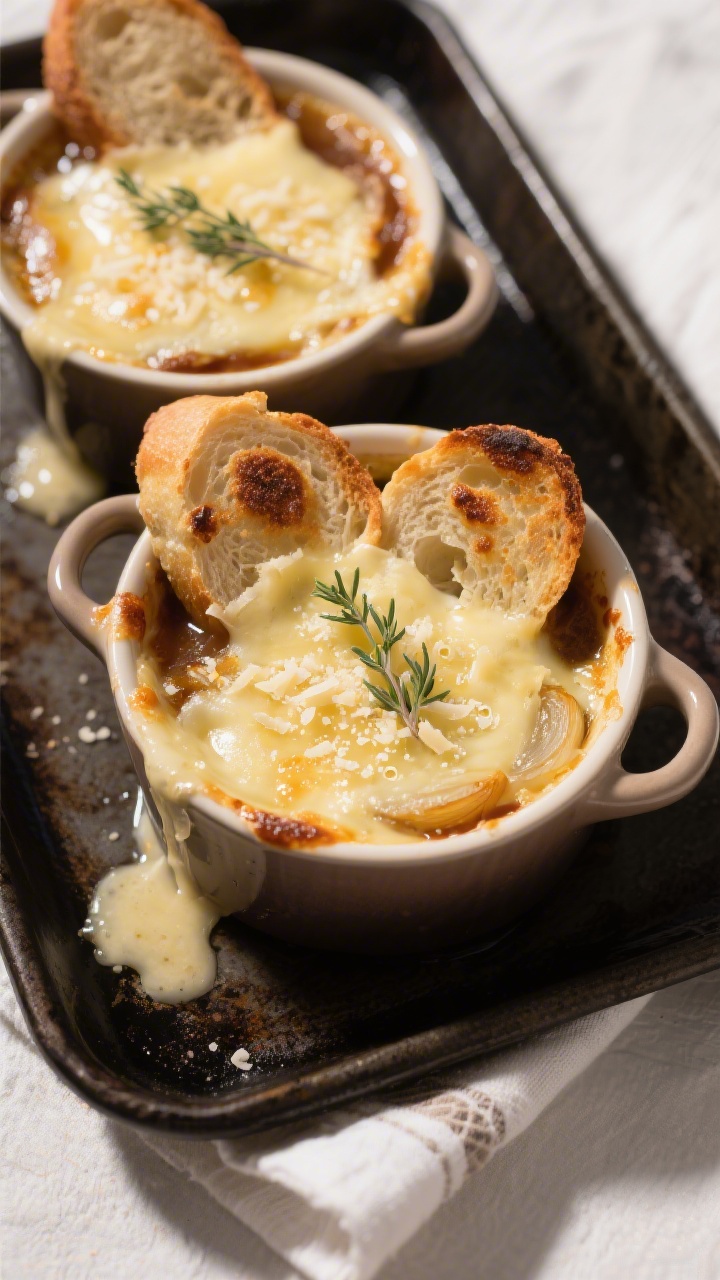
Top each with 1–2 toasts, then a generous mound of Gruyère and a sprinkle of Parmesan. Broil until the cheese is melted, bubbling, and browned in spots, 2–4 minutes. Watch closely.
- Serve carefully. Let bowls cool for a minute before serving.
The cheese and broth will be very hot.
Keeping It Fresh
Leftover soup keeps well and often tastes better the next day. Store the broth and onions separately from the bread and cheese. Refrigerate in an airtight container for up to 4 days, or freeze for up to 3 months.
Reheat gently on the stove, then add fresh toasts and cheese and broil just before serving. If you’re planning ahead, you can toast the baguette slices a day in advance. Keep them in a sealed bag at room temperature so they stay crisp.
Grate the cheese ahead too, and store it in the fridge.
Why This is Good for You
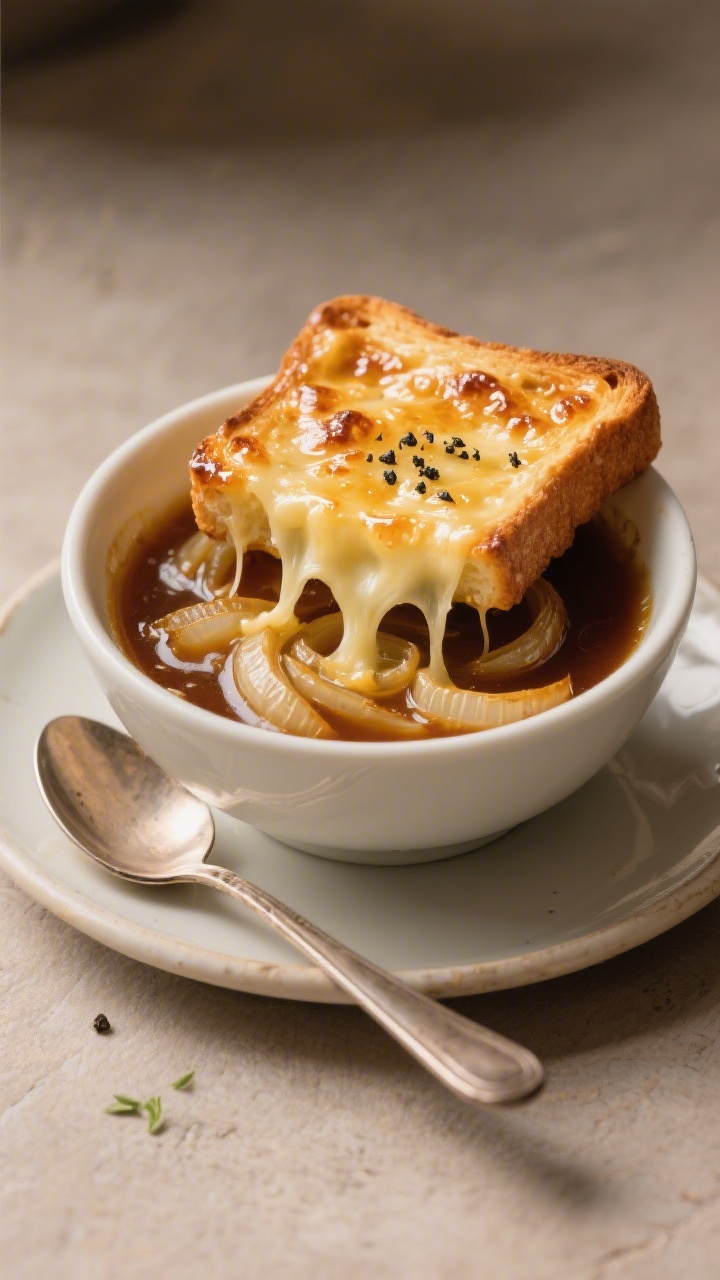
Onions bring more than flavor. They’re rich in antioxidants and fiber, which support digestion and overall health. A homemade broth gives you protein and minerals with a cleaner label than most canned soups.
Using a strong, flavorful cheese like Gruyère means you can get big payoff from a modest amount. To keep things lighter, you can use low-sodium stock and control the salt. You can also serve a smaller portion topped with extra onions and a little less cheese.
The balance of sweet onions, savory broth, and tangy finish makes it satisfying without needing heavy add-ons.
Pitfalls to Watch Out For
- Rushing the onions. Pale, quickly cooked onions won’t deliver that classic depth. Keep the heat moderate and take your time.
- Burning the fond. If browned bits start to scorch, lower the heat and add a splash of water to deglaze. Burnt flavors are hard to hide.
- Over-salting early. Stocks vary in saltiness.
Season lightly at first and adjust at the end.
- Watery top. Untoasted bread will turn mushy fast. Toast both sides to create a sturdy raft for the cheese.
- Flat flavor. If the soup tastes dull, add a pinch more salt and a little vinegar. Acid lifts the sweetness and balances the richness.
Variations You Can Try
- Vegetarian version. Use a rich vegetable stock and a splash of soy sauce or mushroom powder for umami.
A bit of miso whisked in off the heat adds depth.
- Onion medley. Mix yellow, sweet, and a few red onions. A handful of sliced leeks adds gentle sweetness.
- Cheese swap. Try Comté, Emmental, or a blend with a little Fontina for extra melt. Add Parmesan for a sharper edge.
- No-wine route. Deglaze with extra stock plus 1–2 teaspoons sherry vinegar.
You’ll still get brightness without alcohol.
- Gluten-free. Use cornstarch instead of flour and gluten-free bread or toasted polenta rounds for the topping.
- Hearty twist. Add a splash of brandy just before serving for a classic bistro touch. Or stir in a few caramelized mushrooms for extra savoriness.
FAQ
What kind of onions are best?
Yellow onions are the standard because they balance sweetness and bite. Sweet onions work too, but you may want to add a bit more vinegar at the end to keep the soup from tasting cloying.
Can I make it ahead?
Yes.
The soup base can be made 2–3 days ahead and refrigerated, or frozen for months. Reheat, then toast bread and broil with cheese right before serving for the best texture.
Do I need special bowls?
Oven-safe bowls are ideal for broiling the cheese. If you don’t have them, broil the toasts on a sheet pan with the cheese, then float them on the hot soup in regular bowls.
What wine should I use?
Choose a dry white like Sauvignon Blanc or a dry sherry.
Avoid sweet wines. If you have only red, use a small splash and balance with a touch of extra vinegar.
Why add vinegar at the end?
A small amount of acid sharpens the flavors and keeps the soup from feeling heavy. Add it gradually and taste as you go so it doesn’t overwhelm the sweetness of the onions.
How do I keep the cheese from sinking?
Use well-toasted bread and pile the cheese onto the toast rather than directly into the soup.
Broil until it forms a cohesive lid that sits on top.
Can I skip the flour?
Yes. The soup will be slightly thinner but still delicious. If you prefer a gentle body without flour, use a teaspoon of cornstarch mixed with cold stock and simmer briefly.
Final Thoughts
Classic French onion soup is proof that slow, careful cooking turns humble ingredients into something special.
With a pot, a little patience, and a handful of pantry staples, you can create a restaurant-worthy bowl at home. Keep the technique simple, taste as you go, and let the onions do the magic. Once you master it, this soup becomes a comforting ritual you’ll return to all winter long.
Printable Recipe Card
Want just the essential recipe details without scrolling through the article? Get our printable recipe card with just the ingredients and instructions.
