
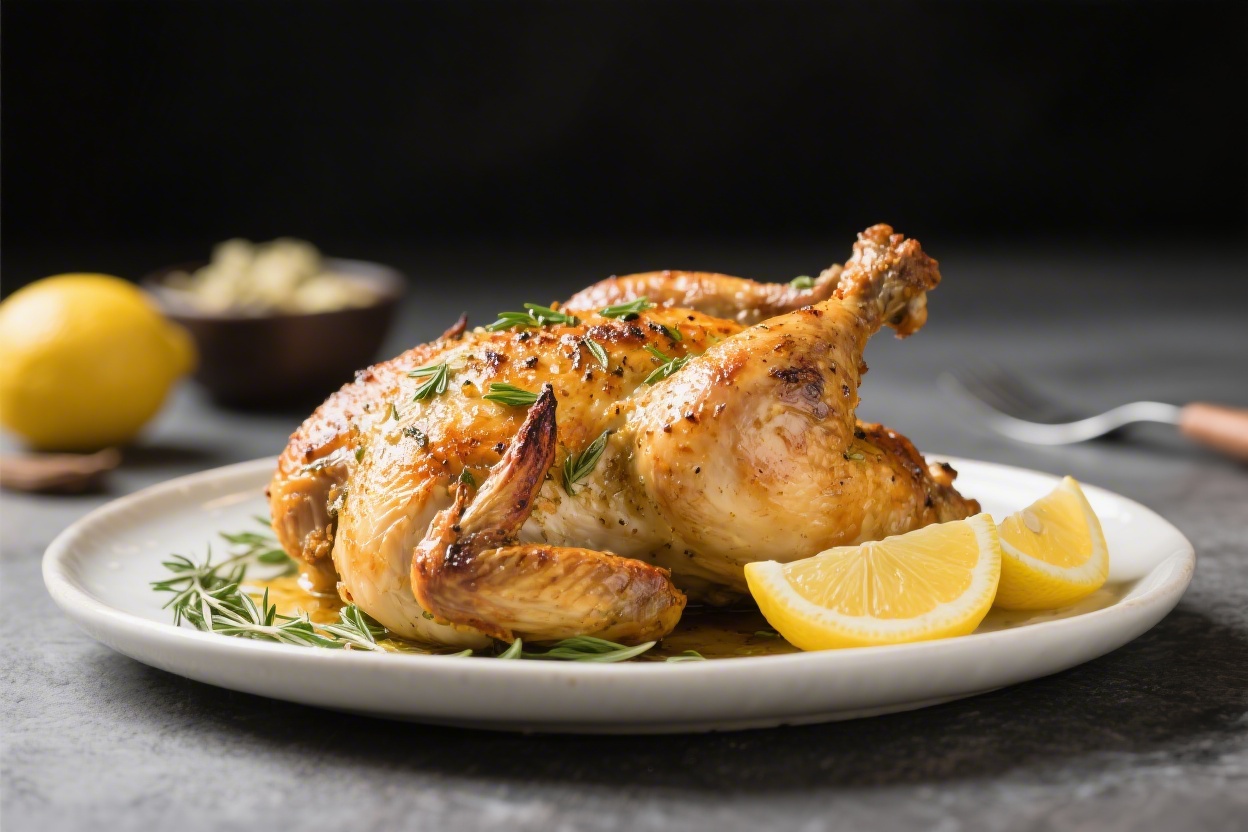
Roasted chicken doesn’t need to be fussy to taste amazing. This lemon herb version is crisp on the outside, juicy inside, and packed with clean, bright flavor. It’s the kind of meal that makes the house smell incredible and brings everyone to the table.
With simple ingredients and a few smart steps, you can get reliable, restaurant-quality results at home. Serve it with potatoes, a green salad, or crusty bread, and you’re set.

Lemon Herb Roasted Chicken – Bright, Juicy, and Comforting
Ingredients
- 1 whole chicken (4–5 pounds), patted very dry
- 2 lemons (zest one, halve both)
- 6 tablespoons unsalted butter, softened
- 4 cloves garlic, minced
- 2 tablespoons fresh rosemary, finely chopped
- 2 tablespoons fresh thyme, leaves picked and chopped
- 2 tablespoons fresh parsley, chopped (plus extra for garnish)
- 2 teaspoons kosher salt, plus more to taste
- 1 teaspoon freshly ground black pepper
- 2 tablespoons olive oil
- 1 small onion, quartered (optional, for the roasting pan)
- 1 pound small potatoes or carrots (optional, for the roasting pan)
- 1/2 cup chicken broth or dry white wine (optional, for the pan and quick gravy)
Instructions
- Preheat and prep. Heat the oven to 450°F (232°C). Place a rack in the lower-middle position. Pat the chicken very dry with paper towels, inside and out. Dry skin equals crisp skin.
- Mix the herb butter. In a small bowl, combine softened butter, lemon zest, minced garlic, rosemary, thyme, parsley, salt, and pepper. Stir until evenly blended into a fragrant paste.
- Loosen the skin. Using your fingers, gently separate the skin from the breast meat starting at the cavity end. Be careful not to tear the skin.
- Butter under the skin. Slide about half the herb butter under the skin, smoothing it over the breasts. Rub the remaining butter over the outside of the chicken, including the legs and thighs. Drizzle with olive oil for extra browning.
- Season the cavity. Sprinkle a pinch of salt inside the cavity. Stuff with the halved lemons and the onion quarters if using. This adds moisture and citrusy aroma.
- Truss or tuck. Tie the legs together with kitchen twine, or at least tuck the wing tips under the body. Trussing helps the chicken cook evenly and keeps the aromatics in place.
- Prepare the pan. Scatter potatoes and/or carrots in a roasting pan if using, season with salt and pepper, and drizzle with olive oil. Set a rack over the vegetables if you have one, or place the chicken directly on top so the drippings baste them.
- Roast hot, then reduce. Place the chicken breast-side up and roast at 450°F (232°C) for 15–20 minutes to set the skin. Then reduce the oven to 375°F (190°C) and continue roasting for 45–60 minutes, depending on the size of your bird.
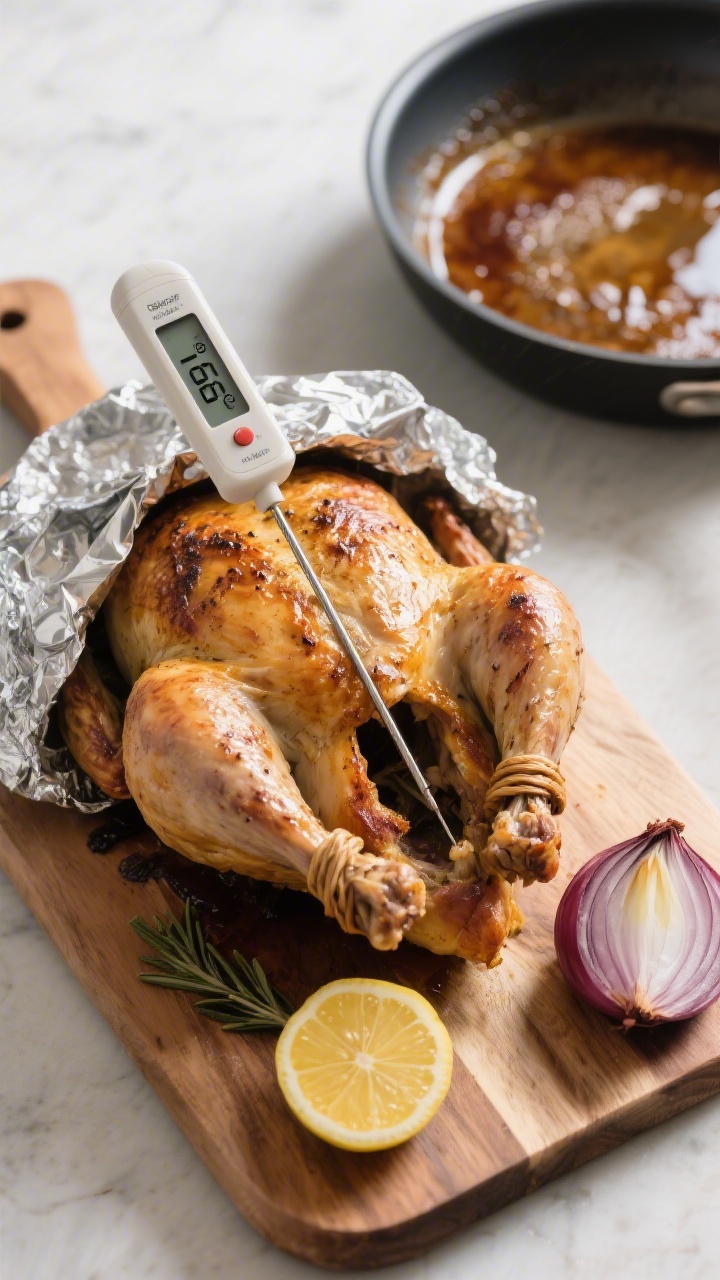
- Check for doneness. The thickest part of the thigh should reach 165°F (74°C) on an instant-read thermometer, and juices should run clear. If the skin is browning too fast, tent loosely with foil.
- Rest. Transfer the chicken to a cutting board and rest for 15 minutes. This allows the juices to redistribute for moist, tender slices.
- Make a quick pan sauce (optional). Place the roasting pan over medium heat on the stove. Skim excess fat. Add 1/2 cup broth or white wine, scraping up browned bits. Simmer 3–5 minutes until slightly reduced. Squeeze in some roasted lemon juice and adjust seasoning.
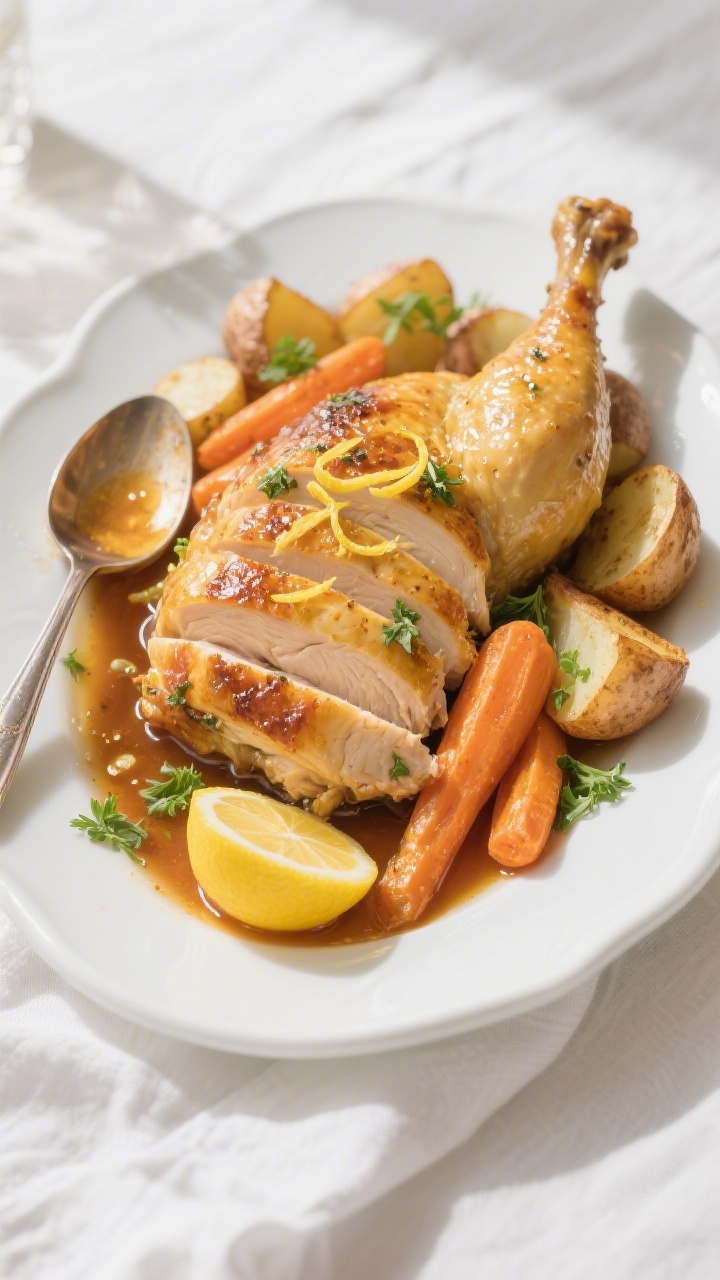
- Carve and serve. Carve the chicken into breasts, thighs, drumsticks, and wings. Spoon over pan juices, sprinkle with fresh parsley, and serve with the roasted vegetables.
Why This Recipe Works
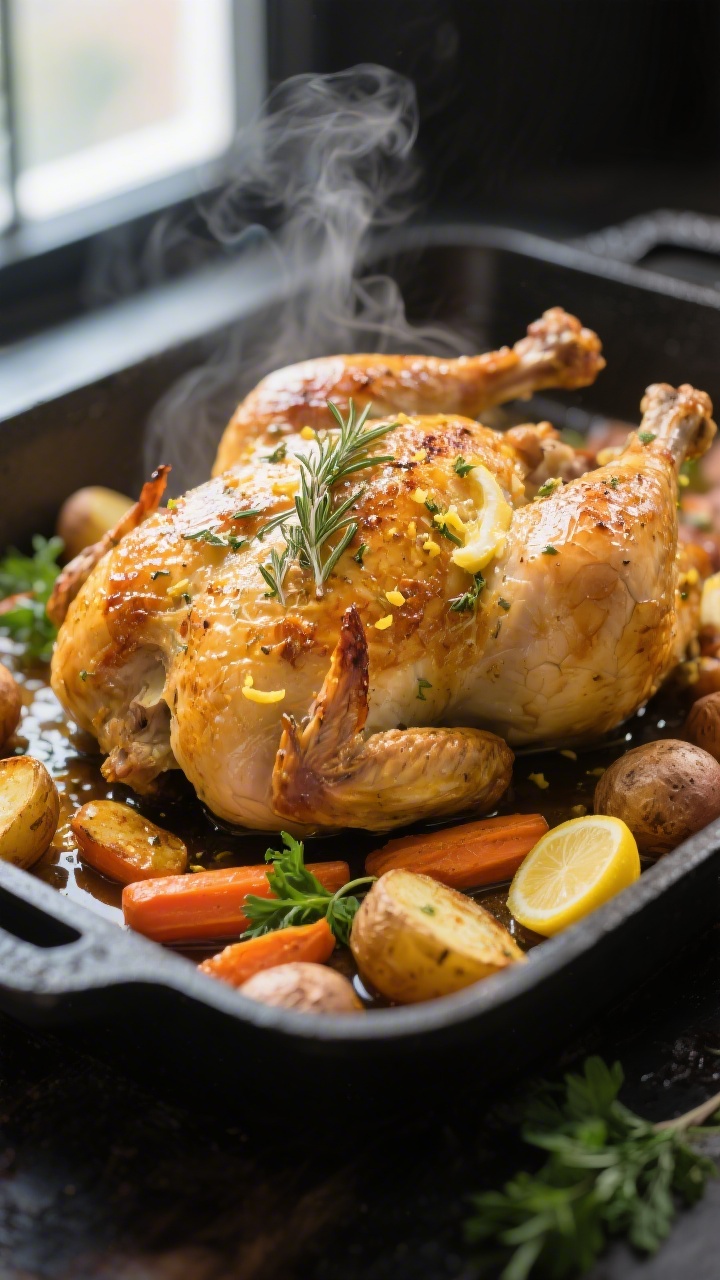
The magic comes from a few key moves. First, a lemony herb butter goes under the skin, which keeps the meat moist and seasons it from within.
The lemon halves and garlic in the cavity perfume the chicken as it roasts, adding depth without overpowering it. Starting hot helps crisp the skin, then lowering the heat cooks the meat gently so it stays tender. Resting the bird locks in juices and makes carving easier.
Simple techniques, big payoff.
What You’ll Need
- 1 whole chicken (4–5 pounds), patted very dry
- 2 lemons (zest one, halve both)
- 6 tablespoons unsalted butter, softened
- 4 cloves garlic, minced
- 2 tablespoons fresh rosemary, finely chopped
- 2 tablespoons fresh thyme, leaves picked and chopped
- 2 tablespoons fresh parsley, chopped (plus extra for garnish)
- 2 teaspoons kosher salt, plus more to taste
- 1 teaspoon freshly ground black pepper
- 2 tablespoons olive oil
- 1 small onion, quartered (optional, for the roasting pan)
- 1 pound small potatoes or carrots (optional, for the roasting pan)
- 1/2 cup chicken broth or dry white wine (optional, for the pan and quick gravy)
Instructions
- Preheat and prep. Heat the oven to 450°F (232°C). Place a rack in the lower-middle position. Pat the chicken very dry with paper towels, inside and out.
Dry skin equals crisp skin.
- Mix the herb butter. In a small bowl, combine softened butter, lemon zest, minced garlic, rosemary, thyme, parsley, salt, and pepper. Stir until evenly blended into a fragrant paste.
- Loosen the skin. Using your fingers, gently separate the skin from the breast meat starting at the cavity end. Be careful not to tear the skin.
- Butter under the skin. Slide about half the herb butter under the skin, smoothing it over the breasts.
Rub the remaining butter over the outside of the chicken, including the legs and thighs. Drizzle with olive oil for extra browning.
- Season the cavity. Sprinkle a pinch of salt inside the cavity. Stuff with the halved lemons and the onion quarters if using.
This adds moisture and citrusy aroma.
- Truss or tuck. Tie the legs together with kitchen twine, or at least tuck the wing tips under the body. Trussing helps the chicken cook evenly and keeps the aromatics in place.
- Prepare the pan. Scatter potatoes and/or carrots in a roasting pan if using, season with salt and pepper, and drizzle with olive oil. Set a rack over the vegetables if you have one, or place the chicken directly on top so the drippings baste them.
- Roast hot, then reduce. Place the chicken breast-side up and roast at 450°F (232°C) for 15–20 minutes to set the skin. Then reduce the oven to 375°F (190°C) and continue roasting for 45–60 minutes, depending on the size of your bird.
- Check for doneness. The thickest part of the thigh should reach 165°F (74°C) on an instant-read thermometer, and juices should run clear.
If the skin is browning too fast, tent loosely with foil.
- Rest. Transfer the chicken to a cutting board and rest for 15 minutes. This allows the juices to redistribute for moist, tender slices.
- Make a quick pan sauce (optional). Place the roasting pan over medium heat on the stove. Skim excess fat.
Add 1/2 cup broth or white wine, scraping up browned bits. Simmer 3–5 minutes until slightly reduced. Squeeze in some roasted lemon juice and adjust seasoning.
- Carve and serve. Carve the chicken into breasts, thighs, drumsticks, and wings.
Spoon over pan juices, sprinkle with fresh parsley, and serve with the roasted vegetables.
How to Store
- Refrigerate: Cool leftovers within two hours. Store sliced chicken in airtight containers for up to 4 days.
- Freeze: Shred or slice, then freeze in freezer-safe bags for up to 3 months. Press out air to prevent freezer burn.
- Reheat: Warm gently at 300°F (150°C) covered with foil, or in a skillet with a splash of broth to keep it juicy.
Avoid the microwave for large pieces to prevent drying.
- Use the carcass: Save the bones for a simple stock. Simmer with onion, carrot, celery, peppercorns, and bay leaves for 2–3 hours.
Health Benefits
- Lean protein: Chicken provides high-quality protein for muscle repair and steady energy.
- Lower in added fats: Roasting uses minimal added fat compared to frying. The herb butter adds flavor, and you control the amount.
- Vitamin C boost: Lemon adds vitamin C, which supports immune health and enhances iron absorption from your meal.
- Herb-powered antioxidants: Rosemary, thyme, and parsley offer helpful antioxidants and anti-inflammatory compounds.
- Balanced meal option: Pair with fiber-rich vegetables and whole grains for a satisfying, nutrient-dense plate.
Pitfalls to Watch Out For
- Skipping the dry-off: Damp skin steams instead of crisps.
Take the extra minute to pat the chicken dry.
- Under-seasoning: A whole bird needs more salt than you think. Season the butter, the skin, and the cavity.
- Overcooking the breasts: Use a thermometer and pull the chicken when the thigh hits 165°F. Carryover heat will finish the job.
- Uneven roasting: If the breast browns too fast, tent with foil.
Rotate the pan halfway through if your oven has hot spots.
- Skipping the rest: Cutting too soon releases precious juices. Resting is non-negotiable for juicy meat.
Alternatives
- Herb swaps: Use oregano, basil, or dill if that’s what you have. Dried herbs work in a pinch—use about one-third the amount.
- Different fats: Replace butter with olive oil or ghee for a dairy-free or richer flavor profile.
- Spatchcock method: Remove the backbone and flatten the chicken for faster, more even cooking.
Roast at 425°F (218°C) for 35–50 minutes, depending on size.
- Citrus twist: Try Meyer lemons, oranges, or a mix of lemon and lime for a different brightness.
- Vegetable bed: Swap potatoes for fennel, leeks, or parsnips. They soak up the drippings and caramelize beautifully.
- Gravy upgrade: Whisk a teaspoon of Dijon mustard and a knob of butter into the reduced pan juices for a glossy finish.
FAQ
Can I use chicken pieces instead of a whole chicken?
Yes. Use bone-in, skin-on thighs or a mix of parts.
Roast at 425°F (218°C) for 35–45 minutes, until the thickest piece reads 165°F. The herb butter works the same way.
Do I have to truss the chicken?
No, but it helps. Trussing promotes even cooking and tidy presentation.
If you skip it, at least tuck the wing tips to prevent burning.
What if I don’t have fresh herbs?
Use dried rosemary and thyme at about 1 teaspoon each, and skip parsley or use a pinch of dried parsley. Add a little extra lemon zest to brighten the flavor.
How do I keep the breast meat from drying out?
Spread butter under the skin, start the roast hot, then reduce the heat. Pull the chicken as soon as the thigh hits 165°F and let it rest.
These steps protect the lean breast meat.
Can I make it ahead?
You can season the chicken and refrigerate it uncovered for up to 24 hours. This dry brine improves flavor and crisps the skin. Roast just before serving.
Is there a gluten-free option for the pan sauce?
Yes.
Reduce the pan juices with broth or wine and finish with a dab of butter. Skip flour and rely on reduction for body.
What should I serve with Lemon Herb Roasted Chicken?
Roasted potatoes, lemony green beans, a simple arugula salad, or buttered noodles all pair well. Keep sides light to let the chicken shine.
Can I roast this in a Dutch oven?
You can, but leave the lid off so the skin crisps.
If browning too fast, tent with foil. A roasting pan with good airflow is ideal.
In Conclusion
Lemon Herb Roasted Chicken is proof that simple ingredients can deliver big, comforting flavor. With a bright citrus kick, fragrant herbs, and crackly skin, it’s a weeknight hero that also fits any special occasion.
Follow the few key steps—season well, control the heat, and rest—and you’ll get juicy, consistent results every time. Make it once, and it’ll become a go-to in your kitchen.
Printable Recipe Card
Want just the essential recipe details without scrolling through the article? Get our printable recipe card with just the ingredients and instructions.
