
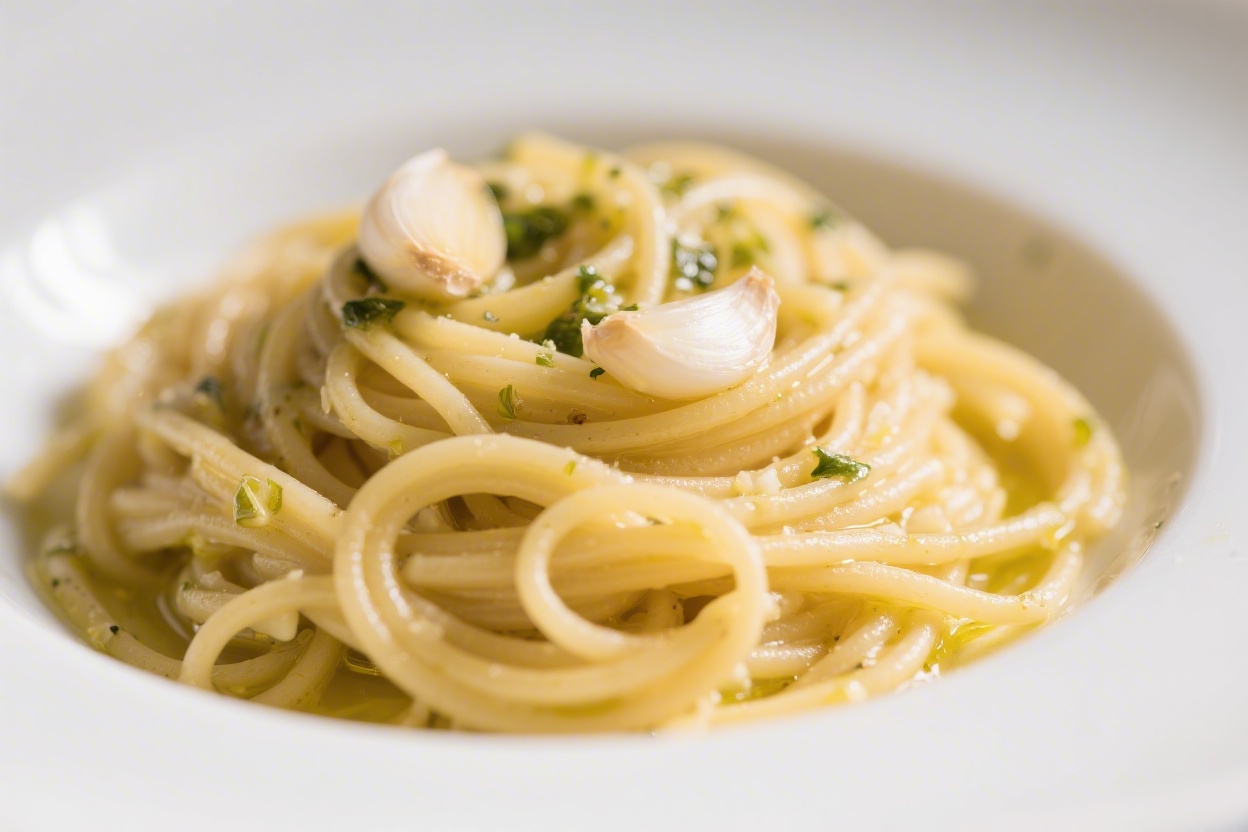
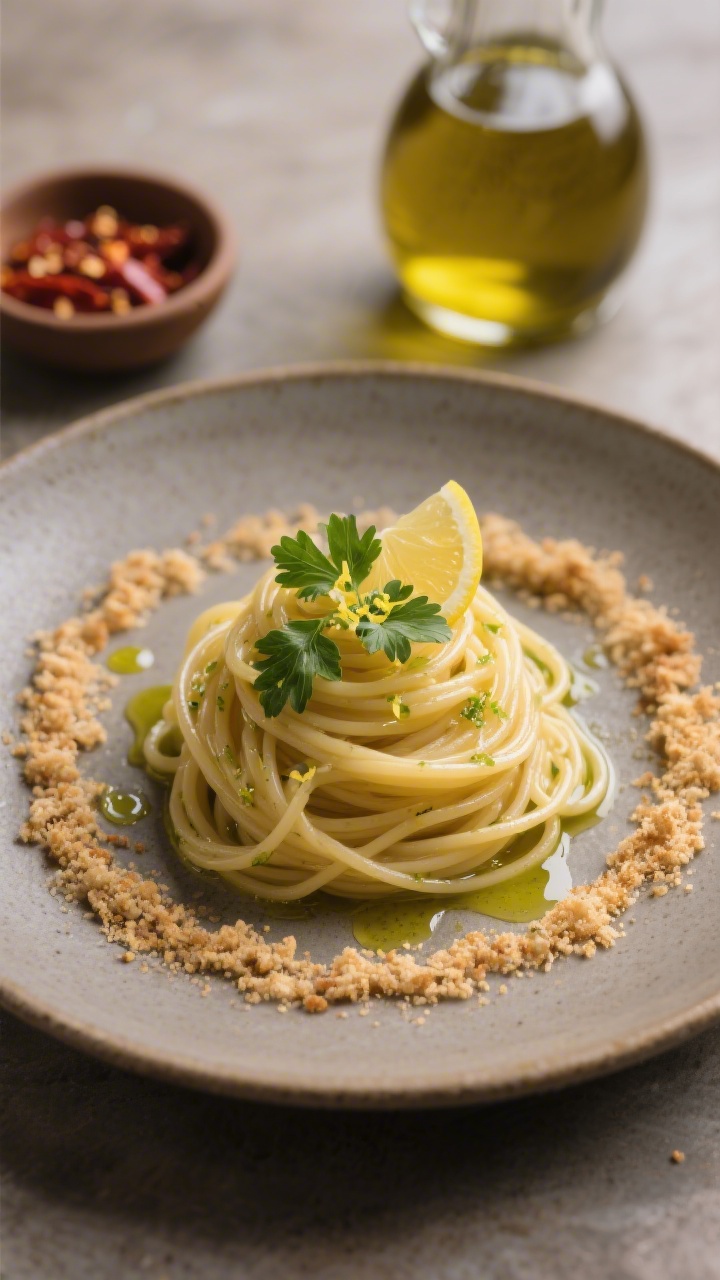
Spaghetti Aglio e Olio is the kind of meal you make when you want something fast but deeply satisfying. It uses pantry staples, comes together in minutes, and still feels special. The flavors are bold but balanced: warm garlic, fruity olive oil, a touch of heat, and the freshness of parsley.
It’s a classic Italian dish that proves you don’t need a long ingredient list to make something memorable. Whether it’s a late-night dinner or a weeknight staple, this is comfort in a bowl.
Spaghetti Aglio e Olio (Garlic & Oil) - Simple, Classic, and Comforting
Ingredients
- Spaghetti: 12 ounces (340 g)
- Extra-virgin olive oil: 1/3 to 1/2 cup
- Garlic: 6–8 cloves, thinly sliced
- Red pepper flakes: 1/2 to 1 teaspoon, to taste
- Fresh parsley: Small handful, chopped
- Kosher salt: For pasta water and seasoning
- Black pepper: Freshly ground, optional
- Lemon: Zest and/or a squeeze of juice, optional
- Pecorino Romano or Parmesan: Optional for serving (traditionalists skip cheese, but many enjoy it)
- Toasted breadcrumbs (pangrattato): Optional for crunch
Instructions
- Salt the water well. Bring a large pot of water to a rolling boil and season generously with salt. It should taste like the sea so the pasta is well-flavored from the start.
- Cook the spaghetti until just shy of al dente. Follow the package time, but start checking a minute early. You want the pasta to have a slight bite since it will finish in the pan.
- Prep the garlic and parsley. While the water heats, thinly slice the garlic and chop the parsley. Keep them ready so nothing burns while you scramble.
- Warm the olive oil gently. In a large skillet, add the olive oil over medium-low heat. You want a gentle sizzle, not a fry.
- Toast the garlic to pale gold. Add the sliced garlic and cook slowly, stirring, until it turns light golden and fragrant. This usually takes 2–4 minutes. If it browns quickly, lower the heat. Burnt garlic is bitter.
- Add red pepper flakes. Stir in the flakes for 15–20 seconds to bloom them in the oil. This releases flavor without scorching.
- Reserve pasta water. Before draining, scoop out about 1 cup of starchy pasta water. This is your magic for emulsifying the sauce.
- Combine pasta and sauce. Transfer the drained spaghetti straight into the skillet with the garlic oil. Toss to coat. Add a generous splash of reserved pasta water.
- Emulsify and finish. Toss vigorously over low heat until the oil and water create a silky sauce that clings to the noodles. Add more water as needed. Season with salt and pepper to taste.
- Stir in parsley and optional lemon. Off the heat, add chopped parsley and, if you like, a little lemon zest or a squeeze of juice for brightness.
- Serve immediately. Plate hot. If using, top with a sprinkle of cheese or toasted breadcrumbs for texture. Enjoy right away.
What Makes This Recipe So Good
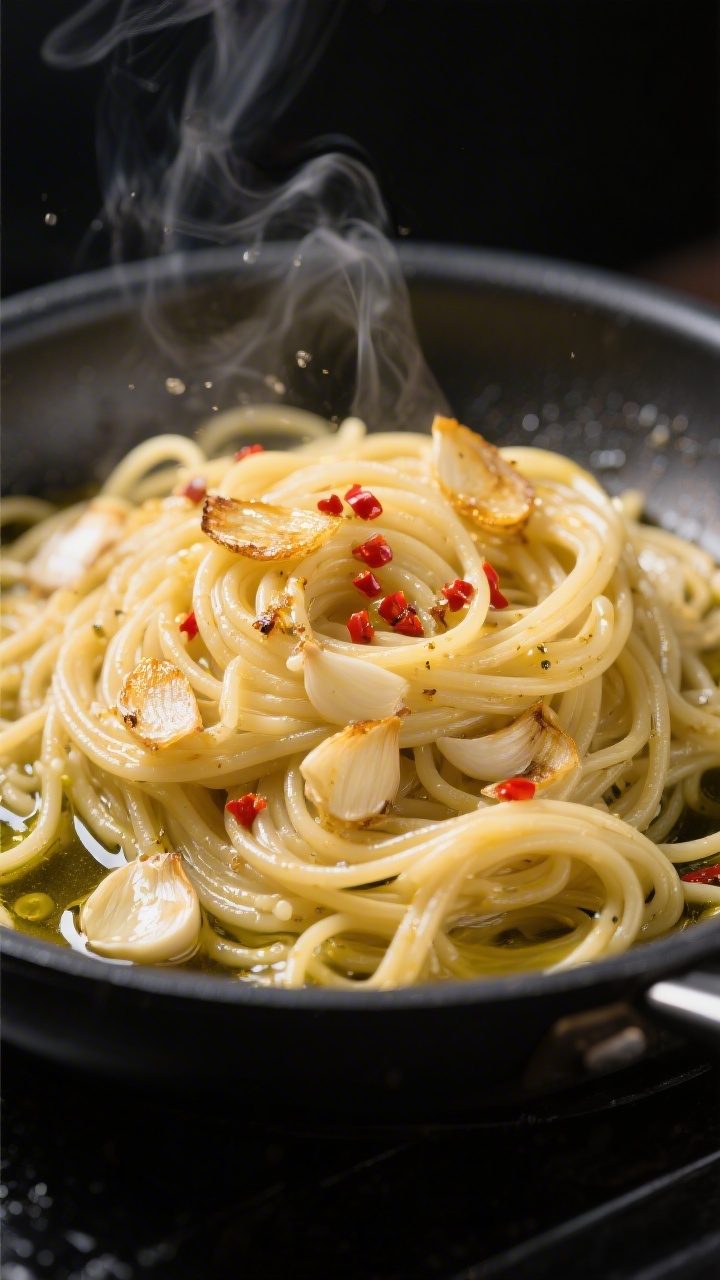
- Big flavor from simple ingredients: Garlic, olive oil, and chili flakes create a sauce that coats the pasta beautifully.
- Quick and easy: You can have it on the table in about 15–20 minutes with minimal prep.
- Budget-friendly: Everything here is affordable and likely already in your pantry.
- Restaurant-quality results at home: Toasted garlic, starchy pasta water, and good olive oil make it feel elevated.
- Flexible and forgiving: Adjust the heat, add herbs, or toss in extras like lemon or breadcrumbs without losing the soul of the dish.
Shopping List
- Spaghetti: 12 ounces (340 g)
- Extra-virgin olive oil: 1/3 to 1/2 cup
- Garlic: 6–8 cloves, thinly sliced
- Red pepper flakes: 1/2 to 1 teaspoon, to taste
- Fresh parsley: Small handful, chopped
- Kosher salt: For pasta water and seasoning
- Black pepper: Freshly ground, optional
- Lemon: Zest and/or a squeeze of juice, optional
- Pecorino Romano or Parmesan: Optional for serving (traditionalists skip cheese, but many enjoy it)
- Toasted breadcrumbs (pangrattato): Optional for crunch
How to Make It
- Salt the water well. Bring a large pot of water to a rolling boil and season generously with salt. It should taste like the sea so the pasta is well-flavored from the start.
- Cook the spaghetti until just shy of al dente. Follow the package time, but start checking a minute early.
You want the pasta to have a slight bite since it will finish in the pan.
- Prep the garlic and parsley. While the water heats, thinly slice the garlic and chop the parsley. Keep them ready so nothing burns while you scramble.
- Warm the olive oil gently. In a large skillet, add the olive oil over medium-low heat. You want a gentle sizzle, not a fry.
- Toast the garlic to pale gold. Add the sliced garlic and cook slowly, stirring, until it turns light golden and fragrant.
This usually takes 2–4 minutes. If it browns quickly, lower the heat. Burnt garlic is bitter.
- Add red pepper flakes. Stir in the flakes for 15–20 seconds to bloom them in the oil.
This releases flavor without scorching.
- Reserve pasta water. Before draining, scoop out about 1 cup of starchy pasta water. This is your magic for emulsifying the sauce.
- Combine pasta and sauce. Transfer the drained spaghetti straight into the skillet with the garlic oil. Toss to coat.
Add a generous splash of reserved pasta water.
- Emulsify and finish. Toss vigorously over low heat until the oil and water create a silky sauce that clings to the noodles. Add more water as needed. Season with salt and pepper to taste.
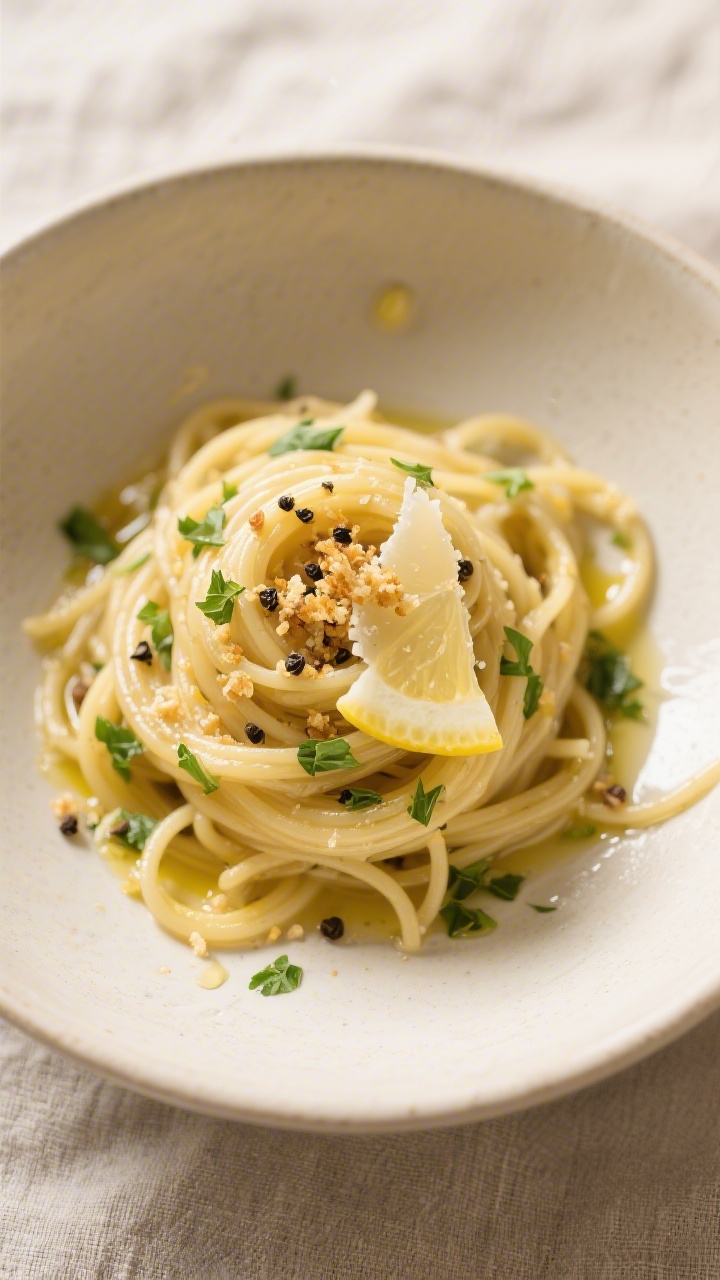
- Stir in parsley and optional lemon. Off the heat, add chopped parsley and, if you like, a little lemon zest or a squeeze of juice for brightness.
- Serve immediately. Plate hot.
If using, top with a sprinkle of cheese or toasted breadcrumbs for texture. Enjoy right away.
How to Store
- Refrigerate: Keep leftovers in an airtight container for up to 3 days. The pasta will absorb some oil, so expect a drier texture.
- Reheat: Warm gently in a skillet with a splash of water or extra olive oil to revive the sauce.
Avoid microwaving on high; it can dry the pasta and dull the garlic flavor.
- Not ideal for freezing: The texture of both pasta and garlic oil suffers after thawing, so it’s best eaten fresh.
Health Benefits
- Olive oil offers heart-healthy fats: Extra-virgin olive oil contains monounsaturated fats and antioxidants that support cardiovascular health.
- Garlic brings more than flavor: It has compounds like allicin that may support immune function and help reduce inflammation.
- Simple, clean ingredients: No heavy cream or processed sauces—just whole foods you recognize.
- Easy to balance: Pair with a salad or add vegetables like sautéed greens for extra fiber and nutrients.
Common Mistakes to Avoid
- Burning the garlic: This is the number one pitfall. Keep the heat low and pull the pan off the burner if it starts browning too fast.
- Underseasoning the water: Bland pasta can’t be saved later. Salty water is essential for full flavor.
- Skipping the pasta water: The starch helps create a glossy, cohesive sauce.
Plain oil alone won’t cling properly.
- Overcooking the pasta: You want al dente so it holds up while you toss it in the pan.
- Using poor-quality oil: The oil is the star. Choose a good extra-virgin olive oil with a pleasant aroma and flavor.
Variations You Can Try
- Lemon and herb: Add lemon zest and a squeeze of juice, plus a mix of parsley and basil for a fresh twist.
- Anchovy umami: Melt 2–3 anchovy fillets in the oil before the garlic. They disappear into the sauce and add depth.
- Pangrattato crunch: Toast breadcrumbs in olive oil with a pinch of salt until golden, then sprinkle on top for texture.
- Garlic chips and minced garlic: Use half sliced for chips and half minced for a deeper garlic profile.
- Greens and extras: Toss in baby spinach, arugula, or sautéed broccolini.
For protein, add shrimp or white beans.
- Spaghetti vs. other shapes: Spaghetti is classic, but linguine or thin spaghettini also work well.
FAQ
Can I use pre-minced garlic?
Jarred garlic doesn’t deliver the same clean, sweet flavor and can taste harsh. Fresh cloves are best, and slicing instead of mincing helps prevent burning and bitterness.
Is cheese traditional in Aglio e Olio?
Traditionally, no. However, many home cooks enjoy a light dusting of Parmesan or Pecorino.
If you do add cheese, use it sparingly so it doesn’t clump or overwhelm the dish.
How spicy should it be?
It’s up to you. Classic versions have a gentle heat that warms the palate. Start with 1/2 teaspoon of chili flakes and adjust to taste.
What if my sauce seems oily?
Add more reserved pasta water and toss over low heat.
The starch and agitation emulsify the oil into a silky coating. A pinch more salt can also help the flavors pop.
Can I make it gluten-free?
Yes. Use a good-quality gluten-free spaghetti and be generous with the pasta water to help the sauce cling.
Some gluten-free pastas release extra starch, which can actually help the emulsion.
What olive oil should I use?
Choose a fresh-tasting extra-virgin olive oil with balanced fruitiness and a light peppery finish. Avoid oils that taste flat or overly bitter, since the oil leads the flavor.
How do I prevent the garlic from turning bitter?
Control the heat and timing. Keep the pan at medium-low, stir often, and stop when the garlic is pale golden.
Add the chili flakes briefly, then move on quickly to the pasta and water.
Can I add protein?
Absolutely. Shrimp, clams, or even a handful of white beans fit well. Cook the protein separately or in the oil before adding the garlic, then proceed as usual.
Why is my pasta clumping?
Give it a stir in the pot as it cooks and don’t skimp on water.
Once drained, get it into the skillet right away so it meets the oil while it’s hot and loose.
Do I need lemon?
Not required, but a little zest or juice brightens the dish without changing its character. Add it off heat to keep the flavor fresh.
Final Thoughts
Spaghetti Aglio e Olio is proof that simple can be spectacular. With a few good ingredients and careful attention to heat and timing, you get a bowl of pasta that’s silky, garlicky, and incredibly satisfying.
Keep it classic, or make it your own with a touch of lemon, anchovy, or breadcrumbs. Either way, it’s the kind of recipe you’ll come back to whenever you want comfort with very little fuss. Keep the pantry stocked, and you’re never more than 20 minutes from a great meal.
Printable Recipe Card
Want just the essential recipe details without scrolling through the article? Get our printable recipe card with just the ingredients and instructions.
