
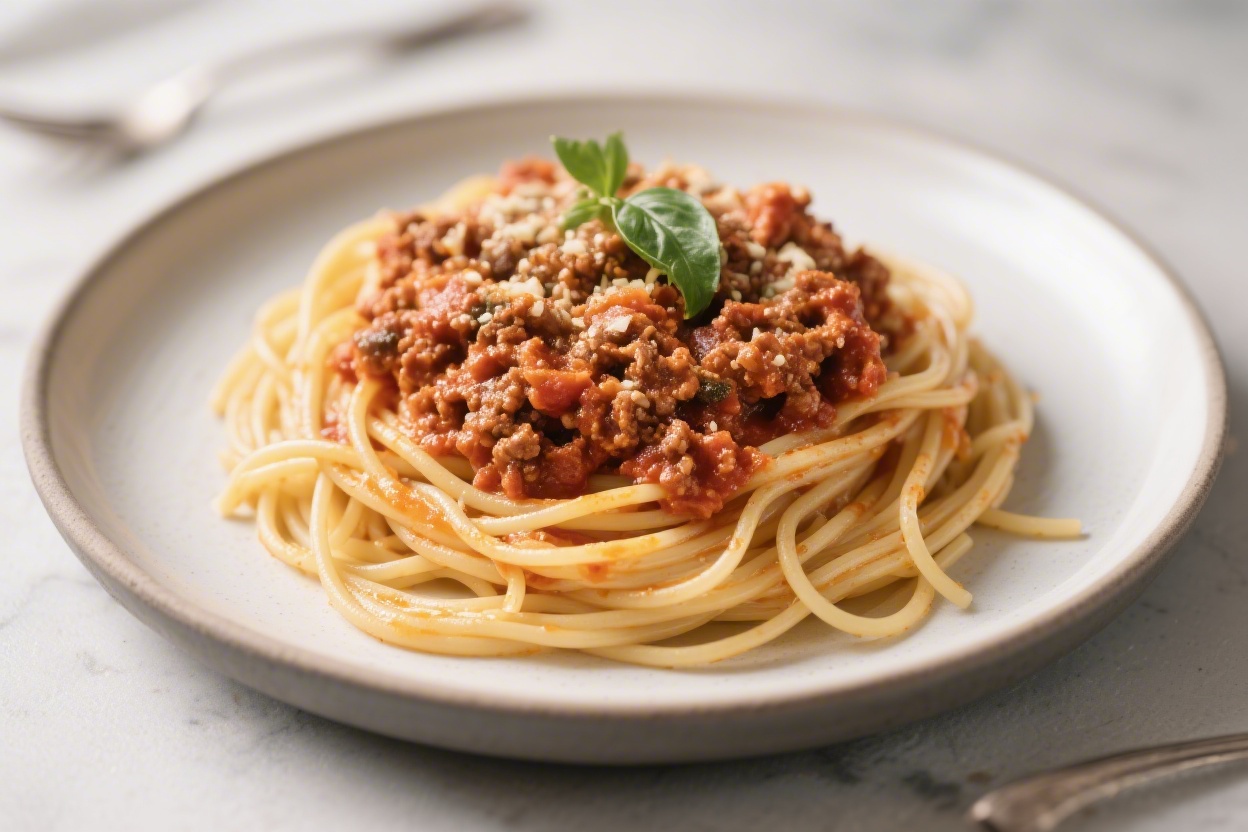
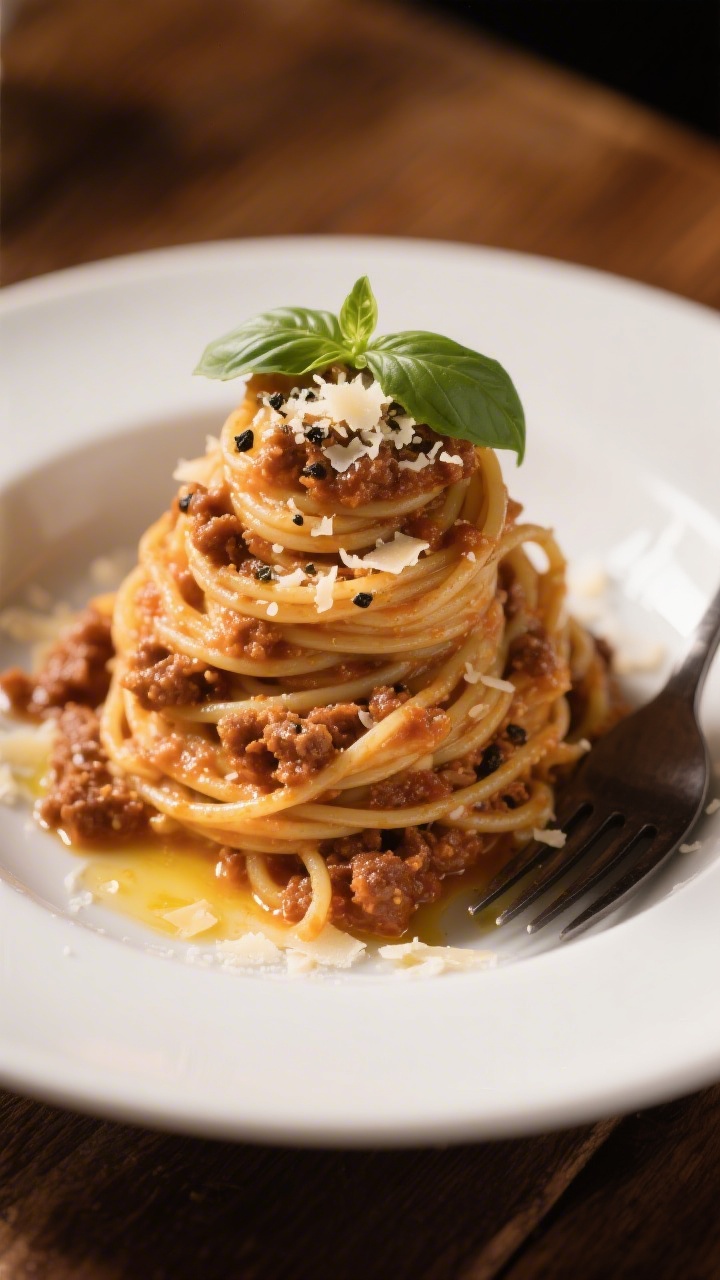
Skip the separate pot of boiling water and make spaghetti bolognese the easy way. This no-boil method lets the pasta cook directly in the sauce, soaking up all that rich, meaty flavor. It’s comforting, satisfying, and perfect for busy weeknights when you want real food without the fuss.
The texture is silky, the sauce is hearty, and cleanup is a breeze. If you love rustic, homestyle cooking with minimal effort, this one’s for you.
Spaghetti Bolognese (No-Boil Method) - A Cozy, One-Pot Classic
Ingredients
- Olive oil: 2 tablespoons
- Ground beef or a mix of beef and pork: 1 pound (450 g)
- Onion: 1 medium, finely diced
- Carrot: 1 small, finely diced
- Celery: 1 small stalk, finely diced
- Garlic: 3 cloves, minced
- Tomato paste: 2 tablespoons
- Crushed tomatoes or passata: 1 can (28 oz / 800 g)
- Beef or chicken broth: 4 cups (1 liter), plus extra as needed
- Milk or half-and-half: 1/2 cup (120 ml) for richness
- Bay leaf: 1
- Dried oregano: 1 teaspoon
- Red pepper flakes: Pinch (optional)
- Salt and black pepper: To taste
- Spaghetti: 12 ounces (340 g), dry
- Parmesan cheese: Freshly grated, for serving
- Fresh basil or parsley: Chopped, for garnish
Instructions
- Heat the pot: Set a large, wide pot or deep sauté pan over medium heat. Add olive oil and warm until shimmering.
- Brown the meat: Add the ground beef. Season with a pinch of salt and pepper. Cook, breaking it up, until well browned with some crispy bits, about 6–8 minutes. Drain excess fat if needed, leaving about a tablespoon for flavor.
- Sweat the aromatics: Add onion, carrot, and celery. Cook until softened, 5–7 minutes. Stir in garlic and cook 30 seconds until fragrant.
- Build the base: Stir in tomato paste and cook 1–2 minutes to caramelize slightly. Add crushed tomatoes, oregano, bay leaf, and a pinch of red pepper flakes if using. Pour in the milk, then 3½ cups of the broth. Bring to a gentle simmer.
- Season and taste: Add 1 teaspoon salt and several grinds of black pepper. Taste the liquid—it should be well seasoned since it will flavor the pasta.
- Add the spaghetti: Break the spaghetti in half so it fits the pot evenly. Submerge the strands, fanning them out so they don’t clump. If needed, add the remaining 1/2 cup broth to ensure everything is mostly covered.
- Simmer and stir: Reduce heat to medium-low. Cook uncovered for 12–15 minutes, stirring every 2–3 minutes to prevent sticking and ensure even cooking. Keep the simmer gentle; rapid boiling can make the pasta tough.
- Adjust the texture: As the pasta cooks, it will absorb liquid and release starch, thickening the sauce. If it looks too thick before the pasta is al dente, add warm broth or water, 1/4 cup at a time. If it’s too thin when the pasta is nearly done, let it bubble a bit longer to reduce.
- Finish the sauce: When the pasta is just al dente, remove the bay leaf. Stir in a small splash of milk or a knob of butter for silkiness, if you like. Taste and adjust salt and pepper.
- Serve: Ladle into warm bowls. Top with a shower of freshly grated Parmesan and chopped basil or parsley. Serve immediately.
What Makes This Special
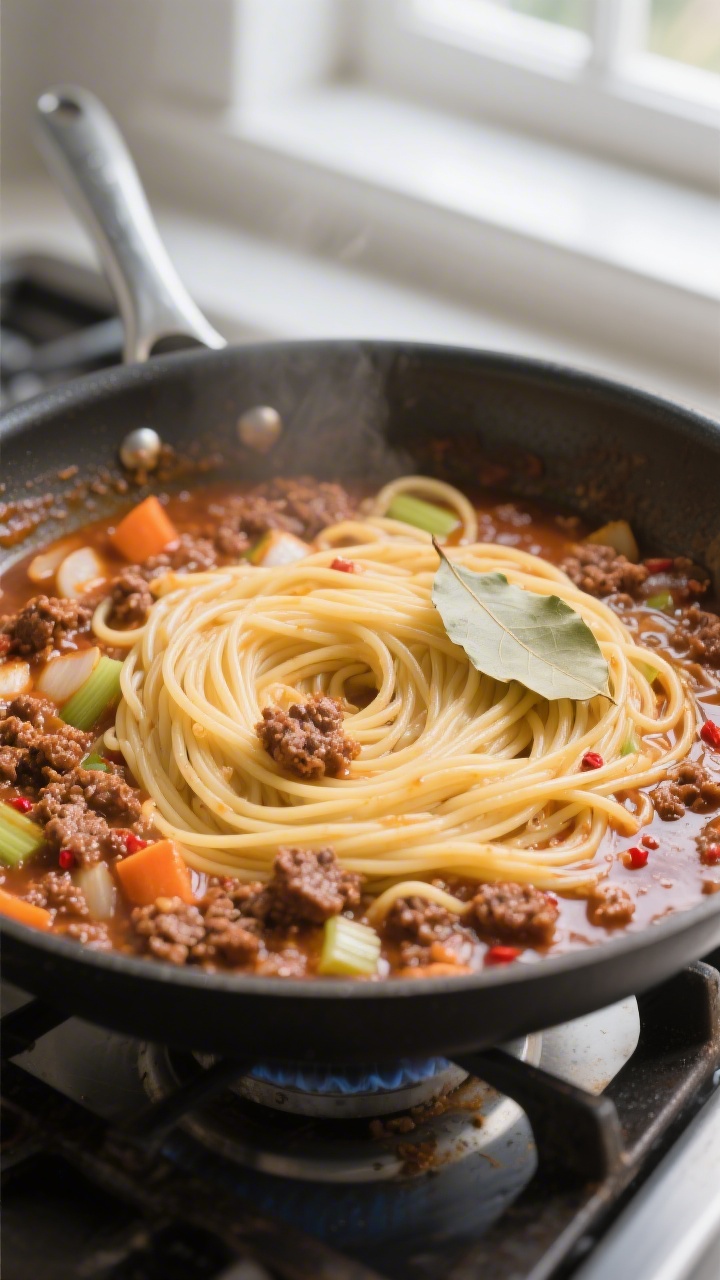
Traditional spaghetti bolognese means cooking pasta and sauce separately. This version breaks the rules in the best way by simmering the spaghetti right in the bolognese.
The starch from the pasta naturally thickens the sauce, giving it a glossy, restaurant-style finish.
It’s also a true one-pot meal. Less to wash, less to monitor, and fewer chances to overcook your pasta. Plus, the flavors meld beautifully because everything cooks together from start to finish.
Best of all, it’s flexible.
You can swap the meat, add vegetables, or use broth instead of water for an even richer result. It’s a foundation you can adapt to your taste and pantry.
What You’ll Need
- Olive oil: 2 tablespoons
- Ground beef or a mix of beef and pork: 1 pound (450 g)
- Onion: 1 medium, finely diced
- Carrot: 1 small, finely diced
- Celery: 1 small stalk, finely diced
- Garlic: 3 cloves, minced
- Tomato paste: 2 tablespoons
- Crushed tomatoes or passata: 1 can (28 oz / 800 g)
- Beef or chicken broth: 4 cups (1 liter), plus extra as needed
- Milk or half-and-half: 1/2 cup (120 ml) for richness
- Bay leaf: 1
- Dried oregano: 1 teaspoon
- Red pepper flakes: Pinch (optional)
- Salt and black pepper: To taste
- Spaghetti: 12 ounces (340 g), dry
- Parmesan cheese: Freshly grated, for serving
- Fresh basil or parsley: Chopped, for garnish
Instructions
- Heat the pot: Set a large, wide pot or deep sauté pan over medium heat. Add olive oil and warm until shimmering.
- Brown the meat: Add the ground beef.
Season with a pinch of salt and pepper. Cook, breaking it up, until well browned with some crispy bits, about 6–8 minutes. Drain excess fat if needed, leaving about a tablespoon for flavor.
- Sweat the aromatics: Add onion, carrot, and celery.
Cook until softened, 5–7 minutes. Stir in garlic and cook 30 seconds until fragrant.
- Build the base: Stir in tomato paste and cook 1–2 minutes to caramelize slightly. Add crushed tomatoes, oregano, bay leaf, and a pinch of red pepper flakes if using.
Pour in the milk, then 3½ cups of the broth. Bring to a gentle simmer.
- Season and taste: Add 1 teaspoon salt and several grinds of black pepper. Taste the liquid—it should be well seasoned since it will flavor the pasta.
- Add the spaghetti: Break the spaghetti in half so it fits the pot evenly.
Submerge the strands, fanning them out so they don’t clump. If needed, add the remaining 1/2 cup broth to ensure everything is mostly covered.
- Simmer and stir: Reduce heat to medium-low. Cook uncovered for 12–15 minutes, stirring every 2–3 minutes to prevent sticking and ensure even cooking.
Keep the simmer gentle; rapid boiling can make the pasta tough.
- Adjust the texture: As the pasta cooks, it will absorb liquid and release starch, thickening the sauce. If it looks too thick before the pasta is al dente, add warm broth or water, 1/4 cup at a time. If it’s too thin when the pasta is nearly done, let it bubble a bit longer to reduce.
- Finish the sauce: When the pasta is just al dente, remove the bay leaf.
Stir in a small splash of milk or a knob of butter for silkiness, if you like. Taste and adjust salt and pepper.
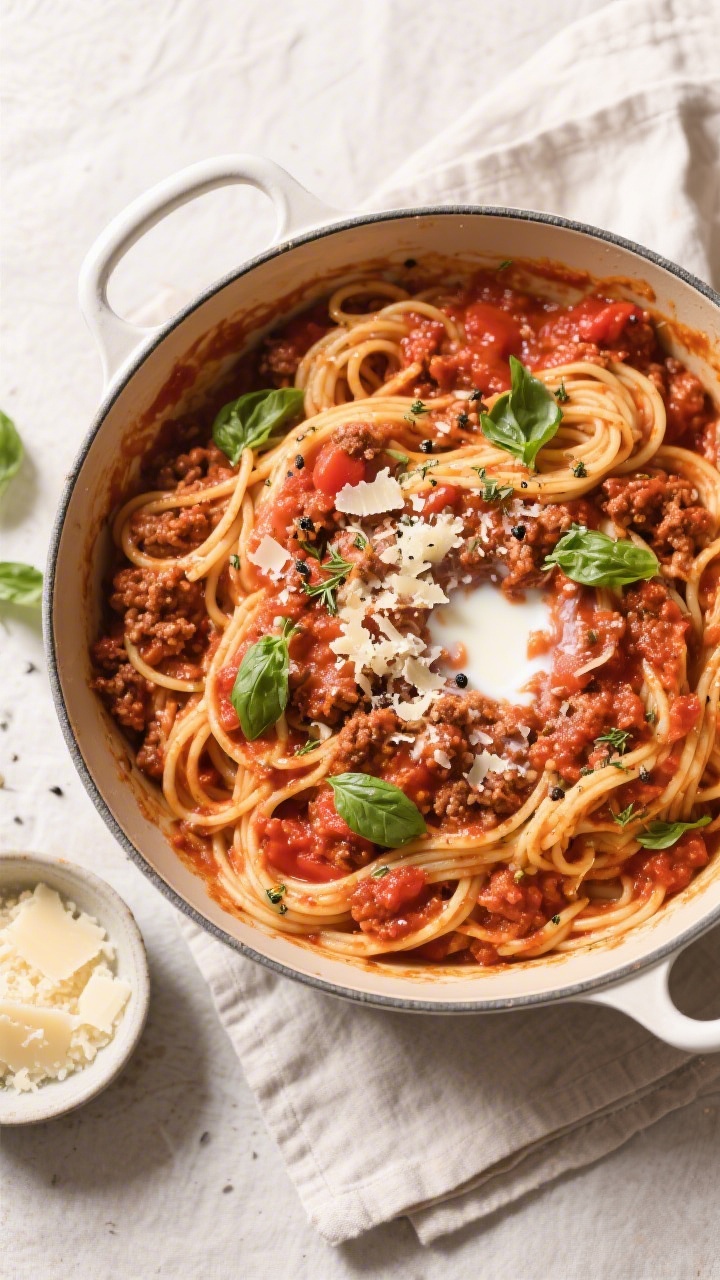
- Serve: Ladle into warm bowls. Top with a shower of freshly grated Parmesan and chopped basil or parsley.
Serve immediately.
Storage Instructions
Let leftovers cool until just warm, then transfer to an airtight container. Refrigerate for up to 3–4 days. For freezing, portion into freezer-safe containers and freeze for up to 2 months.
Reheat gently on the stovetop over low heat with a splash of water or broth to loosen the sauce.
Stir often to prevent sticking. In the microwave, reheat in short bursts, stirring between intervals, and add a little liquid if dry.
Health Benefits
- Protein and iron: Ground beef provides protein for muscle repair and iron for energy and focus. Using a leaner cut can reduce saturated fat.
- Vegetable boost: Onion, carrot, and celery add fiber, vitamins A and C, and antioxidants without overwhelming the dish.
- Calcium: A splash of milk and a sprinkle of Parmesan add calcium and depth of flavor.
- Balanced meal: Carbs from pasta, protein from meat, and fat from olive oil create a satisfying, well-rounded plate.
Add a side salad for extra fiber and freshness.
Common Mistakes to Avoid
- Not stirring often: Pasta can clump or stick when cooked in sauce. Stir every few minutes to keep strands separate.
- Too little liquid: The pasta needs enough moisture to cook through. Keep extra broth or water handy and adjust as you go.
- Undersalting the liquid: Since the pasta absorbs the sauce, underseasoned liquid makes a bland dish.
Taste early and adjust.
- Boiling too hard: A rolling boil can break pasta and toughen it. Aim for a steady, gentle simmer.
- Skipping the browning: Deeply browning the meat and caramelizing the tomato paste build the backbone of flavor. Don’t rush this step.
Alternatives
- Meat options: Use ground turkey, chicken, pork, or plant-based mince.
For extra richness, add pancetta or Italian sausage.
- Dairy-free: Swap milk for unsweetened oat milk or leave it out. Use nutritional yeast instead of Parmesan.
- Gluten-free: Use gluten-free spaghetti. Watch closely—GF pasta can cook faster and may need slightly less liquid at the end.
- Vegetable add-ins: Mushrooms, zucchini, bell peppers, or chopped spinach work well.
Sauté them with the aromatics.
- Herb variations: Add thyme, rosemary, or a splash of balsamic vinegar for depth. Fresh basil at the end brightens everything.
- Richer liquid: Replace some broth with red wine for a classic bolognese vibe. Simmer 2–3 minutes after adding wine to cook off the alcohol.
FAQ
Can I use a different pasta shape?
Yes.
Short shapes like penne, rigatoni, or fusilli work well. Cooking times may vary by a few minutes, and you might need a touch more liquid. Stir frequently to prevent sticking.
Do I have to break the spaghetti?
Breaking the spaghetti helps it fit and submerge evenly, which reduces clumping.
If you prefer whole strands, add them gradually and press down as they soften, stirring often.
Why add milk to the sauce?
Milk softens the acidity of tomatoes and gives the sauce a round, velvety finish. It’s a nod to classic bolognese techniques. You can skip it or use a dairy-free alternative if needed.
How do I keep the pasta from going mushy?
Keep the simmer gentle, stir often, and start checking doneness a couple of minutes before the package time.
Remove from heat when just al dente—the residual heat will finish it.
Can I make this ahead?
You can cook the sauce base ahead and refrigerate it for up to 2 days. When ready to serve, reheat the sauce, add broth, and cook the dry pasta directly in it. This keeps the pasta from softening too much.
Is this the same as traditional Italian ragù alla bolognese?
No.
Traditional ragù simmers for hours and is served with wide pasta like tagliatelle, cooked separately. This recipe borrows some flavors but focuses on convenience and one-pot cooking.
What if my sauce tastes flat?
Add a pinch more salt, a grind of pepper, and a small splash of milk or a knob of butter to round it out. A teaspoon of balsamic or a squeeze of tomato paste can also brighten the flavor.
Final Thoughts
This no-boil spaghetti bolognese delivers big flavor with minimal effort.
Cooking the pasta right in the sauce creates a luscious texture you don’t get from separate pots. Keep an eye on the liquid, stir regularly, and season with confidence. With a little Parmesan on top and fresh herbs to finish, you’ve got a weeknight winner that feels like a hug in a bowl.
Printable Recipe Card
Want just the essential recipe details without scrolling through the article? Get our printable recipe card with just the ingredients and instructions.
