
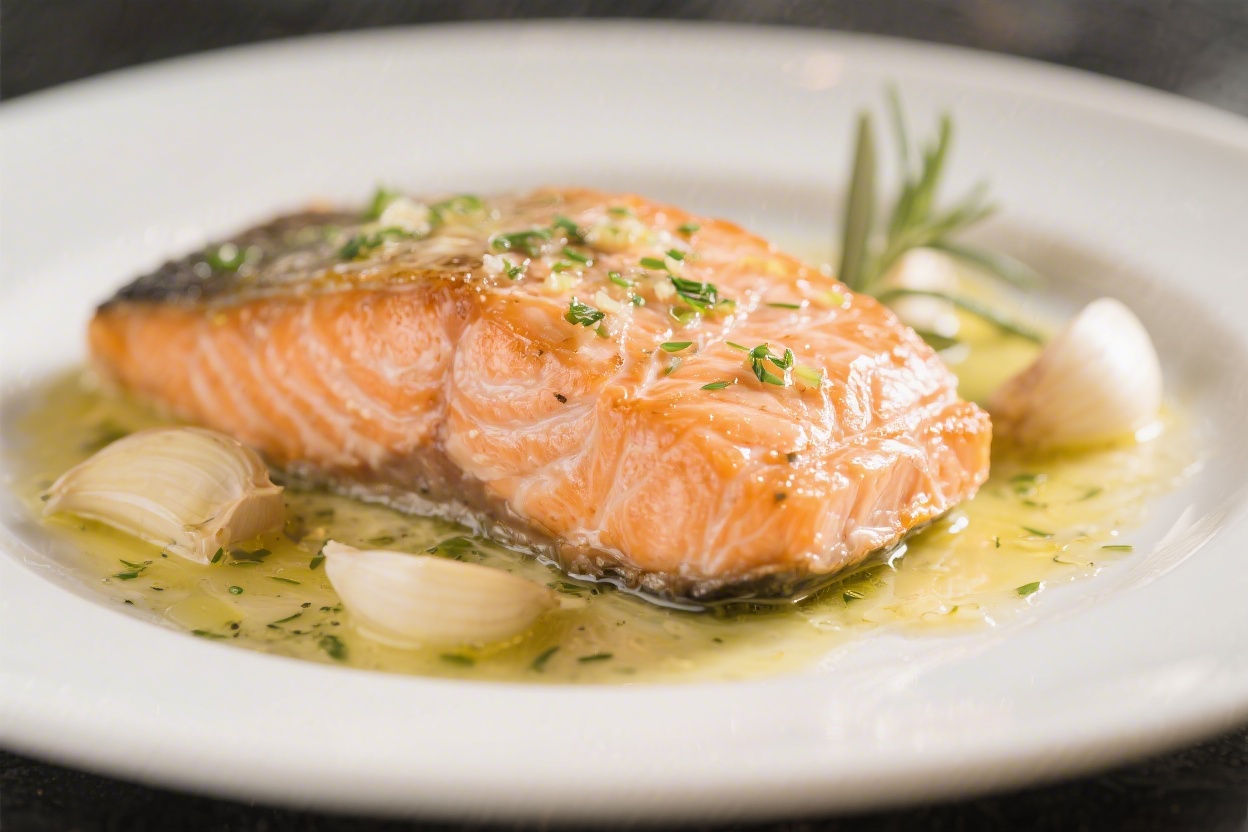
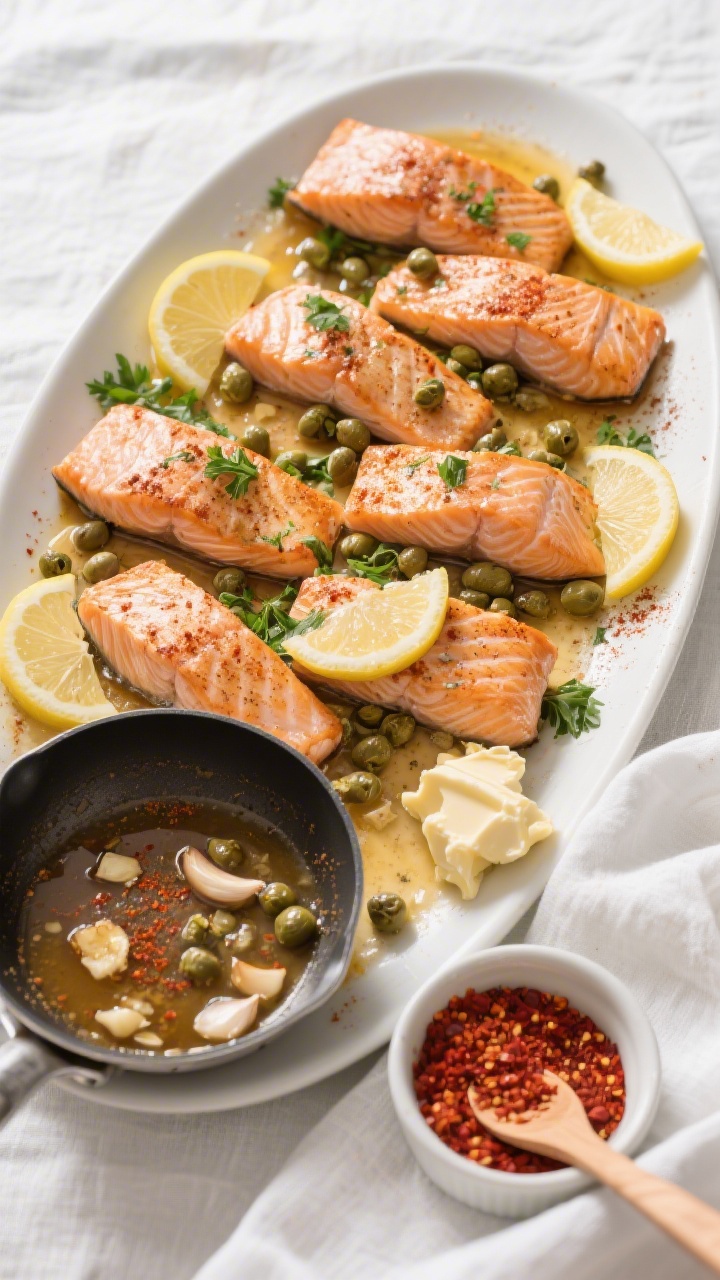
Garlic butter salmon is the kind of meal that tastes like you fussed, even when you didn’t. It’s rich, flaky, and full of bold flavor, yet it comes together quickly with a few pantry staples. Whether you’re cooking for a busy weeknight or hosting friends, this recipe delivers every time.
You’ll get crisp edges, tender flesh, and that lush, garlicky butter sauce everyone loves. Serve it with a bright squeeze of lemon and something green, and dinner is done.
Garlic Butter Salmon - Simple, Flavorful, and Weeknight-Friendly
Ingredients
- Salmon fillets (4 fillets, 5–6 ounces each), skin-on or skinless
- Unsalted butter (4 tablespoons), divided
- Olive oil (1 tablespoon), for high-heat searing
- Fresh garlic (3–4 cloves), finely minced
- Lemon (1), zested and juiced
- Fresh parsley (2 tablespoons), chopped
- Salt (about 1 teaspoon), to taste
- Freshly ground black pepper (1/2 teaspoon)
- Crushed red pepper flakes (optional, a pinch)
- Paprika (optional, 1/2 teaspoon) for color
- Lemon wedges for serving
Instructions
- Prep the salmon: Pat the fillets very dry with paper towels. Season both sides with salt, pepper, and paprika if using. Dry fish sears better and helps prevent sticking.
- Make the garlic butter: In a small bowl, combine the softened butter, minced garlic, lemon zest, half the parsley, and a pinch of red pepper flakes. Stir until smooth. This gives you an even spread of flavor.
- Preheat the pan: Set a large stainless steel or cast-iron skillet over medium-high heat. Add the olive oil and let it get hot until shimmering. A hot pan gives you that golden crust.
- Sear the salmon: Place the fillets in the pan, presentation side down (the side that was facing up in the package). Don’t move them for 3–4 minutes until a deep golden crust forms.
- Flip and baste: Flip the salmon carefully. Drop the garlic butter into the pan in small spoonfuls around the fish. As it melts, tilt the pan and spoon the butter over the fillets for 2–3 minutes. This bastes the salmon and gently cooks the garlic without burning.
- Finish with lemon: Squeeze in half the lemon juice and let it bubble for 30 seconds. Taste the sauce and adjust salt or lemon as needed.
- Check doneness: Salmon is done when it flakes easily and the thickest part reaches about 125–130°F for medium. Pull it off the heat a touch early; it will carryover cook.
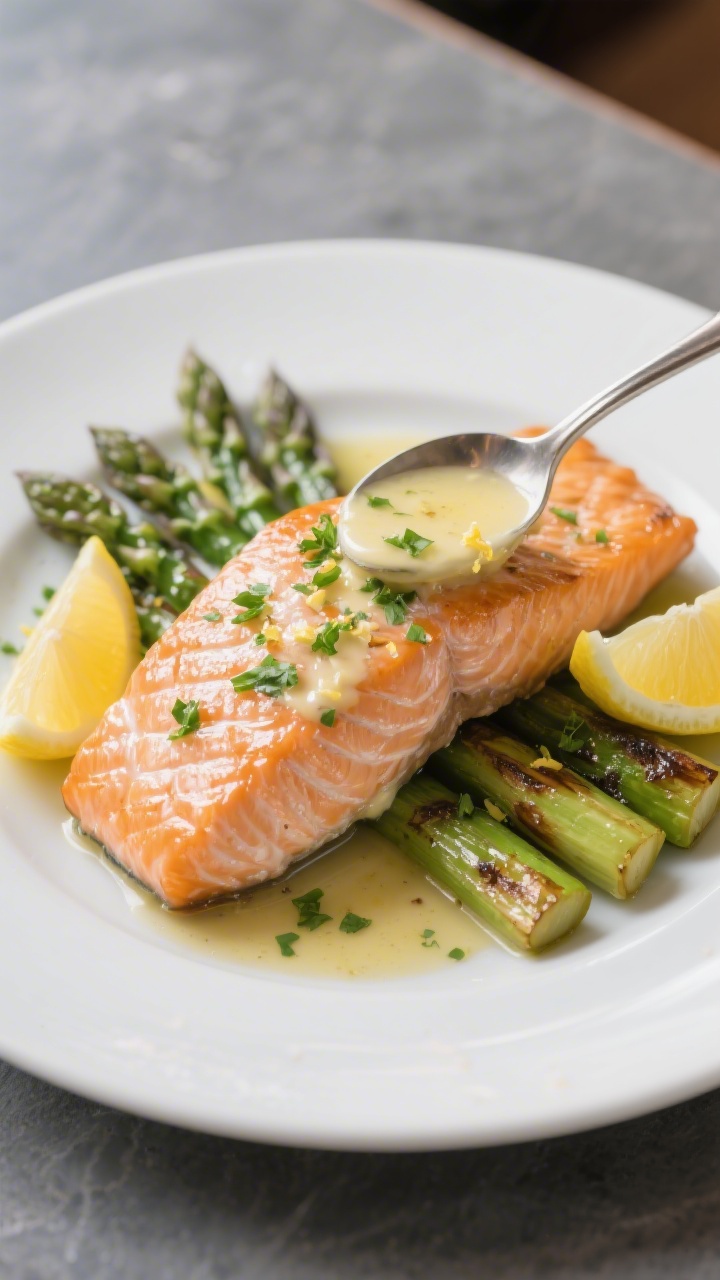
- Rest and garnish: Let the salmon rest for 2 minutes. Spoon the buttery pan sauce over the top, sprinkle with the remaining parsley, and serve with extra lemon wedges.
Why This Recipe Works
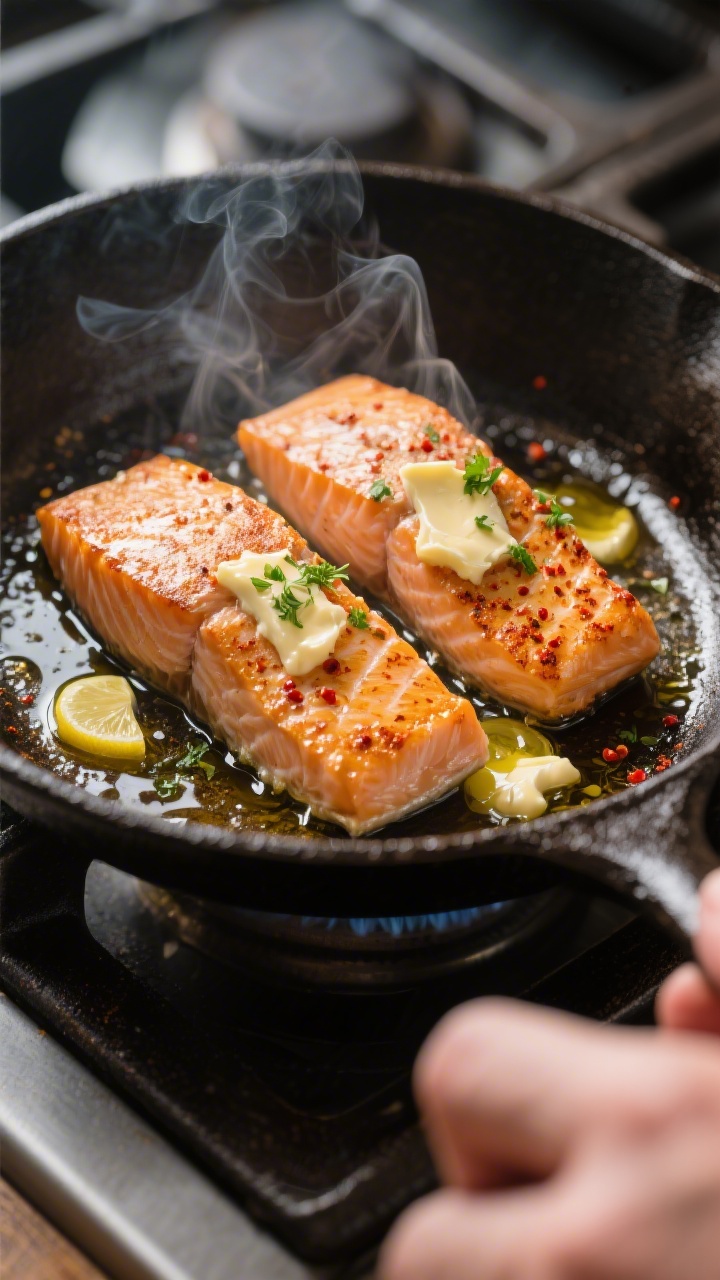
This recipe balances three simple elements: fat, acid, and aromatics. The butter keeps the salmon moist and adds a silky richness.
The garlic perfumes the dish without overpowering the fish, especially when it’s lightly cooked in the butter first. A finishing hit of lemon brightens everything and cuts through the richness. Cooking the salmon hot and fast gives you a crisp exterior while keeping the inside tender.
It’s straightforward, repeatable, and hard to mess up when you follow a few key steps.
What You’ll Need
- Salmon fillets (4 fillets, 5–6 ounces each), skin-on or skinless
- Unsalted butter (4 tablespoons), divided
- Olive oil (1 tablespoon), for high-heat searing
- Fresh garlic (3–4 cloves), finely minced
- Lemon (1), zested and juiced
- Fresh parsley (2 tablespoons), chopped
- Salt (about 1 teaspoon), to taste
- Freshly ground black pepper (1/2 teaspoon)
- Crushed red pepper flakes (optional, a pinch)
- Paprika (optional, 1/2 teaspoon) for color
- Lemon wedges for serving
Instructions
- Prep the salmon: Pat the fillets very dry with paper towels. Season both sides with salt, pepper, and paprika if using. Dry fish sears better and helps prevent sticking.
- Make the garlic butter: In a small bowl, combine the softened butter, minced garlic, lemon zest, half the parsley, and a pinch of red pepper flakes.
Stir until smooth. This gives you an even spread of flavor.
- Preheat the pan: Set a large stainless steel or cast-iron skillet over medium-high heat. Add the olive oil and let it get hot until shimmering.
A hot pan gives you that golden crust.
- Sear the salmon: Place the fillets in the pan, presentation side down (the side that was facing up in the package). Don’t move them for 3–4 minutes until a deep golden crust forms.
- Flip and baste: Flip the salmon carefully. Drop the garlic butter into the pan in small spoonfuls around the fish.
As it melts, tilt the pan and spoon the butter over the fillets for 2–3 minutes. This bastes the salmon and gently cooks the garlic without burning.
- Finish with lemon: Squeeze in half the lemon juice and let it bubble for 30 seconds. Taste the sauce and adjust salt or lemon as needed.
- Check doneness: Salmon is done when it flakes easily and the thickest part reaches about 125–130°F for medium.
Pull it off the heat a touch early; it will carryover cook.
- Rest and garnish: Let the salmon rest for 2 minutes. Spoon the buttery pan sauce over the top, sprinkle with the remaining parsley, and serve with extra lemon wedges.
Storage Instructions
- Refrigerate: Cool leftovers, then store in an airtight container for up to 3 days.
- Reheat gently: Warm in a 275°F (135°C) oven for 10–12 minutes or on the stovetop over low heat with a splash of water or broth. Avoid the microwave if you can; it can dry the fish out.
- Freeze: Cooked salmon can be frozen for up to 2 months.
Wrap tightly and thaw overnight in the fridge. Reheat gently to keep it moist.
- Use it up: Flake cold leftovers into salads, grain bowls, or tuck into tortillas with avocado and slaw.
Why This is Good for You
Salmon is rich in omega-3 fatty acids, which support heart and brain health. It’s also an excellent source of protein and key nutrients like vitamin D, B12, and selenium.
Using butter in moderation adds flavor, helping you feel satisfied with a modest portion. The lemon and parsley bring antioxidants and a fresh, clean finish. Paired with veggies and whole grains, this meal is both balanced and nourishing.
Pitfalls to Watch Out For
- Overcooking: Dry salmon is the main risk.
Pull it around 125–130°F and let carryover heat finish the job.
- Burnt garlic: Add garlic butter after flipping the fish so the garlic cooks gently in the melted butter, not in scorching oil.
- Cold fish: If the salmon is ice-cold, it can cook unevenly. Let it sit at room temperature for 10–15 minutes before searing.
- Wet surface: Moisture prevents browning. Pat the salmon dry to get that crisp, golden crust.
- Overcrowding: Cramming the pan drops the temperature.
Cook in batches if needed so each fillet gets a good sear.
Recipe Variations
- Sheet Pan Style: Place salmon on a foil-lined tray, spread with garlic butter, and bake at 400°F (205°C) for 10–14 minutes, depending on thickness. Great for hands-off cooking.
- Herb Swap: Try dill, chives, or basil in place of parsley. A mix of parsley and dill is especially nice with salmon.
- Lemon-Caper Twist: Stir 1 tablespoon chopped capers into the butter and finish with extra lemon juice for briny brightness.
- Honey Garlic: Add 1–2 teaspoons honey to the butter for a touch of sweetness that caramelizes lightly in the pan.
- Spicy Kick: Blend in 1 teaspoon harissa or sriracha with the butter for heat and depth.
- Dairy-Free Option: Use vegan butter or olive oil and skip the basting.
Finish with a squeeze of lemon and extra herbs.
- Grill It: Brush salmon with oil, grill skin-side down over medium heat, and top with garlic butter in the last 2 minutes.
FAQ
Can I use frozen salmon?
Yes. Thaw it in the fridge overnight or under cold running water, then pat it very dry before cooking. Frozen fillets often release more moisture, so drying well is key for browning.
Skin on or off?
Either works.
Skin-on helps protect the fish from overcooking and makes flipping easier. If you prefer skinless, be extra careful when searing so it doesn’t stick.
What if I don’t have a thermometer?
Use the flake test. Gently press the thickest part with a fork.
If it flakes in large, moist pieces and is just slightly translucent in the center, it’s done. Pull it earlier rather than later.
Can I make this in the oven from start to finish?
Absolutely. Spread the garlic butter over the fillets and bake at 400°F (205°C) for 10–14 minutes, depending on thickness.
Broil for the last 1–2 minutes for a bit of color.
What sides go well with garlic butter salmon?
Keep it fresh and simple. Try roasted asparagus, sautéed green beans, a lemony arugula salad, or garlicky broccoli. For starch, go with rice, quinoa, or crispy potatoes.
How do I avoid a fishy smell?
Buy the freshest salmon you can and cook it the day you purchase it.
A quick squeeze of lemon and good ventilation while searing also help keep the kitchen smelling clean.
Can I scale this for a crowd?
Yes. Use a whole side of salmon on a sheet pan, spread with garlic butter, and bake. Slice into portions after cooking.
It’s easy, elegant, and less hands-on than pan-searing multiple fillets.
Wrapping Up
Garlic butter salmon is a reliable, restaurant-worthy meal you can pull off any night of the week. With a hot pan, a simple flavored butter, and a squeeze of lemon, you get big flavor with minimal effort. Keep an eye on doneness, baste generously, and serve it right away for the best texture.
Once you make it a couple of times, it’ll become one of those go-to recipes you can cook by feel. Simple, satisfying, and always a hit.
Printable Recipe Card
Want just the essential recipe details without scrolling through the article? Get our printable recipe card with just the ingredients and instructions.
