
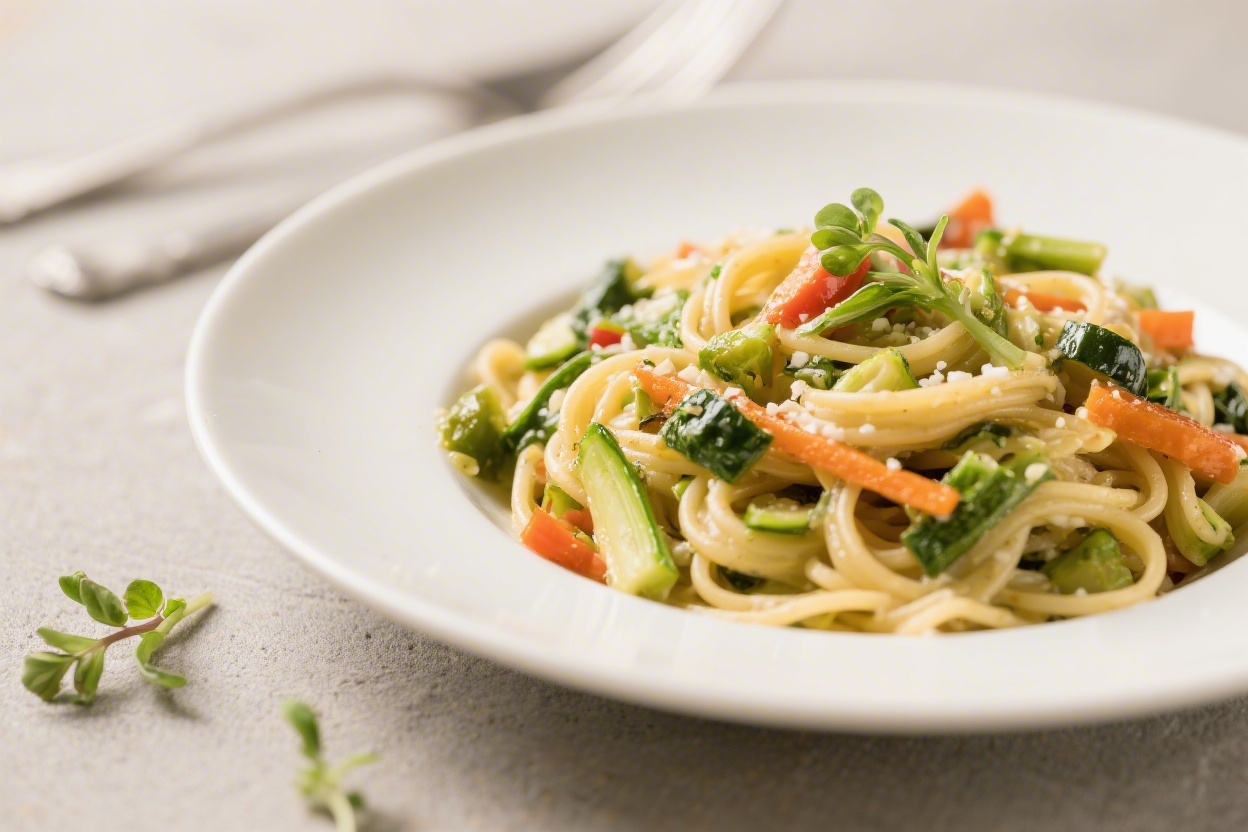
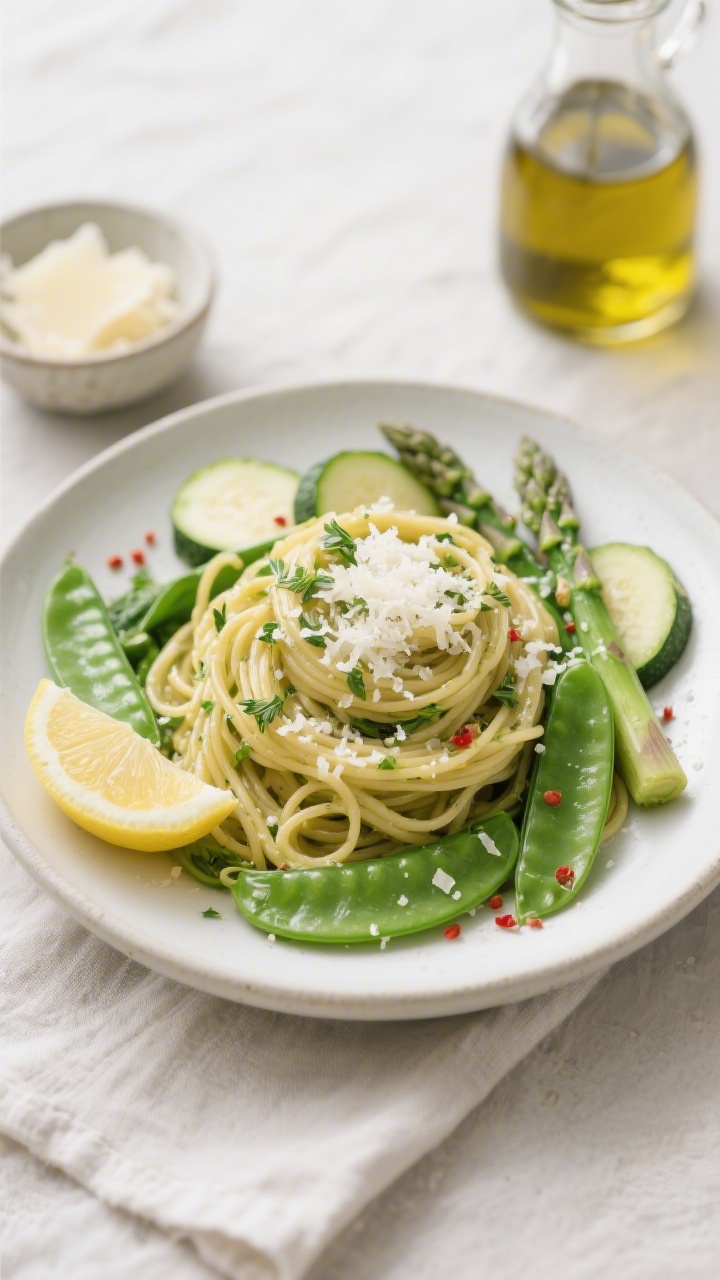
Spring vegetable pasta is the kind of meal that feels like a deep breath of fresh air. It’s colorful, quick to make, and loaded with tender, crunchy vegetables that taste like the season. You don’t need complicated techniques or a long ingredient list—just good produce and a few pantry staples.
This dish is flexible, forgiving, and easy to love. Make it on a busy weeknight or serve it for a relaxed weekend lunch with friends.
Spring Vegetable Pasta - A Bright, Fresh Weeknight Favorite
Ingredients
- 12 ounces pasta (spaghetti, linguine, or short pasta like orecchiette)
- 3 tablespoons extra-virgin olive oil, plus more for finishing
- 3 cloves garlic, thinly sliced
- 1 small shallot, finely chopped
- 1 bunch asparagus (about 1 pound), trimmed and cut into 1-inch pieces
- 1 cup sugar snap peas or snow peas, trimmed and halved
- 1 cup peas (fresh or frozen, no need to thaw)
- 1 small zucchini, halved lengthwise and sliced into half-moons
- 1 cup baby spinach or arugula
- Zest and juice of 1 lemon
- 1/2 cup grated Parmesan or Pecorino Romano, plus more to serve
- 1/4 cup fresh herbs (basil, mint, parsley), roughly chopped
- Red pepper flakes, to taste
- Kosher salt and freshly ground black pepper
- Reserved pasta water (about 1 cup)
- Optional: 2 tablespoons unsalted butter for extra silkiness
Instructions
- Boil the pasta. Bring a large pot of well-salted water to a rolling boil. Cook the pasta until just shy of al dente. Reserve 1 cup of pasta water, then drain.
- Prep the vegetables while the water heats. Trim the asparagus, slice the zucchini, and halve the snap peas. Have the peas, spinach, lemon, and herbs ready to go.
- Soften the aromatics. In a large skillet, warm the olive oil over medium heat. Add the shallot and a pinch of salt. Cook 2–3 minutes until translucent, then add the garlic and a pinch of red pepper flakes. Stir for 30 seconds, just until fragrant.
- Cook the sturdy veg first. Add asparagus and zucchini to the skillet with a splash of pasta water. Season with salt and pepper. Cook 3–4 minutes, stirring, until crisp-tender.
- Add quick-cooking greens. Stir in snap peas and peas. Cook 2 minutes more. Toss in the spinach and let it wilt.
- Make it saucy. Add the drained pasta to the skillet. Pour in 1/2 cup reserved pasta water, lemon zest, and lemon juice. Toss vigorously over medium heat for 1–2 minutes until everything is glossy and combined. If using, swirl in the butter.
- Finish with cheese and herbs. Off the heat, sprinkle in the grated Parmesan and most of the herbs. Toss until the cheese melts and lightly thickens the sauce. Add more pasta water if it looks dry.
- Taste and adjust. Add salt, pepper, extra lemon, or red pepper flakes to taste. Drizzle with a little olive oil. Top with remaining herbs and more cheese at the table.
Why This Recipe Works
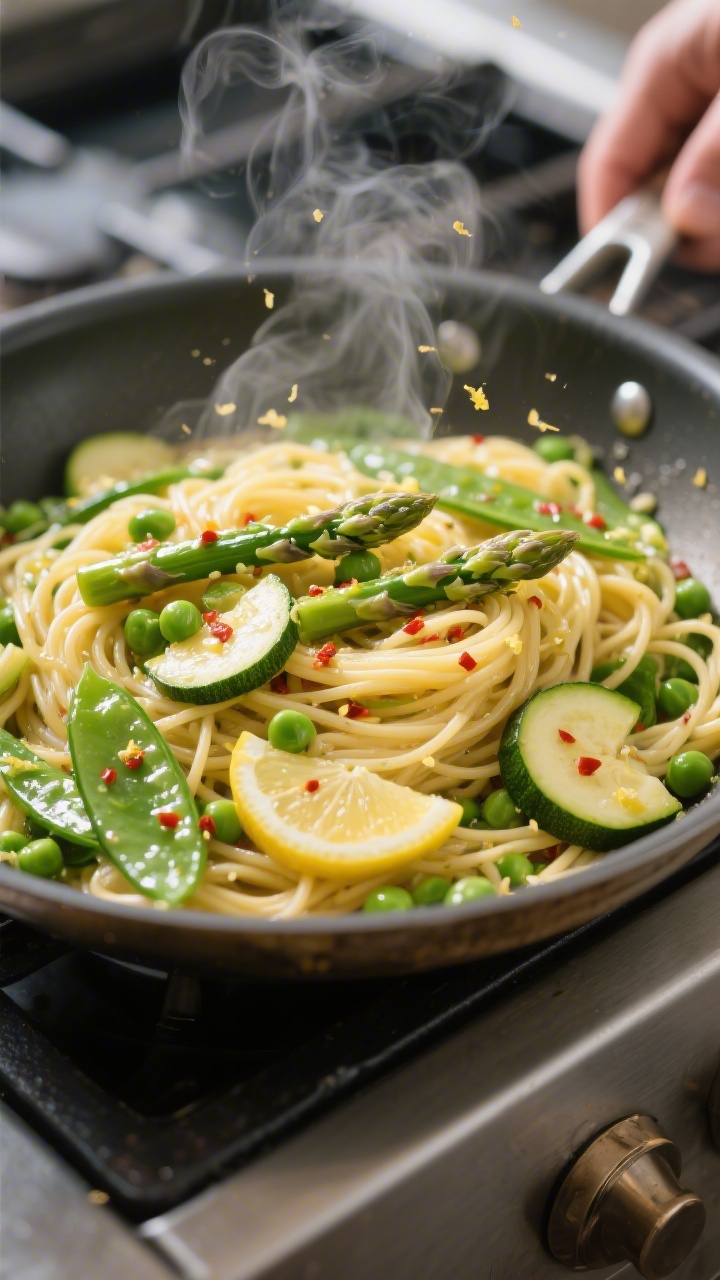
This pasta keeps things simple and lets spring vegetables shine. A lemony, garlicky olive oil sauce coats the noodles without weighing them down.
Briefly blanching or sautéing the vegetables keeps them crisp-tender and bright. A splash of starchy pasta water brings the sauce together and helps it cling to every strand. Finished with fresh herbs and a sprinkle of cheese, it tastes light but still satisfying.
Ingredients
- 12 ounces pasta (spaghetti, linguine, or short pasta like orecchiette)
- 3 tablespoons extra-virgin olive oil, plus more for finishing
- 3 cloves garlic, thinly sliced
- 1 small shallot, finely chopped
- 1 bunch asparagus (about 1 pound), trimmed and cut into 1-inch pieces
- 1 cup sugar snap peas or snow peas, trimmed and halved
- 1 cup peas (fresh or frozen, no need to thaw)
- 1 small zucchini, halved lengthwise and sliced into half-moons
- 1 cup baby spinach or arugula
- Zest and juice of 1 lemon
- 1/2 cup grated Parmesan or Pecorino Romano, plus more to serve
- 1/4 cup fresh herbs (basil, mint, parsley), roughly chopped
- Red pepper flakes, to taste
- Kosher salt and freshly ground black pepper
- Reserved pasta water (about 1 cup)
- Optional: 2 tablespoons unsalted butter for extra silkiness
How to Make It
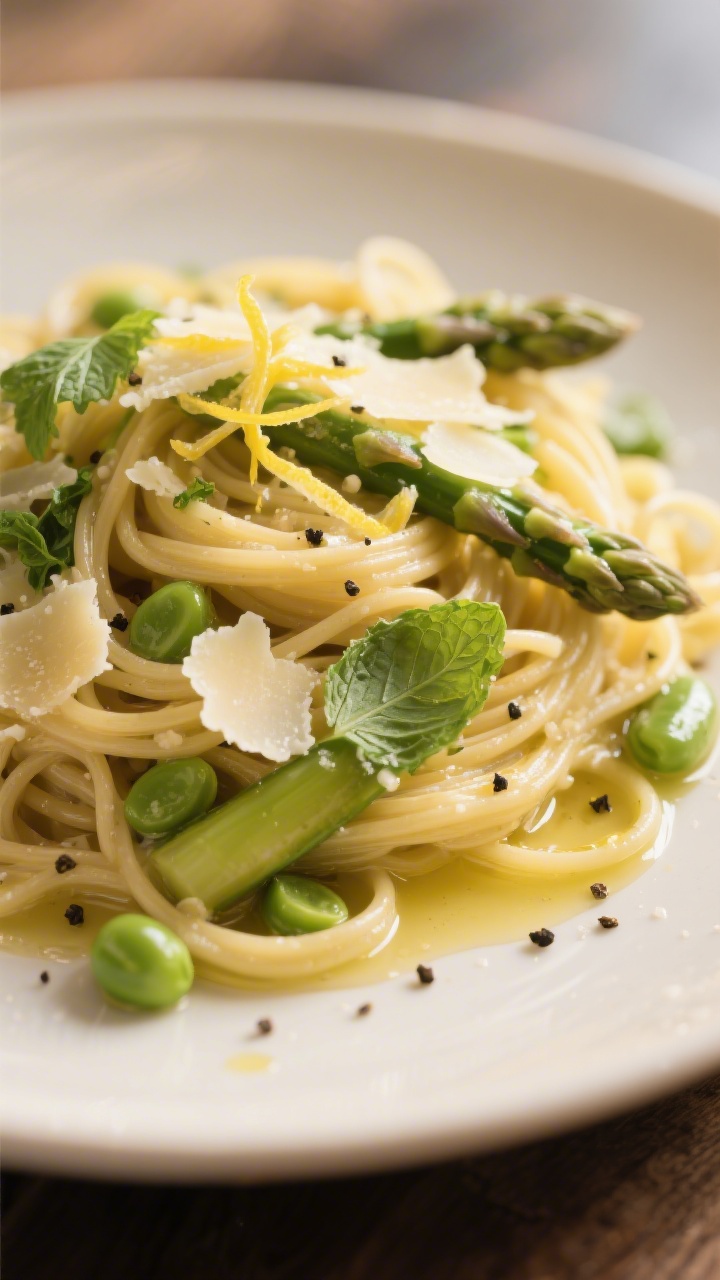
- Boil the pasta. Bring a large pot of well-salted water to a rolling boil.
Cook the pasta until just shy of al dente. Reserve 1 cup of pasta water, then drain.
- Prep the vegetables while the water heats. Trim the asparagus, slice the zucchini, and halve the snap peas. Have the peas, spinach, lemon, and herbs ready to go.
- Soften the aromatics. In a large skillet, warm the olive oil over medium heat. Add the shallot and a pinch of salt.
Cook 2–3 minutes until translucent, then add the garlic and a pinch of red pepper flakes. Stir for 30 seconds, just until fragrant.
- Cook the sturdy veg first. Add asparagus and zucchini to the skillet with a splash of pasta water. Season with salt and pepper.
Cook 3–4 minutes, stirring, until crisp-tender.
- Add quick-cooking greens. Stir in snap peas and peas. Cook 2 minutes more. Toss in the spinach and let it wilt.
- Make it saucy. Add the drained pasta to the skillet.
Pour in 1/2 cup reserved pasta water, lemon zest, and lemon juice. Toss vigorously over medium heat for 1–2 minutes until everything is glossy and combined. If using, swirl in the butter.
- Finish with cheese and herbs. Off the heat, sprinkle in the grated Parmesan and most of the herbs.
Toss until the cheese melts and lightly thickens the sauce. Add more pasta water if it looks dry.
- Taste and adjust. Add salt, pepper, extra lemon, or red pepper flakes to taste. Drizzle with a little olive oil.
Top with remaining herbs and more cheese at the table.
Storage Instructions
- Refrigerate: Store leftovers in an airtight container for up to 3 days. Add a splash of water or broth when reheating to loosen the sauce.
- Reheat: Warm gently on the stove over low heat, stirring and adding a bit of water or olive oil as needed. Microwave in short bursts, stirring between intervals.
- Freezing: Not ideal.
The vegetables can turn mushy, and the pasta may get soft. If you must, freeze for up to 1 month and reheat on the stove with extra cheese and lemon to refresh the flavors.
Health Benefits
- Vegetable-forward: Asparagus, peas, and greens add fiber, vitamins A, C, and K, and valuable phytonutrients that support overall health.
- Light but satisfying: Olive oil and a modest amount of cheese provide healthy fats and protein without making the dish heavy.
- Whole-grain option: Using whole-wheat pasta increases fiber and keeps you full longer.
- Lower sodium control: Seasoning the cooking water well means you can use less salt later while keeping the dish flavorful.
- Balanced plate: Carbs, vegetables, and healthy fats make a well-rounded meal. Add grilled chicken, shrimp, or white beans for extra protein if you like.
What Not to Do
- Don’t overcook the vegetables. They should be bright and crisp-tender, not dull or soft.
- Don’t skip the pasta water. Its starch brings the sauce together and helps it cling to the noodles.
- Don’t drown it in cheese or cream. The charm here is light, fresh flavor.
A little cheese goes a long way.
- Don’t forget to season. Salt the pasta water well and taste as you go. Lemon and pepper wake everything up.
- Don’t cook everything at once. Stagger the vegetables. Sturdy ones first, delicate ones last.
Recipe Variations
- Creamy Lemon Ricotta: Stir 1/2 cup ricotta with lemon zest and a splash of pasta water, then fold into the pasta off heat.
- Herby Pesto Twist: Replace some olive oil with basil or arugula pesto.
Add a squeeze of lemon for brightness.
- Protein Boost: Add sautéed shrimp, grilled chicken, crispy prosciutto, or a can of white beans for extra staying power.
- Vegan Friendly: Skip the cheese or use a vegan alternative. Add toasted pine nuts or almonds for richness and crunch.
- Citrus Swap: Use Meyer lemon for a sweeter note, or add a touch of orange zest alongside the lemon.
- Veggie Freestyle: Try artichoke hearts, cherry tomatoes, broccolini, or leeks. Use what looks best at the market.
- Spice Lovers: Add more red pepper flakes or finish with a drizzle of Calabrian chili oil.
FAQ
Can I use frozen vegetables?
Yes.
Frozen peas are perfect, and frozen asparagus or mixed spring veggies can work in a pinch. Add them straight from the freezer and cook just until heated through to avoid mushiness.
What pasta shape works best?
Long shapes like spaghetti and linguine are great for a silky, light sauce. Short shapes like orecchiette or farfalle hold small vegetables nicely.
Use what you have and enjoy.
How do I prevent the pasta from getting dry?
Reserve at least 1 cup of pasta water. Add it a little at a time as you toss with the vegetables and cheese. The starch creates a glossy sauce that keeps everything moist.
Can I make it gluten-free?
Absolutely.
Use your favorite gluten-free pasta and keep an eye on the cook time since it can vary. The rest of the recipe stays the same.
What cheese is best if I don’t have Parmesan?
Pecorino Romano brings a saltier, sharper edge. Grated aged Asiago also works.
For a mellower finish, crumble in a little fresh goat cheese off the heat.
How far in advance can I prep?
You can chop the vegetables and herbs up to a day ahead and store them separately. Zest the lemon in advance, but wait to cut and juice it until cooking for the freshest flavor.
How do I make it kid-friendly?
Go light on the lemon and red pepper flakes, and choose milder veggies like peas and zucchini. Add a touch more cheese to make it extra cozy.
Is butter necessary?
No.
Butter adds silkiness, but olive oil alone keeps the pasta bright and light. If you skip butter, consider an extra drizzle of good olive oil at the end.
Wrapping Up
Spring vegetable pasta is simple, fresh, and fast—exactly what a weeknight calls for. It celebrates good produce and smart technique, not heavy sauces or long simmer times.
With a few tweaks, you can make it creamy, spicy, vegan, or protein-packed. Keep the vegetables crisp, save your pasta water, and finish with lemon and herbs. You’ll have a bowl that tastes like spring, any night of the week.
Printable Recipe Card
Want just the essential recipe details without scrolling through the article? Get our printable recipe card with just the ingredients and instructions.
