
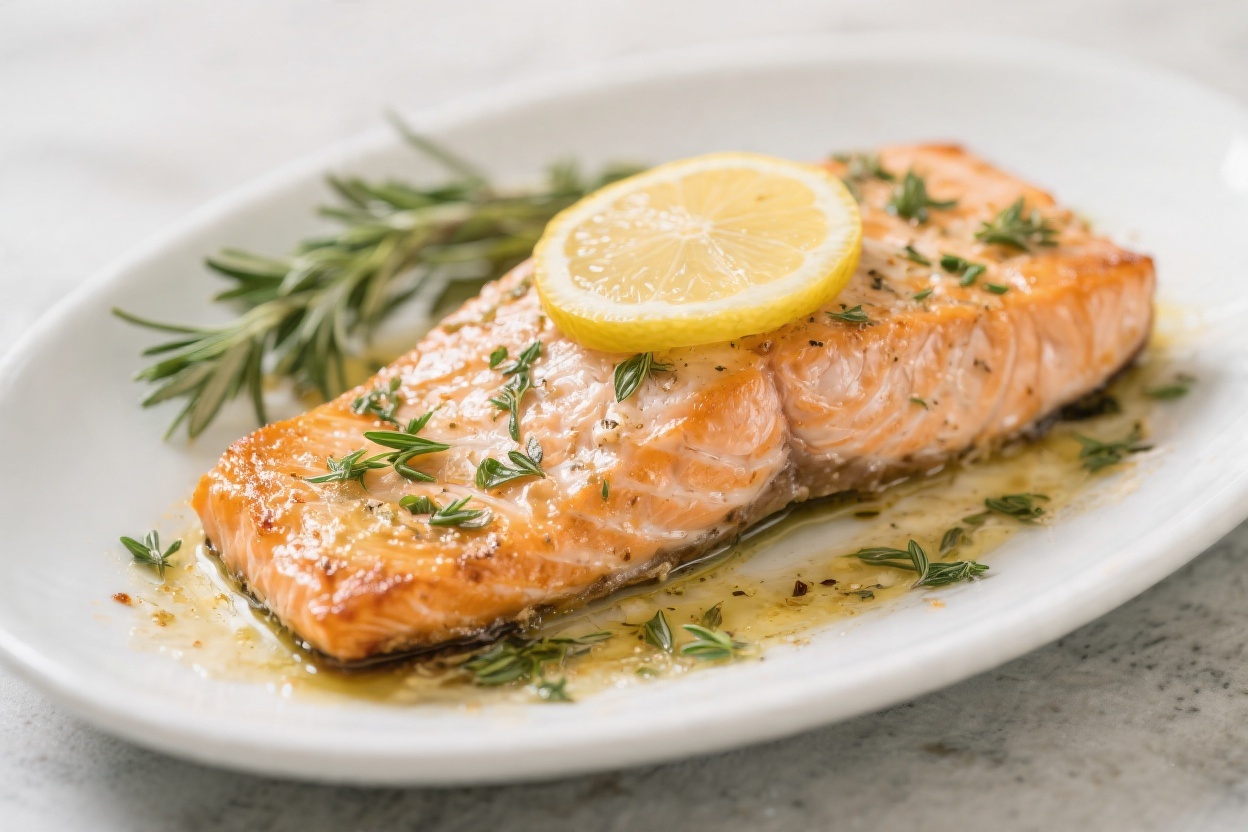
This is the kind of dinner that looks impressive but takes almost no effort. Baked Lemon Herb Salmon gives you flaky, juicy fish with a crisp edge and bright, fresh flavor. It’s all about a handful of pantry herbs, fresh lemon, and a quick bake in the oven.
You’ll get reliable results whether you’re cooking for one or feeding a crowd. If you’re new to cooking salmon, this method is forgiving and easy to master.
Baked Lemon Herb Salmon - Simple, Bright, and Weeknight-Friendly
Ingredients
- Salmon fillets (4 pieces, 5–6 ounces each), skin-on preferred
- Lemon (1 large), zested and thinly sliced
- Fresh garlic (2 cloves), minced
- Olive oil (2 tablespoons)
- Fresh herbs: parsley (2 tablespoons, chopped) and dill (1 tablespoon, chopped)
- Dried herbs: oregano (1 teaspoon) and thyme (1/2 teaspoon)
- Salt (3/4 to 1 teaspoon, to taste)
- Black pepper (1/2 teaspoon, freshly ground)
- Red pepper flakes (optional, a pinch for heat)
- Butter (optional, 1 tablespoon, cut into small pieces)
- Lemon wedges for serving
Instructions
- Preheat the oven. Set it to 400°F (200°C). Line a baking sheet with parchment or lightly grease a baking dish to prevent sticking.
- Prep the salmon. Pat the fillets dry with paper towels. Dry surface = better browning and fewer watery juices on the pan.
- Mix the seasoning. In a small bowl, combine olive oil, minced garlic, lemon zest, parsley, dill, oregano, thyme, salt, and pepper. If using, add a pinch of red pepper flakes.
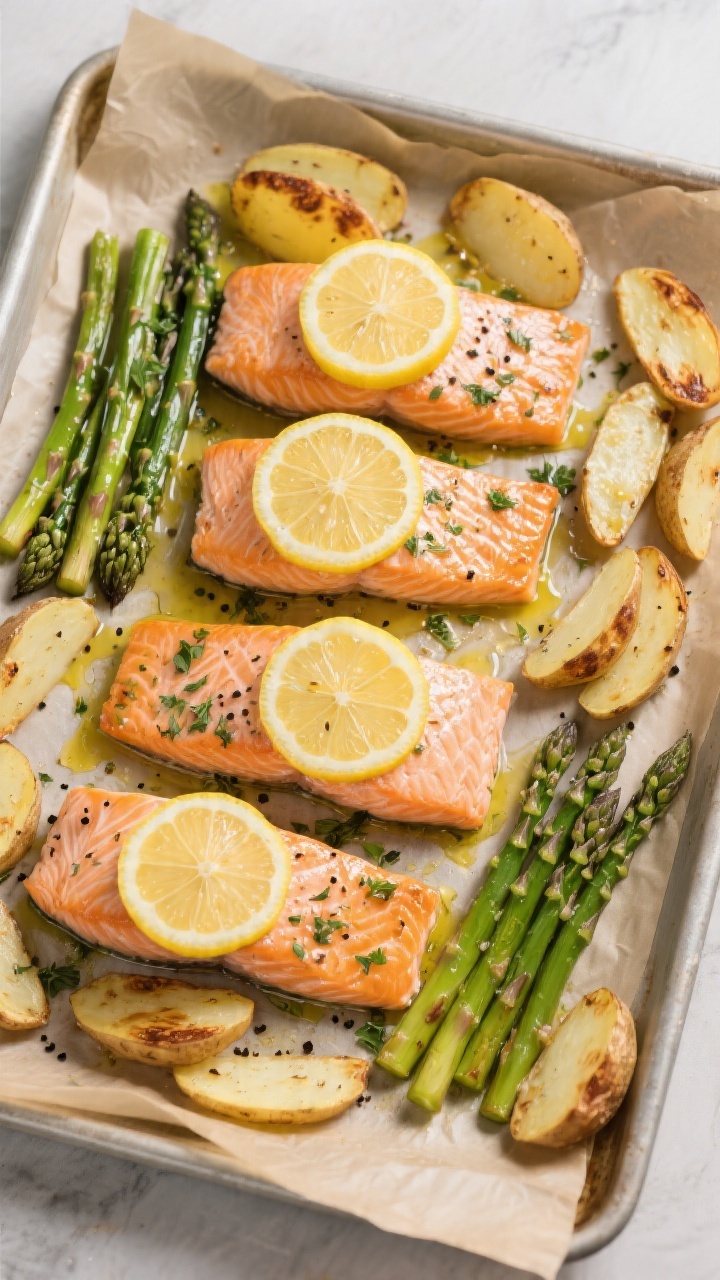
- Season generously. Place the salmon skin-side down. Spoon the herb mixture over the tops and sides, coating evenly. Tuck a lemon slice or two on each fillet. Dot with small pieces of butter if you want extra richness.
- Bake. Cook for 10–14 minutes, depending on thickness. Aim for salmon that flakes easily with a fork and is just opaque in the center. For a steak-thick piece (about 1-inch), 12 minutes is a good target.
- Optional broil. For a lightly crisp top, switch to broil for 1–2 minutes at the end. Watch closely—lemon slices can brown fast.
- Rest briefly. Let the salmon sit for 2 minutes. This helps the juices settle so each bite stays moist.
- Serve. Finish with a squeeze of fresh lemon. Pair with roasted potatoes, steamed asparagus, a simple salad, or rice.
Why This Recipe Works
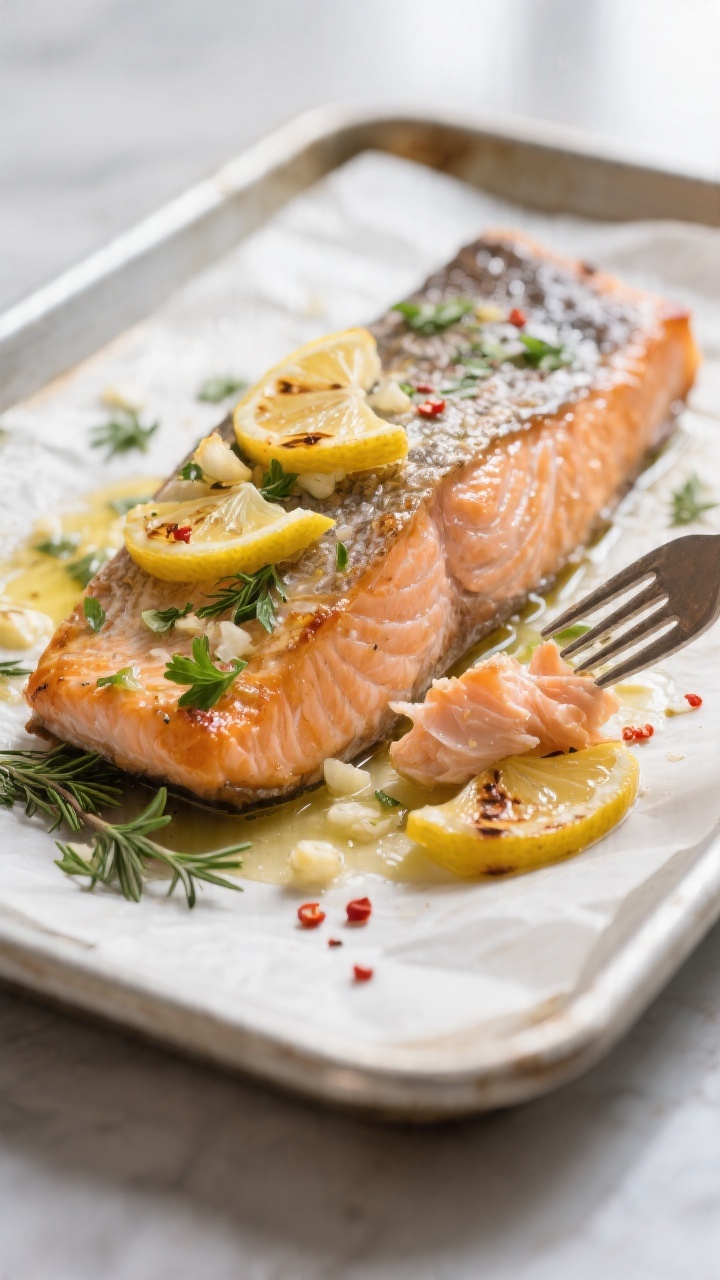
Salmon loves high heat and simple seasoning. Lemon adds acidity that balances the richness of the fish, while herbs bring aroma and freshness without overpowering it.
A light coating of olive oil helps the surface caramelize just enough for texture. Baking at a steady temperature cooks the fish evenly, so you don’t have to hover over a pan. The result is tender, flaky salmon with a clean, bright taste every time.
What You’ll Need
- Salmon fillets (4 pieces, 5–6 ounces each), skin-on preferred
- Lemon (1 large), zested and thinly sliced
- Fresh garlic (2 cloves), minced
- Olive oil (2 tablespoons)
- Fresh herbs: parsley (2 tablespoons, chopped) and dill (1 tablespoon, chopped)
- Dried herbs: oregano (1 teaspoon) and thyme (1/2 teaspoon)
- Salt (3/4 to 1 teaspoon, to taste)
- Black pepper (1/2 teaspoon, freshly ground)
- Red pepper flakes (optional, a pinch for heat)
- Butter (optional, 1 tablespoon, cut into small pieces)
- Lemon wedges for serving
How to Make It
- Preheat the oven. Set it to 400°F (200°C).Line a baking sheet with parchment or lightly grease a baking dish to prevent sticking.
- Prep the salmon. Pat the fillets dry with paper towels. Dry surface = better browning and fewer watery juices on the pan.
- Mix the seasoning. In a small bowl, combine olive oil, minced garlic, lemon zest, parsley, dill, oregano, thyme, salt, and pepper. If using, add a pinch of red pepper flakes.
- Season generously. Place the salmon skin-side down.Spoon the herb mixture over the tops and sides, coating evenly. Tuck a lemon slice or two on each fillet. Dot with small pieces of butter if you want extra richness.
- Bake. Cook for 10–14 minutes, depending on thickness.Aim for salmon that flakes easily with a fork and is just opaque in the center. For a steak-thick piece (about 1-inch), 12 minutes is a good target.
- Optional broil. For a lightly crisp top, switch to broil for 1–2 minutes at the end. Watch closely—lemon slices can brown fast.
- Rest briefly. Let the salmon sit for 2 minutes.This helps the juices settle so each bite stays moist.
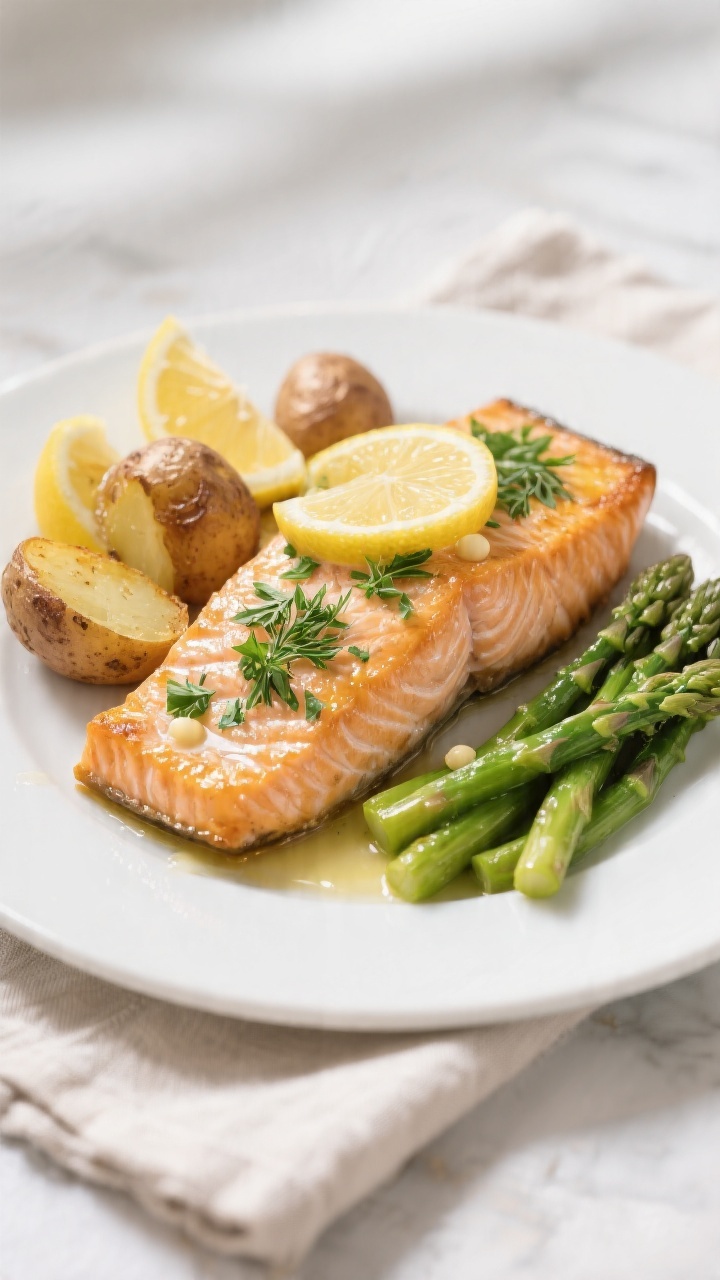
- Serve. Finish with a squeeze of fresh lemon. Pair with roasted potatoes, steamed asparagus, a simple salad, or rice.
Storage Instructions
- Refrigerate: Cool completely, then store in an airtight container for up to 3 days.
- Reheat gently: Warm at 275°F (135°C) for 10–12 minutes, or use low heat in a covered skillet with a splash of water. Avoid the microwave if you can—it can dry the fish.
- Serve cold: Leftover salmon is great flaked over salads, folded into pasta with lemon and olive oil, or made into salmon salad for sandwiches.
- Freezing: You can freeze cooked salmon up to 2 months.Wrap tightly and thaw overnight in the fridge. Texture will be slightly firmer once thawed.
Why This is Good for You
Salmon is rich in omega-3 fatty acids, which support heart and brain health. It’s also a high-quality source of protein and provides key nutrients like vitamin D, B vitamins, and selenium.
Baking keeps added fats low while locking in moisture. Fresh herbs and lemon add flavor without heavy sauces or sugar. It’s a balanced, feel-good meal you can make on repeat.
What Not to Do
- Don’t overcook. Dry salmon is the number one mistake.Pull it when it flakes but still looks slightly translucent at the thickest point.
- Don’t skip drying the fish. Moisture on the surface leads to steaming instead of light browning.
- Don’t drown it in lemon juice before baking. Too much liquid can make the fish sour and mushy. Save most of the lemon for finishing.
- Don’t use old, fishy-smelling salmon. Fresh salmon should smell clean and slightly briny, not pungent.
- Don’t overcrowd the pan. Give each fillet space so heat circulates and edges can caramelize.
Alternatives
- Herbs: Swap dill and parsley for basil, chives, or cilantro. For a woodsy note, add rosemary—go light, it’s strong.
- Citrus: Try lime or orange zest for a twist.Meyer lemon gives a softer, sweeter flavor.
- Fat: Use melted ghee or avocado oil instead of olive oil. Skip butter if you want it dairy-free.
- Spice blend: Replace dried oregano and thyme with Italian seasoning, herbes de Provence, or a lemon pepper blend (reduce added salt accordingly).
- Cooking method: Air fryer at 390°F (200°C) for 7–10 minutes, or grill over medium heat on well-oiled grates for 3–4 minutes per side.
- Protein swap: This herb-lemon mix works with trout, cod, or halibut. Adjust time for thinner or thicker fillets.
- Sheet-pan meal: Add asparagus, broccolini, or thin potato slices to the pan.Start the potatoes 10 minutes early, then add the salmon.
FAQ
How do I know when salmon is done?
Look for flakes that separate easily with a fork and a center that’s just opaque. If you use a thermometer, pull it at 125–130°F (52–54°C) for medium and let it rest. It will rise a few degrees off heat.
Should I remove the skin?
Keep it on for baking.
The skin protects the flesh from direct heat and helps keep it moist. You can slide a spatula between the skin and fish after cooking if you don’t want to eat it.
Can I use frozen salmon?
Yes. Thaw it overnight in the fridge, then pat very dry before seasoning.
If cooking from frozen, add a few extra minutes and skip the broil step to prevent burning the herbs.
What if I don’t have fresh herbs?
Use dried herbs only. Reduce quantities slightly because dried herbs are more concentrated. Start with 1 teaspoon dried parsley and 1/2 teaspoon dried dill, and adjust to taste.
Can I make this ahead?
You can mix the herb oil and prep the lemon slices in advance.
Season the salmon right before baking to keep the surface dry and the texture firm.
How do I prevent that white stuff (albumin) from forming?
Cook gently and avoid overbaking. Pat the fish dry and don’t use a very high temperature for too long. A short rest after cooking also helps keep albumin from pushing to the surface.
Is farmed or wild salmon better for this recipe?
Both work.
Wild salmon is leaner and cooks faster, so check early. Farmed salmon is richer and a bit more forgiving, which can be helpful for beginners.
What sides go well with it?
Simple is best: roasted potatoes, lemony rice, garlic green beans, sautéed spinach, or a crisp cucumber salad. The bright flavors of the salmon pair well with fresh, green sides.
In Conclusion
Baked Lemon Herb Salmon is a reliable, no-fuss dinner with big flavor and very little cleanup.
A few fresh herbs, a lemon, and a hot oven are all you need for tender, flaky fish that feels special. Keep an eye on the cook time, finish with a squeeze of lemon, and you’re set. Whether it’s a busy weeknight or a relaxed Sunday, this recipe delivers every time.
Printable Recipe Card
Want just the essential recipe details without scrolling through the article? Get our printable recipe card with just the ingredients and instructions.
