
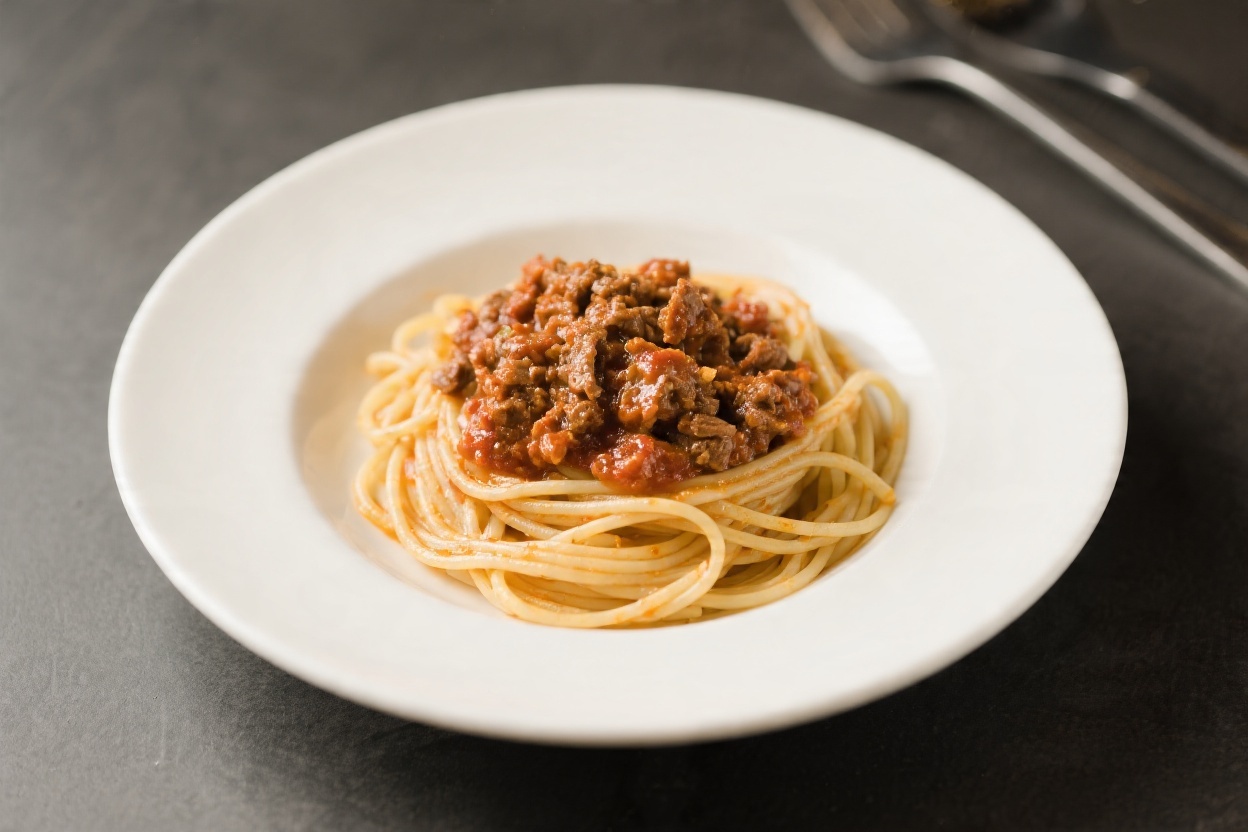
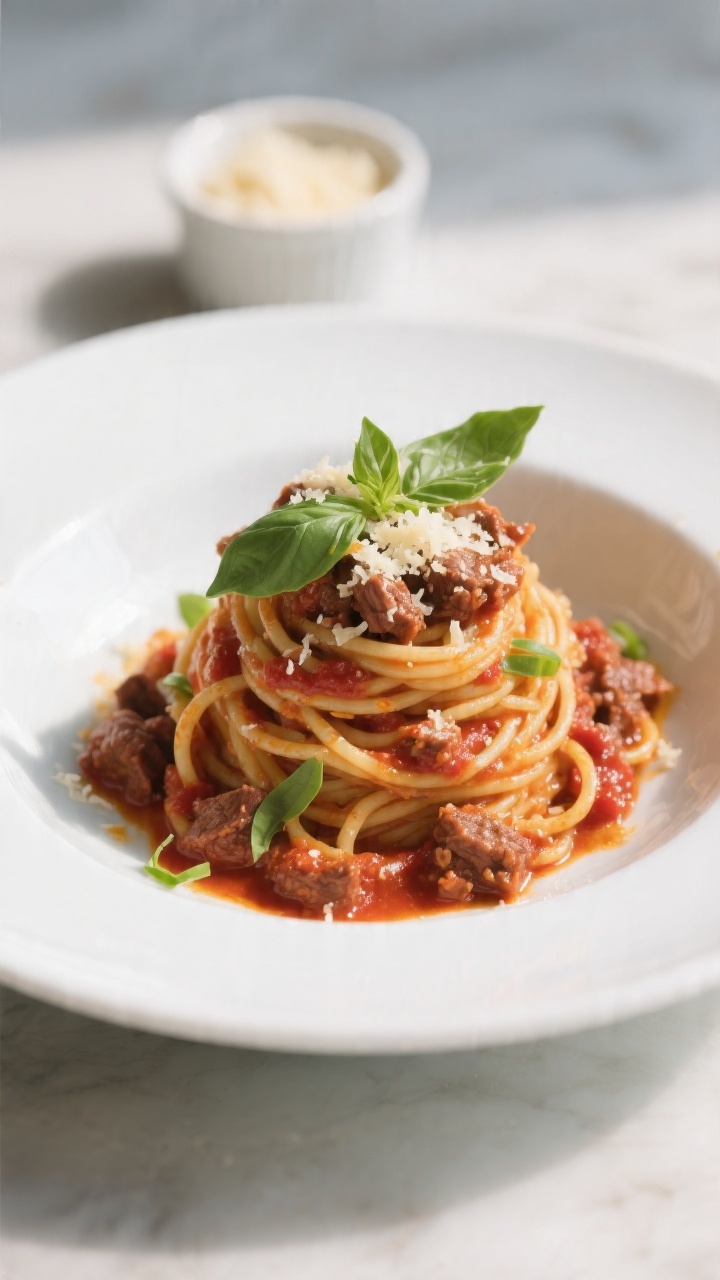
Nothing beats a bowl of spaghetti with meat sauce when you want something warm, familiar, and satisfying. It’s the kind of meal that brings everyone to the table without fuss. This version is straightforward, fast enough for a weeknight, and rich with flavor.
You’ll build depth with simple pantry ingredients and a few easy tricks. No fancy steps, just a sauce that tastes slow-simmered in under an hour.
Simple Spaghetti With Meat Sauce - A Comforting Weeknight Classic
Ingredients
- 12 ounces (340 g) spaghetti
- 1 pound (450 g) ground beef (80–90% lean works well)
- 2 tablespoons olive oil (if needed)
- 1 medium yellow onion, finely chopped
- 3–4 garlic cloves, minced
- 1 (28-ounce) can crushed tomatoes or tomato puree
- 2 tablespoons tomato paste
- 1 teaspoon sugar (to balance acidity; optional but helpful)
- 1 teaspoon dried oregano
- 1 teaspoon dried basil (or 1 tablespoon fresh, chopped)
- 1/2 teaspoon red pepper flakes (optional, for a little heat)
- 1 bay leaf (optional)
- 1/2 cup beef broth or water (as needed to loosen sauce)
- 2 tablespoons unsalted butter (for finishing)
- Salt and black pepper, to taste
- Fresh parsley or basil, chopped, for garnish
- Freshly grated Parmesan, for serving
Instructions
- Boil the pasta water. Bring a large pot of salted water to a rolling boil. Use about 1 tablespoon of salt per 4 quarts of water for properly seasoned pasta.
- Brown the meat. In a large skillet or Dutch oven over medium-high heat, add the ground beef. If your pan is dry, add a little olive oil. Cook, breaking it into small pieces, until deeply browned and no pink remains, about 6–8 minutes. Season lightly with salt and pepper.
- Drain excess fat (if needed). If there’s more than a tablespoon of fat left, spoon some off. Leave a bit for flavor.
- Sauté onion and garlic. Push the meat to the sides and add the onion to the center. Cook until soft and translucent, 4–5 minutes. Stir in the garlic and cook 30–60 seconds until fragrant. Don’t let it burn.
- Build the sauce. Stir in the tomato paste and cook for 1 minute to caramelize it slightly. Add crushed tomatoes, oregano, basil, red pepper flakes, sugar, bay leaf, and a pinch of salt and pepper. Add the broth or water if the sauce seems very thick.
- Simmer gently. Reduce heat to low and simmer uncovered for 15–25 minutes, stirring occasionally. You want a gently bubbling sauce that thickens slightly. Taste and adjust seasoning.
- Cook the spaghetti. Add spaghetti to the boiling water and cook until just shy of al dente (usually 1 minute less than package directions). Reserve about 1 cup of pasta water before draining.
- Marry pasta and sauce. Remove the bay leaf. Add the butter to the sauce and stir until melted for a glossy finish. Add the drained spaghetti and a splash of reserved pasta water. Toss over low heat for 1–2 minutes until the sauce clings. Add more pasta water as needed.
- Finish and serve. Sprinkle with chopped parsley or basil. Serve hot with plenty of freshly grated Parmesan.
Why This Recipe Works
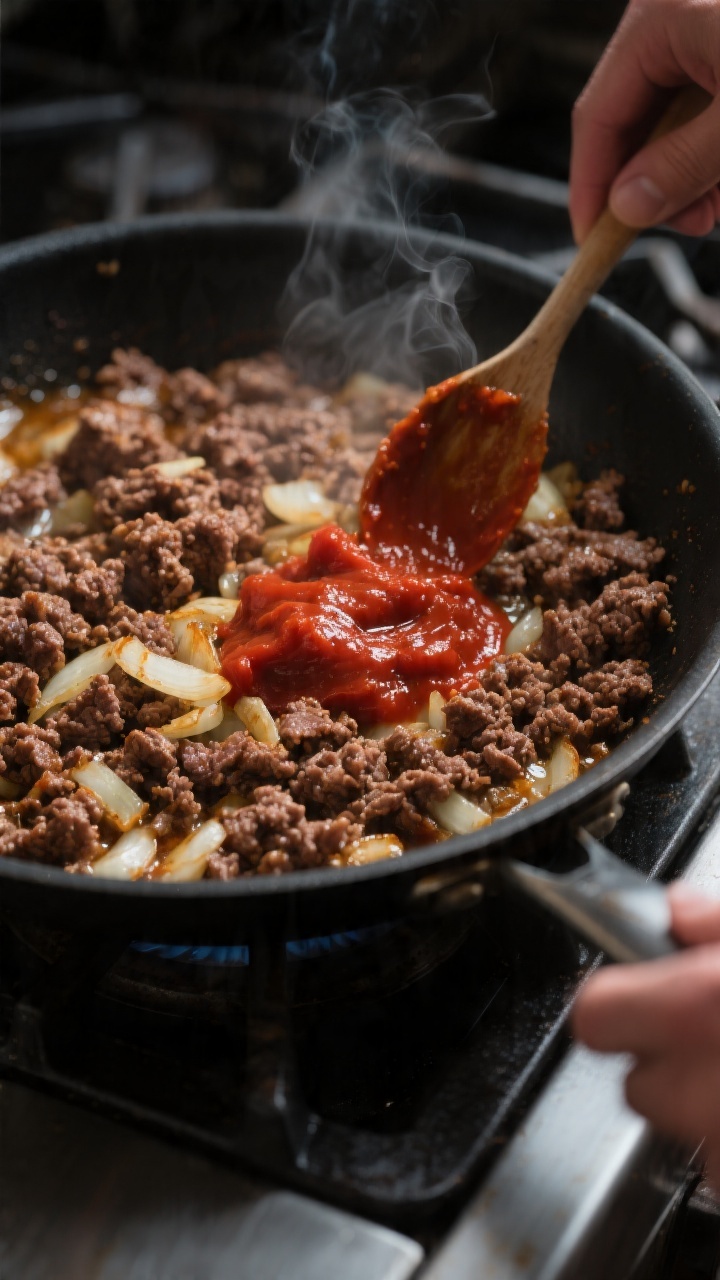
This recipe builds flavor in layers. Browning the meat first gives you savory depth, and sautéing onions and garlic in those drippings adds a rich base.
Canned tomatoes keep it simple and consistent year-round. A splash of pasta water helps the sauce cling to the noodles, making every bite feel silky and full. With a few herbs and a pat of butter at the end, the sauce tastes like it took all afternoon.
Ingredients
- 12 ounces (340 g) spaghetti
- 1 pound (450 g) ground beef (80–90% lean works well)
- 2 tablespoons olive oil (if needed)
- 1 medium yellow onion, finely chopped
- 3–4 garlic cloves, minced
- 1 (28-ounce) can crushed tomatoes or tomato puree
- 2 tablespoons tomato paste
- 1 teaspoon sugar (to balance acidity; optional but helpful)
- 1 teaspoon dried oregano
- 1 teaspoon dried basil (or 1 tablespoon fresh, chopped)
- 1/2 teaspoon red pepper flakes (optional, for a little heat)
- 1 bay leaf (optional)
- 1/2 cup beef broth or water (as needed to loosen sauce)
- 2 tablespoons unsalted butter (for finishing)
- Salt and black pepper, to taste
- Fresh parsley or basil, chopped, for garnish
- Freshly grated Parmesan, for serving
How to Make It
- Boil the pasta water. Bring a large pot of salted water to a rolling boil.Use about 1 tablespoon of salt per 4 quarts of water for properly seasoned pasta.
- Brown the meat. In a large skillet or Dutch oven over medium-high heat, add the ground beef. If your pan is dry, add a little olive oil. Cook, breaking it into small pieces, until deeply browned and no pink remains, about 6–8 minutes.Season lightly with salt and pepper.
- Drain excess fat (if needed). If there’s more than a tablespoon of fat left, spoon some off. Leave a bit for flavor.
- Sauté onion and garlic. Push the meat to the sides and add the onion to the center. Cook until soft and translucent, 4–5 minutes.Stir in the garlic and cook 30–60 seconds until fragrant. Don’t let it burn.
- Build the sauce. Stir in the tomato paste and cook for 1 minute to caramelize it slightly. Add crushed tomatoes, oregano, basil, red pepper flakes, sugar, bay leaf, and a pinch of salt and pepper.Add the broth or water if the sauce seems very thick.
- Simmer gently. Reduce heat to low and simmer uncovered for 15–25 minutes, stirring occasionally. You want a gently bubbling sauce that thickens slightly. Taste and adjust seasoning.
- Cook the spaghetti. Add spaghetti to the boiling water and cook until just shy of al dente (usually 1 minute less than package directions).Reserve about 1 cup of pasta water before draining.
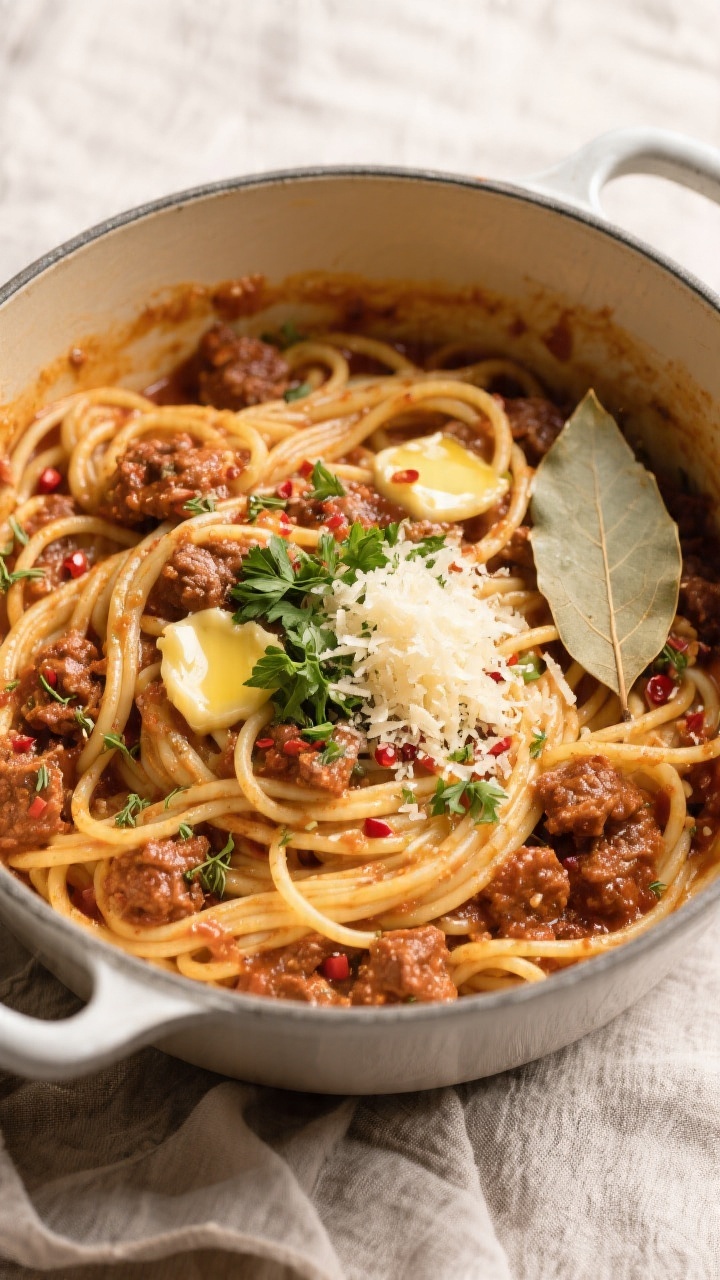
- Marry pasta and sauce. Remove the bay leaf. Add the butter to the sauce and stir until melted for a glossy finish. Add the drained spaghetti and a splash of reserved pasta water.Toss over low heat for 1–2 minutes until the sauce clings. Add more pasta water as needed.
- Finish and serve. Sprinkle with chopped parsley or basil. Serve hot with plenty of freshly grated Parmesan.
Keeping It Fresh
Leftovers keep well and often taste better the next day.
Store cooled spaghetti and sauce in an airtight container in the fridge for up to 4 days. Reheat gently with a splash of water to loosen the sauce. For longer storage, freeze the sauce (without pasta) for up to 3 months.
Thaw in the fridge overnight and warm on the stove before tossing with fresh-cooked spaghetti.
Why This is Good for You
This dish offers a solid balance of carbs, protein, and fat. The tomatoes bring lycopene, an antioxidant that can support heart health. Onions and garlic add natural compounds that may support immunity.
If you use lean beef and don’t overdo the cheese, it stays relatively light for a comfort meal. You can also swap in whole-wheat spaghetti for extra fiber and a steadier energy release.
Common Mistakes to Avoid
- Skipping the browning step. Pale meat means a flat-tasting sauce. Get color on the beef for richer flavor.
- Forgetting to salt the pasta water. This is your chance to season the noodles from the inside out.
- Overcooking the pasta. Aim for al dente.It finishes in the sauce and stays pleasantly firm.
- Not simmering the sauce. Rushing this step leaves a raw tomato taste. Even 15 minutes helps mellow and blend flavors.
- Skipping pasta water. The starch in that water helps the sauce emulsify and cling to each strand.
- Too much heat at the end. Boiling the finished sauce hard can make it greasy. Keep it gentle.
Variations You Can Try
- Italian sausage twist: Swap half the beef for mild or hot Italian sausage.Remove casings and brown as directed.
- Veggie boost: Add finely diced carrots and celery with the onion for a simple soffritto. Mushrooms also add umami.
- Herb-forward: Stir in a handful of fresh basil at the end for a bright, fresh finish.
- Creamy finish: Add a splash of heavy cream or half-and-half in the last 2 minutes for a rosé-style sauce.
- Lean and green: Use ground turkey or chicken and extra olive oil. Season generously to keep the flavor bold.
- Gluten-free: Use your favorite gluten-free spaghetti and check labels on canned tomatoes and broth.
- Extra heat: Stir in Calabrian chili paste or more red pepper flakes for a spicy kick.
FAQ
Can I make this ahead?
Yes.
The sauce tastes even better the next day. Cook and cool it, then chill for up to 4 days or freeze up to 3 months. Boil fresh spaghetti when ready to serve.
What if my sauce is too acidic?
A small pinch of sugar helps, but so does a pat of butter at the end.
You can also simmer longer or add a splash of milk or cream to soften the edges.
How do I prevent greasy sauce?
Use moderately lean beef and drain excess fat after browning. Keep the final simmer gentle and finish with pasta water to create a smooth emulsion.
Can I use fresh tomatoes?
You can, but canned tomatoes give reliable flavor year-round. If using fresh, peel and crush ripe tomatoes and simmer a bit longer to reduce excess liquid.
What’s the best cheese to serve with it?
Freshly grated Parmesan or Pecorino Romano adds salty, nutty flavor.
Grate it yourself for the best melt and taste.
How can I stretch the sauce for more servings?
Add more crushed tomatoes and a bit more seasoning, then simmer to thicken. You can also bulk it up with mushrooms or lentils for extra body.
Is this good for meal prep?
Absolutely. Make a double batch of sauce, portion it, and freeze.
Cook fresh pasta during the week and toss with reheated sauce in minutes.
In Conclusion
Simple spaghetti with meat sauce is a classic for a reason. It’s easy to make, friendly on the budget, and endlessly adaptable. With a few smart steps—good browning, a gentle simmer, and starchy pasta water—you get a sauce that tastes rich and comforting every time.
Keep the ingredients on hand and you’ll always have a dependable, crowd-pleasing dinner ready to go.
Printable Recipe Card
Want just the essential recipe details without scrolling through the article? Get our printable recipe card with just the ingredients and instructions.

3 thoughts on “Simple Spaghetti With Meat Sauce – A Comforting Weeknight Classic”