
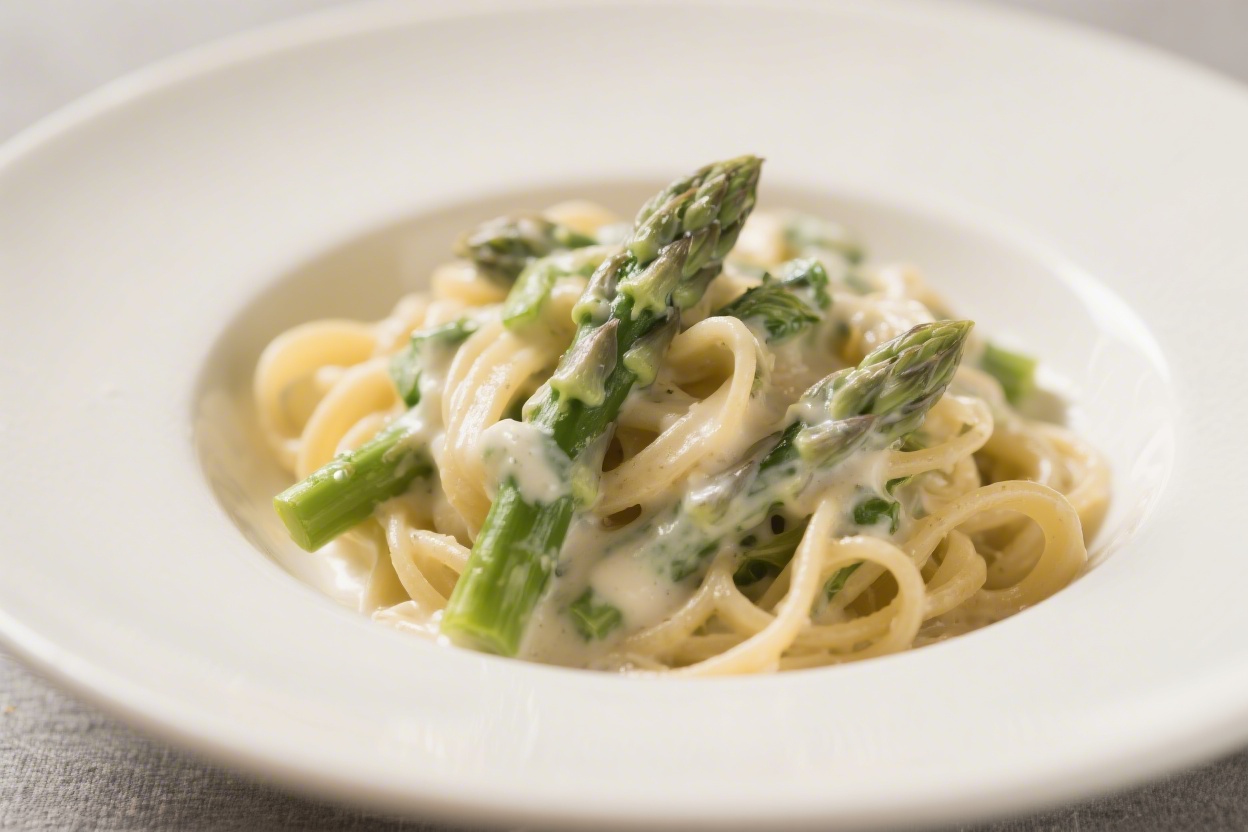
Creamy asparagus pasta is the kind of weeknight dinner that feels comforting but still light and fresh. Tender spears of asparagus meet a silky, garlicky cream sauce that clings to every noodle. It’s simple to make, but it tastes like something you’d order at a cozy bistro.
With a short ingredient list and quick cook time, it’s reliable and unfussy. Make it once, and you’ll keep it in rotation all season.
Creamy Asparagus Pasta – A Comforting, Spring-Ready Classic
Ingredients
- 12 ounces pasta (fettuccine, linguine, or short pasta like rigatoni)
- 1 pound asparagus, woody ends trimmed, cut into 1–2-inch pieces
- 2 tablespoons olive oil
- 2 tablespoons unsalted butter
- 3–4 garlic cloves, minced
- 1 small shallot, finely chopped (optional but recommended)
- 1 cup heavy cream (or 3/4 cup cream + 1/4 cup whole milk)
- 3/4 cup freshly grated Parmesan, plus more for serving
- 1 teaspoon lemon zest and 1–2 tablespoons lemon juice, to taste
- 1/2 cup pasta cooking water, reserved
- Salt and freshly ground black pepper
- Red pepper flakes, a pinch (optional)
- Fresh parsley or chives, chopped, for garnish
Instructions
- Boil the pasta. Bring a large pot of salted water to a rolling boil. Cook the pasta until just shy of al dente. Reserve 1/2 cup of the starchy water, then drain.
- Prep the asparagus. Snap off the woody ends, then cut the stalks into 1–2-inch pieces. Keep the tips intact for better texture and presentation.
- Sauté aromatics. In a large skillet over medium heat, warm the olive oil and melt the butter. Add the shallot and a pinch of salt. Cook 2–3 minutes until soft, then add the garlic and cook 30 seconds until fragrant.
- Cook the asparagus. Add asparagus pieces to the skillet with a pinch of salt and black pepper. Sauté 3–5 minutes, stirring, until bright green and crisp-tender. You want a slight bite, not mushy.
- Build the sauce. Pour in the cream and bring to a gentle simmer. Reduce heat to medium-low. Stir in lemon zest and a pinch of red pepper flakes if using. Simmer 2–3 minutes to thicken slightly.
- Add Parmesan. Off the heat, sprinkle in the Parmesan a handful at a time, stirring until smooth. If it seems too thick, loosen with reserved pasta water a few tablespoons at a time.
- Toss with pasta. Add the drained pasta to the skillet. Return to low heat and toss until every strand is coated and glossy. Adjust with more pasta water for a silky, saucy finish.
- Finish with lemon. Stir in lemon juice to taste. Season with more salt and black pepper. The sauce should taste bright, savory, and balanced.
- Serve. Plate and top with extra Parmesan and chopped herbs. Add a final grind of black pepper for aroma.
What Makes This Special
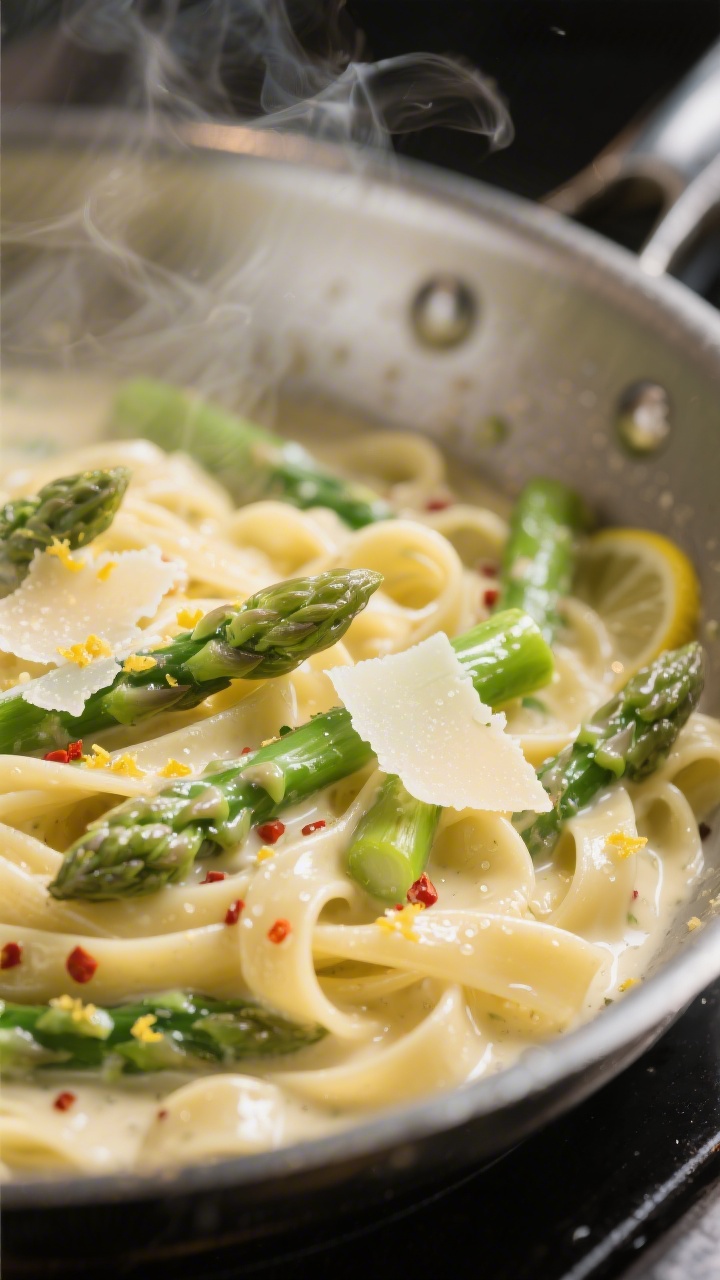
Asparagus brings a bright, slightly grassy flavor that cuts through the richness of the sauce, so the dish never feels heavy. The cream sauce is balanced with lemon and Parmesan, making it creamy without being cloying.
You cook the asparagus right in the same pan as the sauce, which keeps flavors concentrated and cleanup easy. The texture also stands out: crisp-tender asparagus meets glossy pasta for a satisfying bite. It’s a great base recipe that you can adapt with protein, herbs, or a different pasta shape.
Ingredients
- 12 ounces pasta (fettuccine, linguine, or short pasta like rigatoni)
- 1 pound asparagus, woody ends trimmed, cut into 1–2-inch pieces
- 2 tablespoons olive oil
- 2 tablespoons unsalted butter
- 3–4 garlic cloves, minced
- 1 small shallot, finely chopped (optional but recommended)
- 1 cup heavy cream (or 3/4 cup cream + 1/4 cup whole milk)
- 3/4 cup freshly grated Parmesan, plus more for serving
- 1 teaspoon lemon zest and 1–2 tablespoons lemon juice, to taste
- 1/2 cup pasta cooking water, reserved
- Salt and freshly ground black pepper
- Red pepper flakes, a pinch (optional)
- Fresh parsley or chives, chopped, for garnish
How to Make It

- Boil the pasta. Bring a large pot of salted water to a rolling boil.
Cook the pasta until just shy of al dente. Reserve 1/2 cup of the starchy water, then drain.
- Prep the asparagus. Snap off the woody ends, then cut the stalks into 1–2-inch pieces. Keep the tips intact for better texture and presentation.
- Sauté aromatics. In a large skillet over medium heat, warm the olive oil and melt the butter. Add the shallot and a pinch of salt.
Cook 2–3 minutes until soft, then add the garlic and cook 30 seconds until fragrant.
- Cook the asparagus. Add asparagus pieces to the skillet with a pinch of salt and black pepper. Sauté 3–5 minutes, stirring, until bright green and crisp-tender. You want a slight bite, not mushy.
- Build the sauce. Pour in the cream and bring to a gentle simmer.
Reduce heat to medium-low. Stir in lemon zest and a pinch of red pepper flakes if using. Simmer 2–3 minutes to thicken slightly.
- Add Parmesan. Off the heat, sprinkle in the Parmesan a handful at a time, stirring until smooth.
If it seems too thick, loosen with reserved pasta water a few tablespoons at a time.
- Toss with pasta. Add the drained pasta to the skillet. Return to low heat and toss until every strand is coated and glossy. Adjust with more pasta water for a silky, saucy finish.
- Finish with lemon. Stir in lemon juice to taste.
Season with more salt and black pepper. The sauce should taste bright, savory, and balanced.
- Serve. Plate and top with extra Parmesan and chopped herbs. Add a final grind of black pepper for aroma.
Keeping It Fresh
This pasta is best right after it’s made, when the sauce is creamy and loose.
If you have leftovers, transfer to an airtight container and refrigerate for up to 2 days. Reheat gently in a skillet over low heat with a splash of water, milk, or cream to bring the sauce back together. Avoid the microwave if possible, which can cause the sauce to separate and the asparagus to overcook.
If you do use the microwave, heat in short bursts and stir often.

Benefits of This Recipe
- Fast and approachable: On the table in about 30 minutes, with basic steps and one main pan for the sauce.
- Seasonal flavor: Asparagus shines in spring, but the dish works year-round with good-quality produce.
- Balanced richness: Lemon and asparagus keep the cream sauce light, not heavy.
- Flexible: Add chicken, shrimp, pancetta, or mushrooms without changing the core method.
- Comforting: Creamy pasta is a crowd-pleaser, and this version feels fresher than many cream sauces.
What Not to Do
- Don’t overcook the asparagus. It should be crisp-tender, not soft or dull green.
- Don’t skip the pasta water. The starch helps the sauce cling and turn glossy.
- Don’t boil the cream hard. A gentle simmer keeps the sauce smooth and prevents curdling.
- Don’t add all the Parmesan at once over high heat. Take the pan off the heat and add gradually to avoid clumps.
- Don’t forget to taste and season. Adjust salt, pepper, and lemon at the end for the best balance.
Alternatives
- Lighter dairy swap: Use half-and-half instead of heavy cream, but simmer a minute longer, and rely more on pasta water for silkiness.
- Dairy-free: Use a creamy oat milk or cashew cream and a dairy-free Parmesan-style cheese. Finish with extra lemon and olive oil for richness.
- Protein add-ins: Fold in cooked shrimp, grilled chicken, or crisped pancetta or bacon at the end.
- Herb variations: Try basil, tarragon, or dill instead of parsley or chives for a different vibe.
- Pasta shapes: Short shapes like penne or orecchiette catch asparagus pieces nicely; long noodles feel more elegant.
- Veggie boosters: Add peas, sautéed mushrooms, or spinach for extra color and nutrition.
- Gluten-free: Use your favorite gluten-free pasta and watch the cook time closely to keep it al dente.
FAQ
How do I keep the sauce from splitting?
Keep the heat moderate, simmer gently, and add Parmesan off the heat. If the sauce tightens or looks grainy, whisk in a splash of pasta water.
The starch helps pull it back together.
Can I use frozen asparagus?
Yes, but thaw and pat dry first. Cook it in the pan briefly just until heated through and bright green. It won’t be as crisp as fresh, but it still works well in the creamy sauce.
What can I use instead of heavy cream?
Half-and-half is the easiest swap.
For a lighter option, use whole milk and a small spoonful of cream cheese to stabilize the sauce. For dairy-free, use cashew cream made from soaked, blended cashews.
Which Parmesan is best?
Use freshly grated Parmigiano Reggiano. Pre-grated cheese often contains anti-caking agents that prevent smooth melting.
Grate it fine for a silky sauce.
How do I make it more lemony?
Add extra zest and a squeeze more lemon at the end. You can also finish with a drizzle of good olive oil to lift the flavors further.
Can I make it ahead?
This dish tastes best fresh. If you need a head start, prep the asparagus and aromatics and grate the cheese in advance.
Cook the pasta and sauce right before serving for the ideal texture.
What wine pairs well with this pasta?
A crisp white works best. Try Sauvignon Blanc, Pinot Grigio, or a dry Vermentino. The acidity complements the cream and highlights the asparagus.
In Conclusion
Creamy asparagus pasta is proof that a simple list of ingredients can create big flavor.
With tender asparagus, a bright, balanced sauce, and al dente pasta, it feels both comforting and fresh. Keep the heat gentle, save your pasta water, and finish with lemon for a clean, glossy result. It’s a weeknight-friendly dish that still feels special, no matter the season.
Printable Recipe Card
Want just the essential recipe details without scrolling through the article? Get our printable recipe card with just the ingredients and instructions.
