
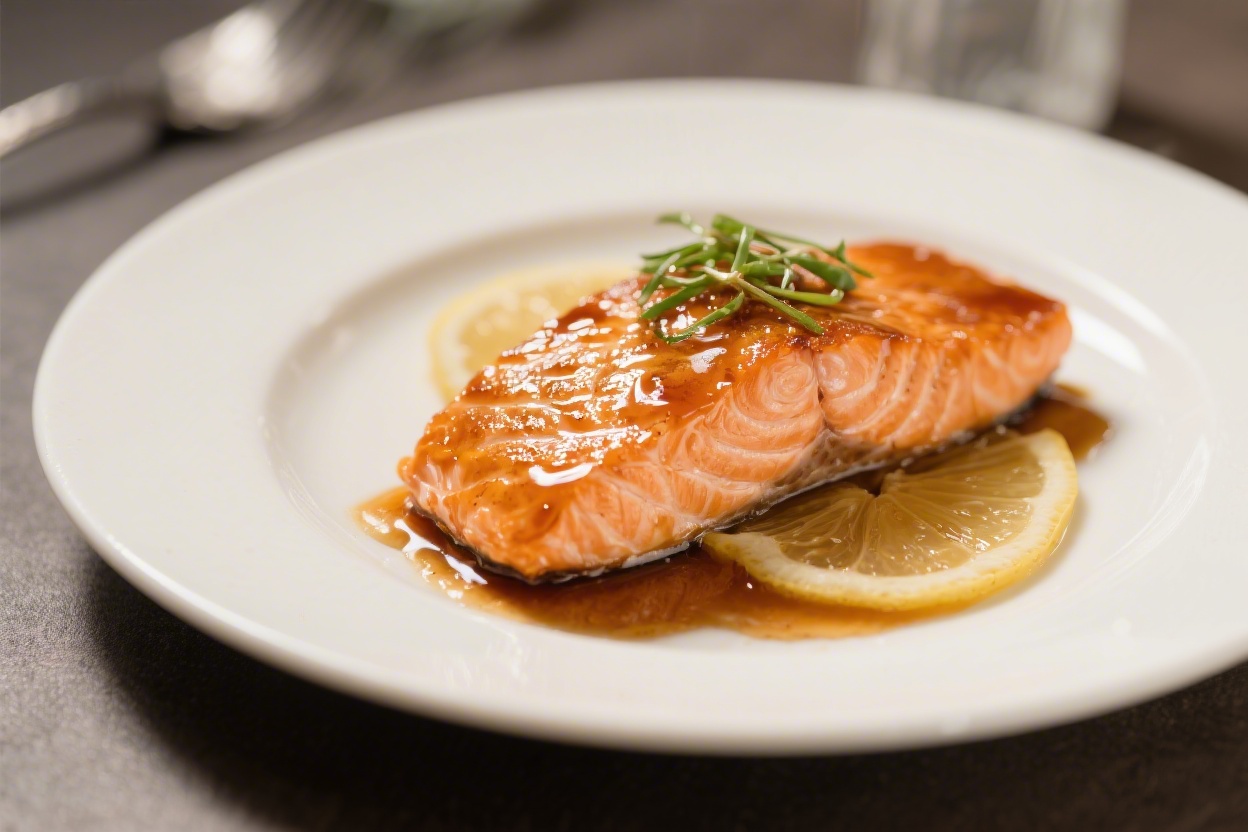
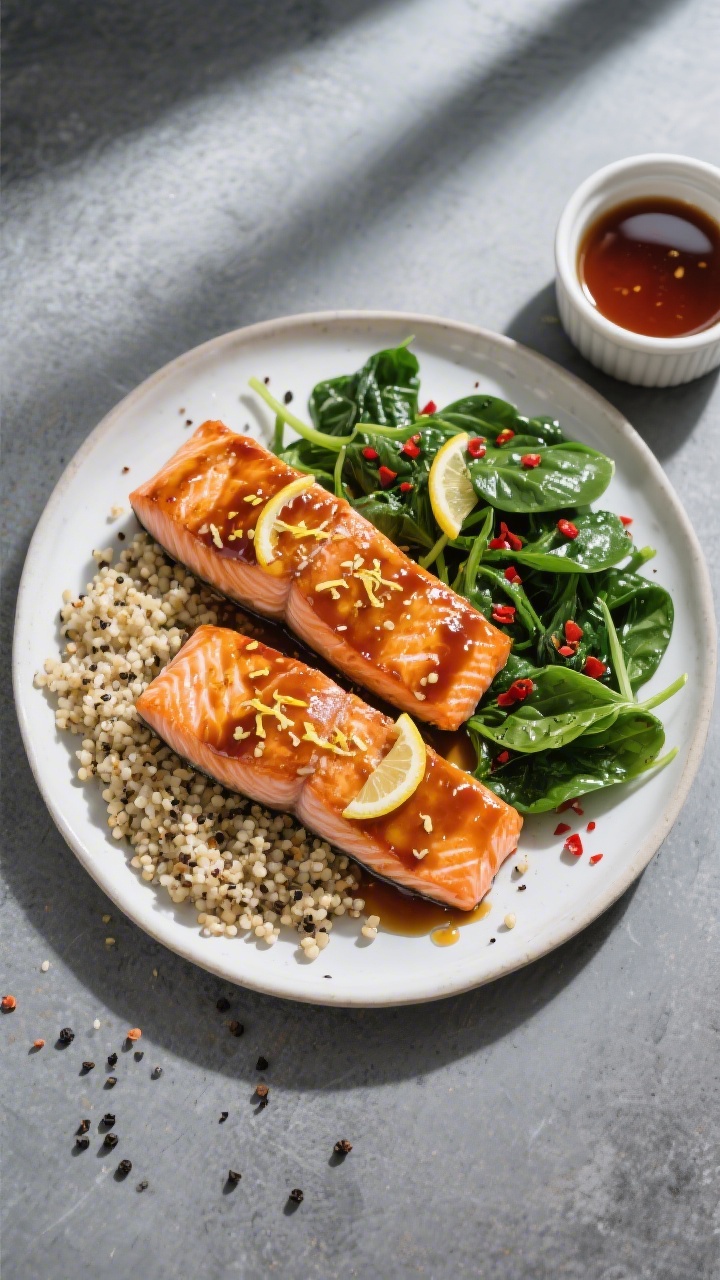
If you’re looking for a dinner that tastes restaurant-quality but takes less than 30 minutes, honey glazed salmon is it. The glaze is sticky, sweet, and a little tangy, and it caramelizes beautifully in a hot pan. You get crispy edges, tender flakes, and a sauce you’ll want to drizzle over everything.
Serve it with rice, greens, or roasted veggies, and you’ve got a balanced, comforting meal. This one’s ideal for busy weeknights but special enough for guests.
Honey Glazed Salmon - Sweet, Savory, and Weeknight Easy
Ingredients
- Salmon fillets (4 pieces, 5–6 oz each, skin-on if possible)
- Honey (2–3 tablespoons)
- Soy sauce or tamari (2 tablespoons)
- Lemon (zest and juice of 1)
- Garlic (2–3 cloves, minced)
- Fresh ginger (1 teaspoon grated, optional but recommended)
- Olive oil or neutral oil (1–2 tablespoons)
- Butter (1 tablespoon, optional for extra richness)
- Red pepper flakes (a pinch, optional for heat)
- Black pepper (to taste)
- Kosher salt (to taste)
- Green onions or sesame seeds (for garnish, optional)
Instructions
- Pat the salmon dry. Use paper towels to blot excess moisture. Season both sides lightly with kosher salt and black pepper. Dry fish browns better and won’t steam in the pan.
- Mix the glaze. In a small bowl, whisk honey, soy sauce, lemon zest, 1 tablespoon lemon juice, minced garlic, grated ginger, and a pinch of red pepper flakes. Adjust sweetness or acidity to taste.
- Preheat the pan. Set a large nonstick or stainless steel skillet over medium-high heat. Add oil and let it get hot until shimmering. A hot pan helps create that golden crust.
- Sear skin-side down first. Place salmon in the pan, skin-side down. Press gently with a spatula for the first 10 seconds to prevent curling. Cook 3–4 minutes without moving it.
- Flip and add butter. Turn the fillets carefully. Add butter to the pan and let it melt. Spoon some over the salmon for a glossy finish.
- Pour in the glaze. Reduce heat to medium. Add the honey mixture and let it bubble. Tilt the pan and baste the salmon as the sauce thickens, 2–3 minutes.
- Check doneness. Salmon is done when it flakes easily and the center is just slightly translucent, about 125–130°F for medium. Pull it earlier if you prefer medium-rare. Don’t overcook—it keeps cooking after you remove it from heat.
- Rest and finish. Transfer salmon to plates. Simmer the remaining sauce for 30–60 seconds if you want it thicker, then spoon it over the fish. Garnish with sliced green onions or sesame seeds.
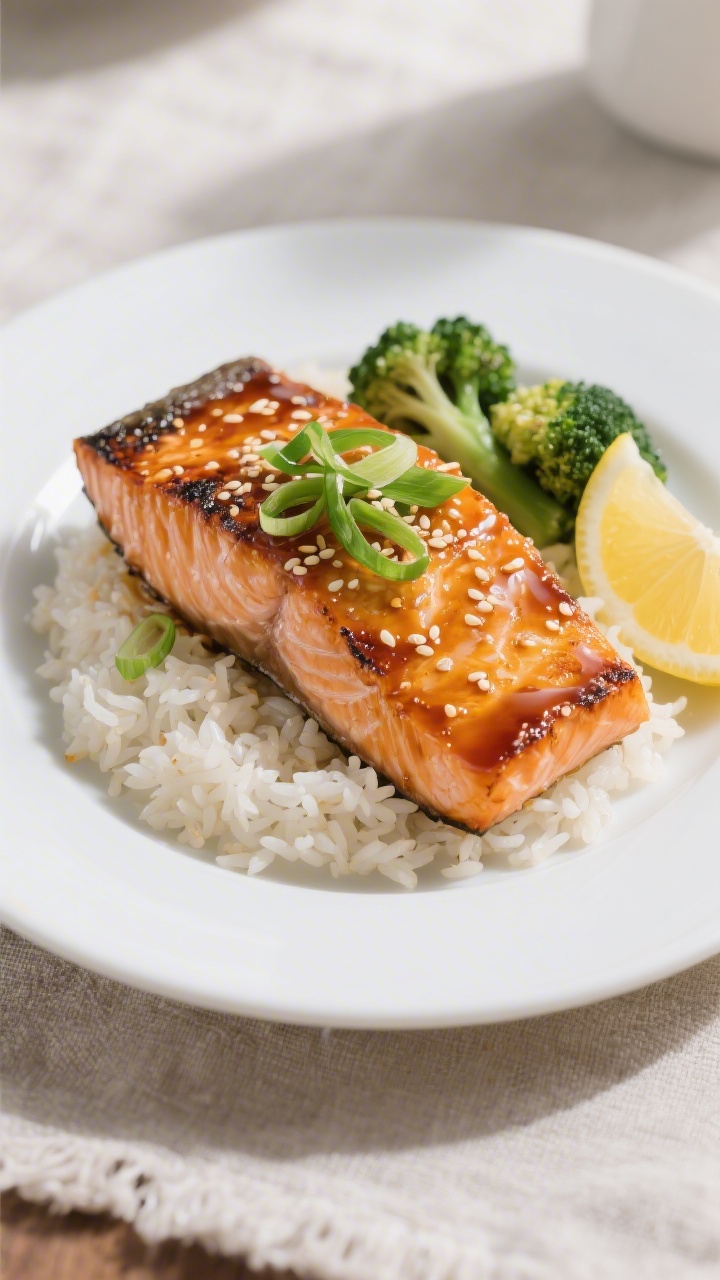
- Serve. Pair with jasmine rice, quinoa, or roasted broccoli. The glaze also tastes great over sautéed spinach or a simple cucumber salad.
Why This Recipe Works
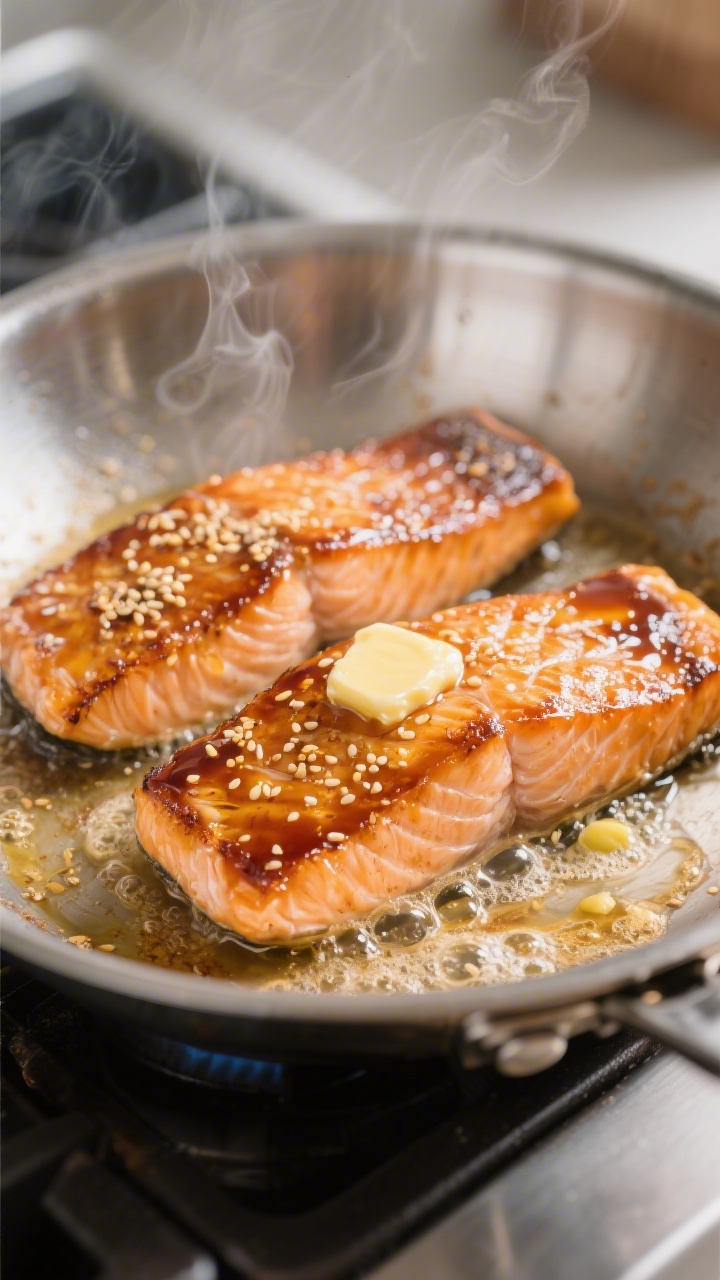
This honey glaze hits all the right notes: sweet from honey, tangy from lemon, and savory from soy and garlic. A quick sear locks in moisture and creates a light crust, while finishing in the pan allows the glaze to thicken and cling to the fish.
Using skin-on fillets helps prevent overcooking and keeps the salmon juicy. The short ingredient list adds big flavor without fuss, making it reliable and repeatable.
Shopping List
- Salmon fillets (4 pieces, 5–6 oz each, skin-on if possible)
- Honey (2–3 tablespoons)
- Soy sauce or tamari (2 tablespoons)
- Lemon (zest and juice of 1)
- Garlic (2–3 cloves, minced)
- Fresh ginger (1 teaspoon grated, optional but recommended)
- Olive oil or neutral oil (1–2 tablespoons)
- Butter (1 tablespoon, optional for extra richness)
- Red pepper flakes (a pinch, optional for heat)
- Black pepper (to taste)
- Kosher salt (to taste)
- Green onions or sesame seeds (for garnish, optional)
How to Make It
- Pat the salmon dry. Use paper towels to blot excess moisture. Season both sides lightly with kosher salt and black pepper.
Dry fish browns better and won’t steam in the pan.
- Mix the glaze. In a small bowl, whisk honey, soy sauce, lemon zest, 1 tablespoon lemon juice, minced garlic, grated ginger, and a pinch of red pepper flakes. Adjust sweetness or acidity to taste.
- Preheat the pan. Set a large nonstick or stainless steel skillet over medium-high heat. Add oil and let it get hot until shimmering.
A hot pan helps create that golden crust.
- Sear skin-side down first. Place salmon in the pan, skin-side down. Press gently with a spatula for the first 10 seconds to prevent curling. Cook 3–4 minutes without moving it.
- Flip and add butter. Turn the fillets carefully.
Add butter to the pan and let it melt. Spoon some over the salmon for a glossy finish.
- Pour in the glaze. Reduce heat to medium. Add the honey mixture and let it bubble.
Tilt the pan and baste the salmon as the sauce thickens, 2–3 minutes.
- Check doneness. Salmon is done when it flakes easily and the center is just slightly translucent, about 125–130°F for medium. Pull it earlier if you prefer medium-rare. Don’t overcook—it keeps cooking after you remove it from heat.
- Rest and finish. Transfer salmon to plates.
Simmer the remaining sauce for 30–60 seconds if you want it thicker, then spoon it over the fish. Garnish with sliced green onions or sesame seeds.
- Serve. Pair with jasmine rice, quinoa, or roasted broccoli. The glaze also tastes great over sautéed spinach or a simple cucumber salad.
How to Store
Let leftovers cool completely, then store in an airtight container in the fridge for up to 3 days.
Reheat gently in a skillet over low heat or in the microwave at 50% power in short bursts to avoid drying it out. You can also enjoy it cold, flaked over a salad or tucked into a rice bowl. Freezing cooked salmon is possible, but texture can change; if you do, wrap tightly and freeze up to 2 months.
Health Benefits
- Omega-3 fats: Salmon is rich in EPA and DHA, which support heart, brain, and joint health.
- High-quality protein: Helps maintain muscle mass and keeps you satisfied.
- Micronutrients: Provides vitamin D, B vitamins, and selenium for immune and metabolic support.
- Balanced flavors, balanced plate: The glaze adds flavor without heavy breading or frying, making it lighter while still satisfying.
Common Mistakes to Avoid
- Starting with wet fish: Moisture prevents browning.
Pat the fillets dry for a better sear.
- Overcrowding the pan: Too many fillets at once steam instead of sear. Cook in batches if needed.
- Overcooking: Salmon goes from perfect to dry fast. Aim for medium and rest it off heat.
- Adding glaze too early: Honey burns if exposed to high heat too long.
Sear first, then glaze.
- Skipping acid: A little lemon or vinegar keeps the glaze bright and prevents it from tasting flat.
Recipe Variations
- Spicy Sriracha Honey: Add 1–2 teaspoons sriracha to the glaze and finish with lime instead of lemon.
- Garlic-Lime Cilantro: Swap lemon for lime, use extra garlic, and top with chopped cilantro.
- Miso Honey: Whisk in 1 tablespoon white miso for savory depth; thin with a splash of water if too thick.
- Sheet Pan Version: Place salmon on a lined tray, brush with glaze, and roast at 400°F for 10–12 minutes, broiling for 1–2 minutes to caramelize.
- Air Fryer Option: Air fry at 390°F for 7–9 minutes, brushing with glaze halfway and at the end.
- Ginger-Scallion: Double the ginger, add sliced scallions to the pan at the end for a sharp, fresh finish.
- No-Soy: Use coconut aminos and a pinch of salt for a gluten-free, soy-free version.
FAQ
Can I use frozen salmon?
Yes, just thaw it fully in the fridge overnight or in a sealed bag under cold running water. Pat very dry before cooking to get a good sear. Frozen fillets can release more moisture, so the drying step is key.
What pan works best?
A well-heated nonstick pan is the most forgiving.
Stainless steel also works if you heat it thoroughly and use enough oil. Cast iron gives great browning but watch the glaze closely to avoid burning.
How do I prevent the glaze from burning?
Sear the salmon first over medium-high heat, then lower to medium when you add the glaze. Keep the sauce moving and baste often.
If it reduces too fast, add a tablespoon of water to loosen it.
Skin on or off?
Skin-on helps protect the flesh and keeps it moist. You can easily slide a spatula between the flesh and skin after cooking if you don’t want to eat the skin.
Can I make it without garlic?
Yes. Skip the garlic and lean on ginger and lemon zest for aroma.
A small pinch of onion powder can also round out the flavor.
What sides go well with honey glazed salmon?
Steamed rice, coconut rice, quinoa, roasted broccoli, green beans, or a crisp cucumber salad all pair well. For something heartier, try mashed sweet potatoes or sesame noodles.
How do I know when salmon is done without a thermometer?
Gently press the top; it should feel slightly firm but still springy. The flakes should separate easily, and the center should be just a touch translucent.
Pull it off heat sooner rather than later—carryover heat finishes the job.
Wrapping Up
Honey glazed salmon is simple, fast, and consistently delicious. With a handful of pantry ingredients and a hot pan, you get tender fish and a glossy, caramelized sauce. Keep the heat in check, avoid overcooking, and finish with a squeeze of citrus.
Once you nail the timing, this becomes a reliable go-to for busy nights and laid-back entertaining alike.
Printable Recipe Card
Want just the essential recipe details without scrolling through the article? Get our printable recipe card with just the ingredients and instructions.
