
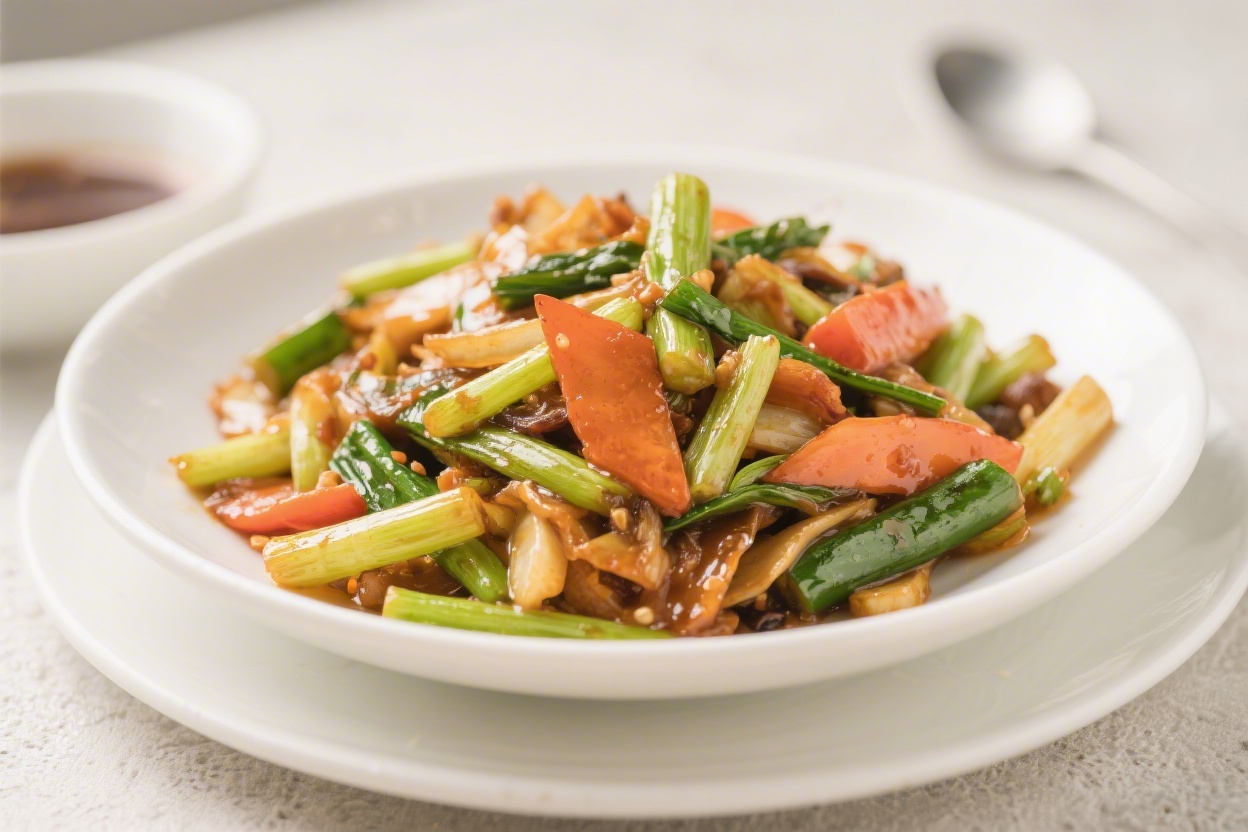
Spring vegetables are at their peak—crisp, sweet, and full of life—and a quick stir fry is one of the best ways to show them off. This recipe keeps things simple, letting the vegetables stay bright and slightly crunchy. The sauce is light but packed with flavor, and it clings to every bite.
You’ll get dinner on the table fast without skimping on taste. It’s the kind of weeknight dish that feels special but doesn’t ask for much.
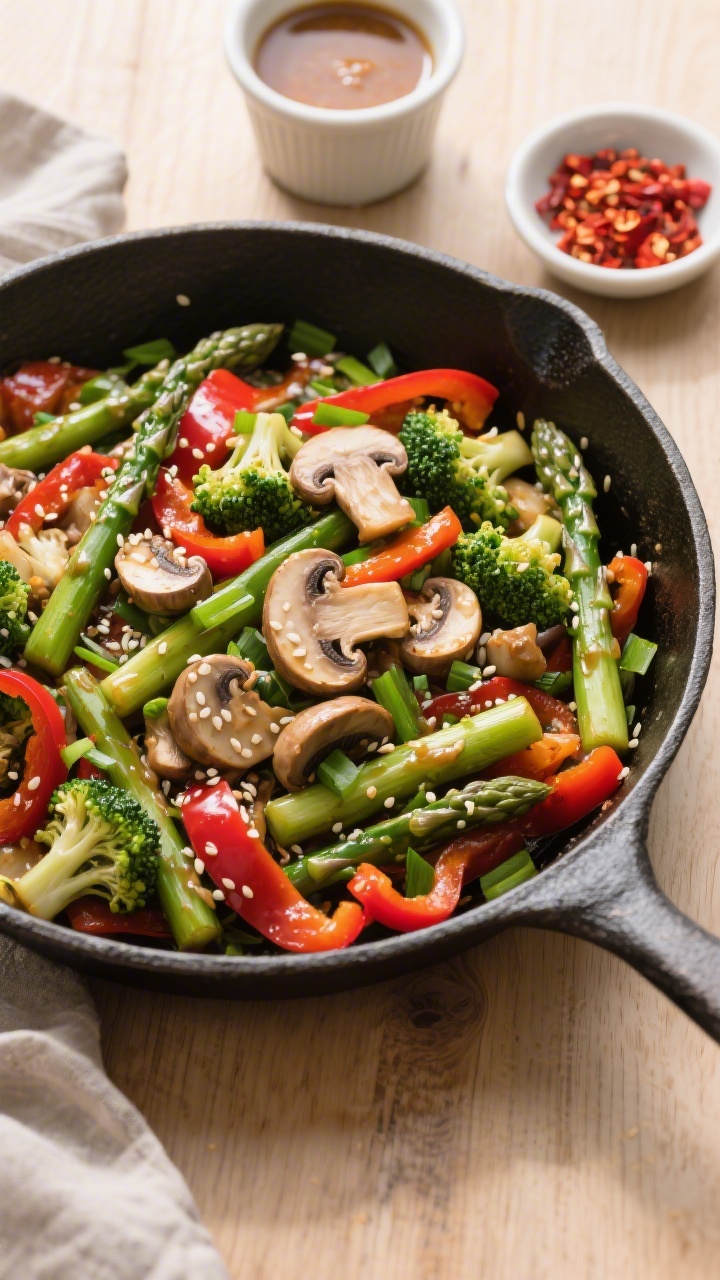
Spring Vegetable Stir Fry - Fresh, Fast, and Full of Flavor
Ingredients
- 1 tablespoon neutral oil (avocado, grapeseed, or canola)
- 1 teaspoon toasted sesame oil
- 2 cups sugar snap peas, strings removed
- 1 small bunch asparagus, tough ends trimmed, cut into 1–2 inch pieces
- 1 cup thinly sliced baby carrots (or regular carrots, on the diagonal)
- 1 small red bell pepper, sliced into thin strips
- 1 cup sliced mushrooms (shiitake or cremini)
- 1 small bunch scallions, cut into 1-inch pieces (white and green parts separated)
- 2 cloves garlic, thinly sliced
- 1 teaspoon fresh ginger, finely grated
- 1 cup small broccoli florets (optional but great for texture)
- 2 tablespoons low-sodium soy sauce (or tamari for gluten-free)
- 1 tablespoon rice vinegar
- 1 tablespoon oyster sauce or vegetarian “oyster” mushroom sauce (optional but recommended)
- 1–2 teaspoons honey or maple syrup, to taste
- 1/3 cup vegetable broth or water
- 1 teaspoon cornstarch mixed with 2 teaspoons cold water (slurry)
- Pinch of red pepper flakes or a drizzle of chili oil (optional)
- Sesame seeds, for garnish
- Cooked rice or noodles, for serving
Instructions
- Prep everything first. Stir fries move fast. Wash, trim, and slice all vegetables. Mix the soy sauce, rice vinegar, oyster sauce (if using), honey, and broth in a small bowl.
- Heat your pan properly. Use a wok or large skillet over medium-high heat. When it’s hot, add the neutral oil and swirl to coat.
- Start with the hardier vegetables. Add carrots and broccoli. Stir fry 2–3 minutes until they start to soften but still have bite.
- Add quick-cooking vegetables. Toss in asparagus, mushrooms, and bell pepper. Stir fry 2 minutes, keeping everything moving so it cooks evenly.
- Layer in aromatics. Add the white parts of the scallions, garlic, and ginger. Stir fry 30–45 seconds until fragrant. Don’t let the garlic brown.
- Finish the veg. Add snap peas and the green parts of the scallions. Stir fry 1–2 minutes. Vegetables should be crisp-tender and bright.
- Add the sauce. Pour the sauce mixture into the pan and toss to coat. Let it bubble for 30 seconds.
- Thicken lightly. Stir in the cornstarch slurry. Cook 20–30 seconds more until the sauce turns glossy and clings to the vegetables. Add sesame oil and red pepper flakes or chili oil, if using.
- Taste and adjust. Add a splash more soy for salt, a squeeze of lemon for brightness, or a pinch more sweetener if needed.
- Serve. Sprinkle with sesame seeds and serve hot over rice or noodles.
What Makes This Recipe So Good
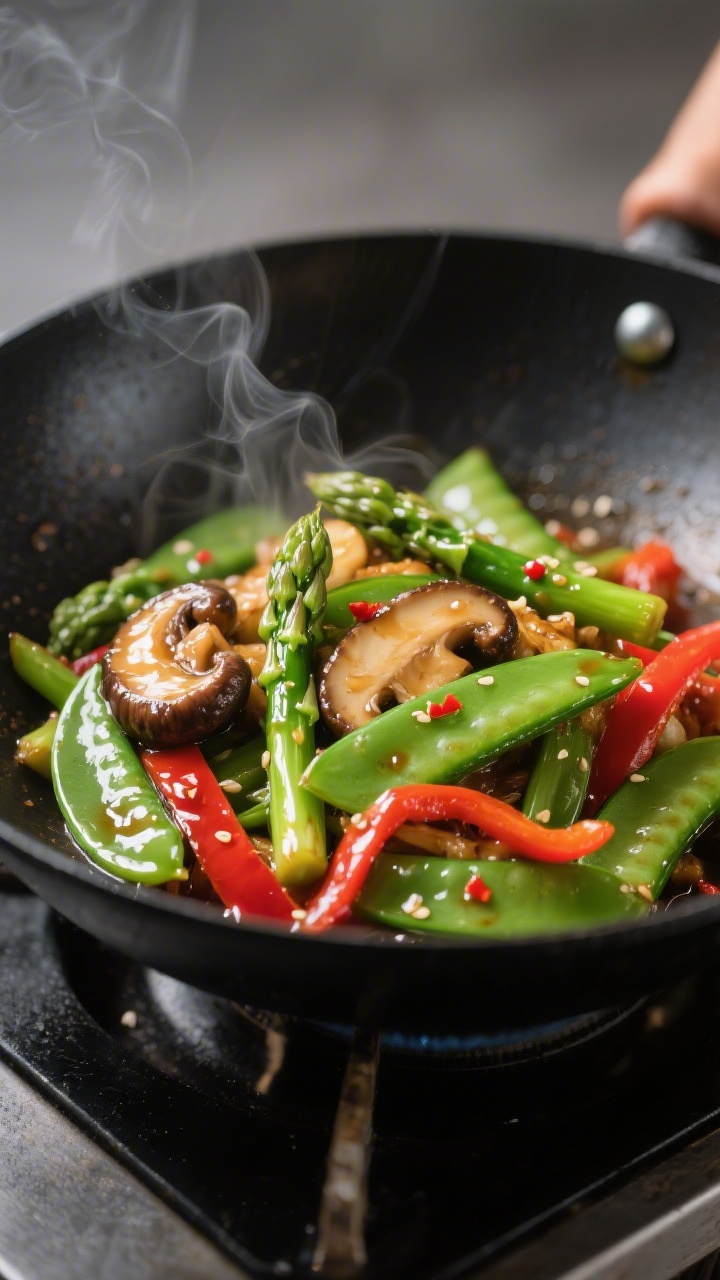
- Seasonal produce shines. Spring vegetables like snap peas, asparagus, and baby carrots are naturally sweet and tender, so they don’t need heavy sauces or long cooking times.
- Quick and easy. From prep to plate in about 25 minutes. Perfect for busy evenings.
- Light but satisfying. The sauce has umami, a little tang, and a touch of sweetness—no gloopy, heavy coating.
- Flexible. Swap in what you have: broccoli rabe, bok choy, or even zucchini works well.
- Great for meal prep. It reheats nicely and pairs with rice, noodles, quinoa, or tofu for a complete meal.
Ingredients
- 1 tablespoon neutral oil (avocado, grapeseed, or canola)
- 1 teaspoon toasted sesame oil
- 2 cups sugar snap peas, strings removed
- 1 small bunch asparagus, tough ends trimmed, cut into 1–2 inch pieces
- 1 cup thinly sliced baby carrots (or regular carrots, on the diagonal)
- 1 small red bell pepper, sliced into thin strips
- 1 cup sliced mushrooms (shiitake or cremini)
- 1 small bunch scallions, cut into 1-inch pieces (white and green parts separated)
- 2 cloves garlic, thinly sliced
- 1 teaspoon fresh ginger, finely grated
- 1 cup small broccoli florets (optional but great for texture)
- 2 tablespoons low-sodium soy sauce (or tamari for gluten-free)
- 1 tablespoon rice vinegar
- 1 tablespoon oyster sauce or vegetarian “oyster” mushroom sauce (optional but recommended)
- 1–2 teaspoons honey or maple syrup, to taste
- 1/3 cup vegetable broth or water
- 1 teaspoon cornstarch mixed with 2 teaspoons cold water (slurry)
- Pinch of red pepper flakes or a drizzle of chili oil (optional)
- Sesame seeds, for garnish
- Cooked rice or noodles, for serving
Step-by-Step Instructions
- Prep everything first. Stir fries move fast.
Wash, trim, and slice all vegetables. Mix the soy sauce, rice vinegar, oyster sauce (if using), honey, and broth in a small bowl.
- Heat your pan properly. Use a wok or large skillet over medium-high heat. When it’s hot, add the neutral oil and swirl to coat.
- Start with the hardier vegetables. Add carrots and broccoli.
Stir fry 2–3 minutes until they start to soften but still have bite.
- Add quick-cooking vegetables. Toss in asparagus, mushrooms, and bell pepper. Stir fry 2 minutes, keeping everything moving so it cooks evenly.
- Layer in aromatics. Add the white parts of the scallions, garlic, and ginger. Stir fry 30–45 seconds until fragrant.
Don’t let the garlic brown.
- Finish the veg. Add snap peas and the green parts of the scallions. Stir fry 1–2 minutes. Vegetables should be crisp-tender and bright.
- Add the sauce. Pour the sauce mixture into the pan and toss to coat.
Let it bubble for 30 seconds.
- Thicken lightly. Stir in the cornstarch slurry. Cook 20–30 seconds more until the sauce turns glossy and clings to the vegetables. Add sesame oil and red pepper flakes or chili oil, if using.
- Taste and adjust. Add a splash more soy for salt, a squeeze of lemon for brightness, or a pinch more sweetener if needed.
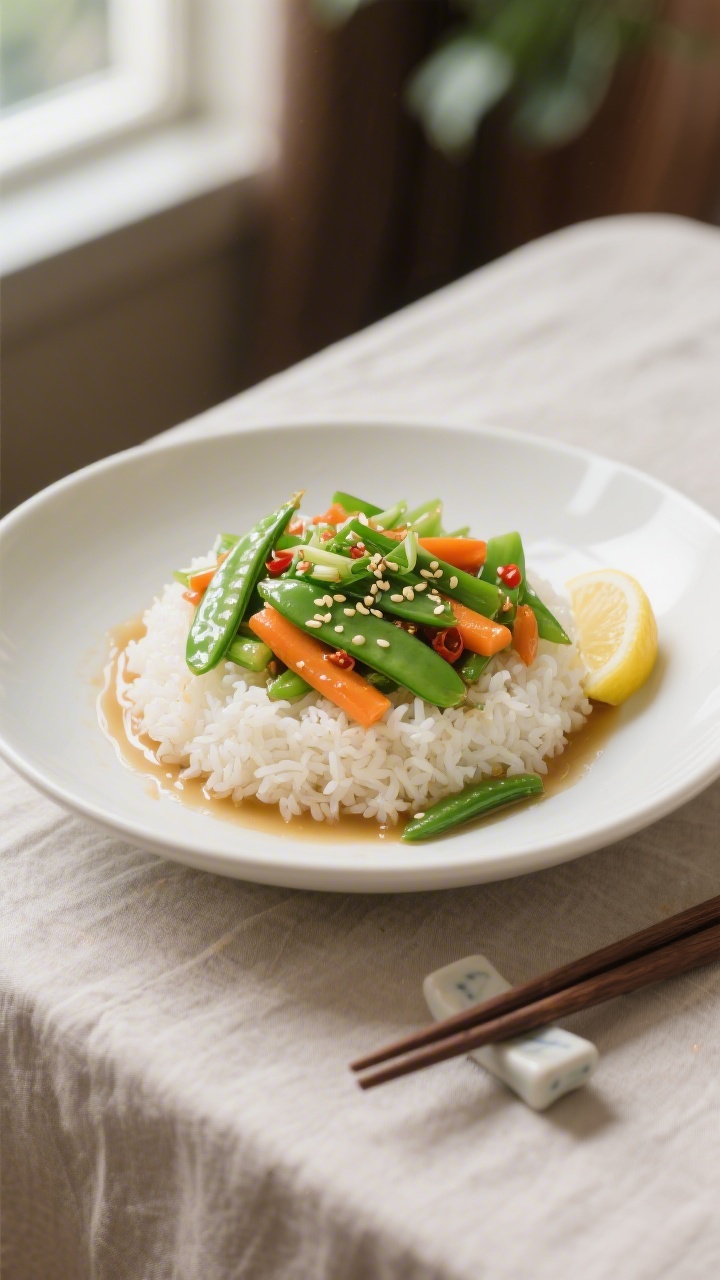
- Serve. Sprinkle with sesame seeds and serve hot over rice or noodles.
How to Store
- Refrigerate: Cool completely, then store in an airtight container for up to 3 days.
- Reheat: Warm in a skillet over medium heat with a splash of water to loosen the sauce.
Microwave works too, but use short bursts to avoid overcooking.
- Freeze: Not ideal. The tender spring vegetables lose their snap after thawing.
- Meal prep tip: Store sauce and chopped vegetables separately up to 2 days ahead. Cook fresh for best texture.
Benefits of This Recipe
- Nutrient-dense. Spring vegetables bring fiber, vitamin C, folate, and antioxidants.
- Lower in sodium and sugar. You control the sauce, so it’s lighter than takeout.
- Balanced flavors. Sweet, salty, and tangy notes keep each bite interesting without overpowering the vegetables.
- Customizable proteins. Add tofu, shrimp, chicken, or edamame to make it a complete meal.
- Minimal equipment. Just a hot pan and a spatula.
Pitfalls to Watch Out For
- Overcrowding the pan. Too many vegetables at once will steam instead of sear.
Cook in batches if needed.
- Undercooked aromatics. Add garlic and ginger late, and cook briefly to avoid bitterness or burning.
- Overthickening the sauce. Use a light hand with the cornstarch. The sauce should glaze, not clump.
- Uneven cuts. Keep vegetables in similar sizes so they cook at the same rate.
- Skipping the final taste test. A splash of soy, vinegar, or sesame oil at the end can pull it all together.
Alternatives
- Vegetable swaps: Try baby bok choy, snow peas, thin-sliced radishes, tender green beans, or zucchini ribbons.
- Protein add-ins: Sear cubed extra-firm tofu, thin-sliced chicken, or shrimp first. Remove, stir fry the vegetables, then add protein back with the sauce.
- Sauce variations: Add a spoonful of miso for depth, a squeeze of orange juice for brightness, or a dash of fish sauce for umami (skip for vegetarian).
- Gluten-free: Use tamari or coconut aminos and a certified gluten-free oyster-style sauce.
- Low-carb: Serve over cauliflower rice or just enjoy it as is.
- Spicier version: Add sliced fresh chili, more chili oil, or a teaspoon of gochujang stirred into the sauce.
FAQ
Can I make this without a wok?
Yes.
A large, heavy skillet works fine. The key is high heat and giving the vegetables room, so don’t crowd the pan.
How do I keep the vegetables crisp?
Cut them evenly, cook over medium-high heat, and stir constantly. Add delicate vegetables last and avoid overcooking after adding the sauce.
What can I use instead of cornstarch?
Arrowroot powder or tapioca starch works well.
Use the same amount and mix with cold water to form a slurry before adding.
Is there a soy-free option?
Use coconut aminos in place of soy sauce. It’s a bit sweeter, so reduce or skip the honey and adjust to taste.
How do I add tofu without it breaking?
Press extra-firm tofu for 15–20 minutes, cut into cubes, and pan-sear in oil until golden on all sides. Remove, cook the vegetables, then add tofu back with the sauce.
Can I make it oil-free?
You can stir fry with a splash of vegetable broth, adding more as needed.
The result won’t sear as deeply, but it still tastes great.
What should I serve this with?
Steamed jasmine rice, brown rice, soba noodles, or rice noodles are all great choices. For extra protein, add a fried egg or edamame on the side.
How do I prevent the garlic from burning?
Add it late, after the sturdier vegetables have softened. Keep the pan moving and cook just until fragrant—about 30 seconds.
In Conclusion
A spring vegetable stir fry is simple, fresh, and quick to make.
With a handful of seasonal ingredients and a light, flavorful sauce, you can put together a colorful meal in minutes. Keep the heat high, the cuts even, and the sauce balanced, and you’re set. It’s the kind of recipe you’ll make again and again, changing the vegetables with the season and never getting bored.
Printable Recipe Card
Want just the essential recipe details without scrolling through the article? Get our printable recipe card with just the ingredients and instructions.
